

















































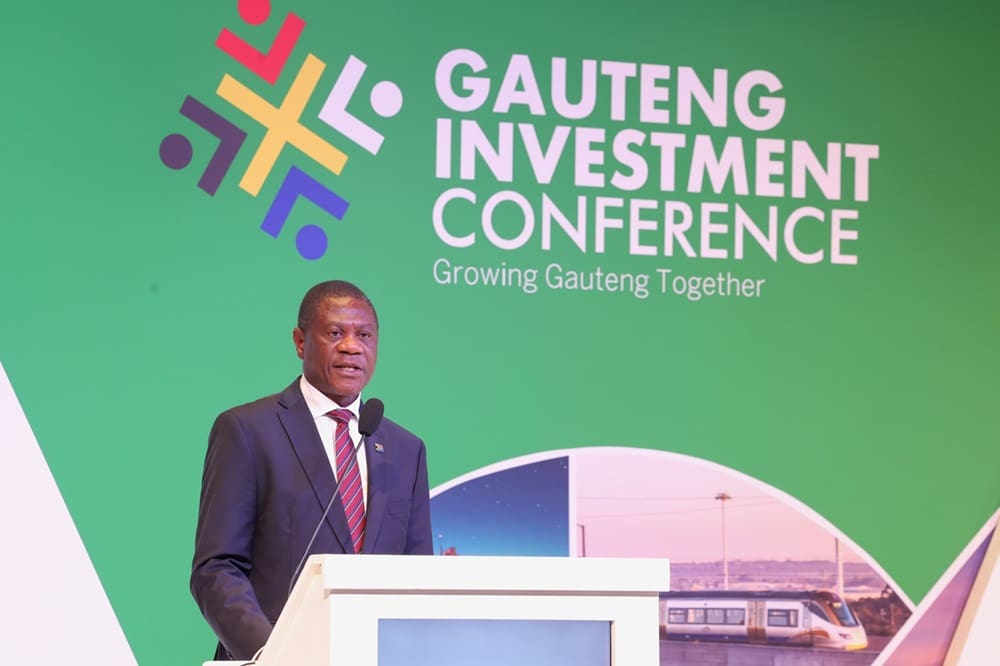
South Africa’s investment drive is entering a more demanding phase, with pressure mounting on government to convert record breaking commitments into projects that can be seen, measured and sustained.
Deputy President Paul Mashatile told the Gauteng Investment Conference this week that the era of announcements is giving way to one defined by execution.
“Investment conferences are not ends in themselves,” he said. “Their true value lies in delivery into factories, infrastructure, energy capacity, and above all, jobs.”
The shift follows the Sixth South African Investment Conference, where government secured approximately R890 billion in commitments in a single day, pushing total pledges since 2018 to over R1.5 trillion. A new national target of R3 trillion has now been set, raising expectations around whether these commitments will translate into tangible economic activity.
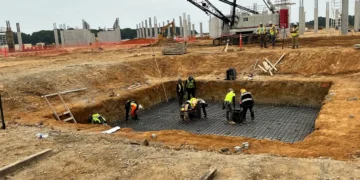
At the centre of this next phase is Gauteng, which government is positioning as the primary site of execution. As Mashatile framed it, the province must move investment from national pledges to provincial pipelines and from investor intent to operational delivery, placing responsibility on systems that can convert ambition into output.
Pipeline strategy brings execution into focus
While national government sets the investment agenda, Gauteng is now being tasked with making it real, and provincial leadership is beginning to define how that will happen.
Newly appointed Gauteng MEC for Education, Sport, Arts, Culture and Recreation, Lebogang Maile outlined a more structured approach centred on building a pipeline of bankable, investor ready projects across key sectors of the provincial economy.
Maile served as MEC for Finance and Economic Development until last week’s cabinet reshuffle by Premier Panyaza Lesufi.
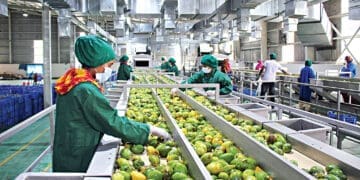
“We are focused on developing a credible pipeline of projects that investors can participate in with certainty,” he said, pointing to sectors such as logistics, agro processing and the green economy.
The emphasis on bankable projects signals a shift from broad ambition to technical readiness, where project preparation, financing structures and execution timelines become the real test of government’s investment strategy.
It also reflects an attempt to close a long standing gap between commitments and delivery, where large investment announcements have not always translated into activity on the ground.
Infrastructure constraints remain a defining risk
Even with a clearer pipeline, structural constraints continue to pose a risk to delivery.
Mashatile acknowledged that industrialisation cannot take place without resolving core infrastructure challenges.
“Without reliable energy, efficient logistics, water security, and modern digital infrastructure, industrialisation cannot take place,” he said.
For businesses, particularly SMEs, these constraints are already a daily reality. Power instability, logistics delays and rising input costs continue to limit growth and reduce competitiveness.
While government has committed to improving energy supply, logistics networks and digital systems, the pace of implementation will determine whether the investment pipeline can move at the speed required.
Industrial strategy shifts toward modern and localised production
Beyond infrastructure, the conference reinforced a broader shift toward a more diversified industrial strategy.
Mashatile pointed to the growing importance of digital industries, including data centres, artificial intelligence, fintech and cloud infrastructure, positioning Gauteng as a potential leader in these sectors. At the same time, government is seeking to strengthen domestic production capacity and reduce reliance on imports.
“Africa remains resource rich but value chain poor,” he said, highlighting the imbalance where raw materials are exported while finished goods are imported.
Efforts to expand regional value chains through the African Continental Free Trade Area are expected to support this shift, although outcomes will depend on execution rather than policy direction alone.
SME inclusion becomes the real test of delivery
As the investment strategy becomes more defined, the question of who benefits is becoming more direct.
Maile indicated that small businesses are expected to form part of this next phase, with government aiming to bring SMEs and township enterprises into the mainstream economy through participation in investment projects.
“We want SMMEs and township enterprises to actively participate in the mainstream economy through these initiatives,” he said.
This commitment is significant, but it also places pressure on how these projects are structured.
SMEs have historically struggled to access large scale investment opportunities, often excluded by strict compliance requirements, limited access to finance and lack of visibility into procurement processes.
Without deliberate mechanisms to include smaller firms, there is a risk that the pipeline will remain concentrated among established players, limiting the broader economic impact government is seeking.
Delivery will define credibility
Government has made it clear that the credibility of its investment strategy will be judged on outcomes.
“Credibility is built not on what we announce, but on what we deliver,” Mashatile said, reinforcing the shift toward measurable results.
For Gauteng, this marks a transition from positioning itself as an investment destination to proving its ability to execute. The pipeline is becoming clearer, the sectors are being defined and the intent to include smaller businesses has been stated.
What remains uncertain is whether these commitments will translate into meaningful participation across the economy, or whether the benefits of this next investment phase will once again be concentrated among a limited group of players.