










































South African tourism SMEs exhibiting at the ITB Berlin say the global tourism showcase is creating opportunities to secure international partnerships, access new markets, and gain insights into emerging travel trends that could support long-term business growth.
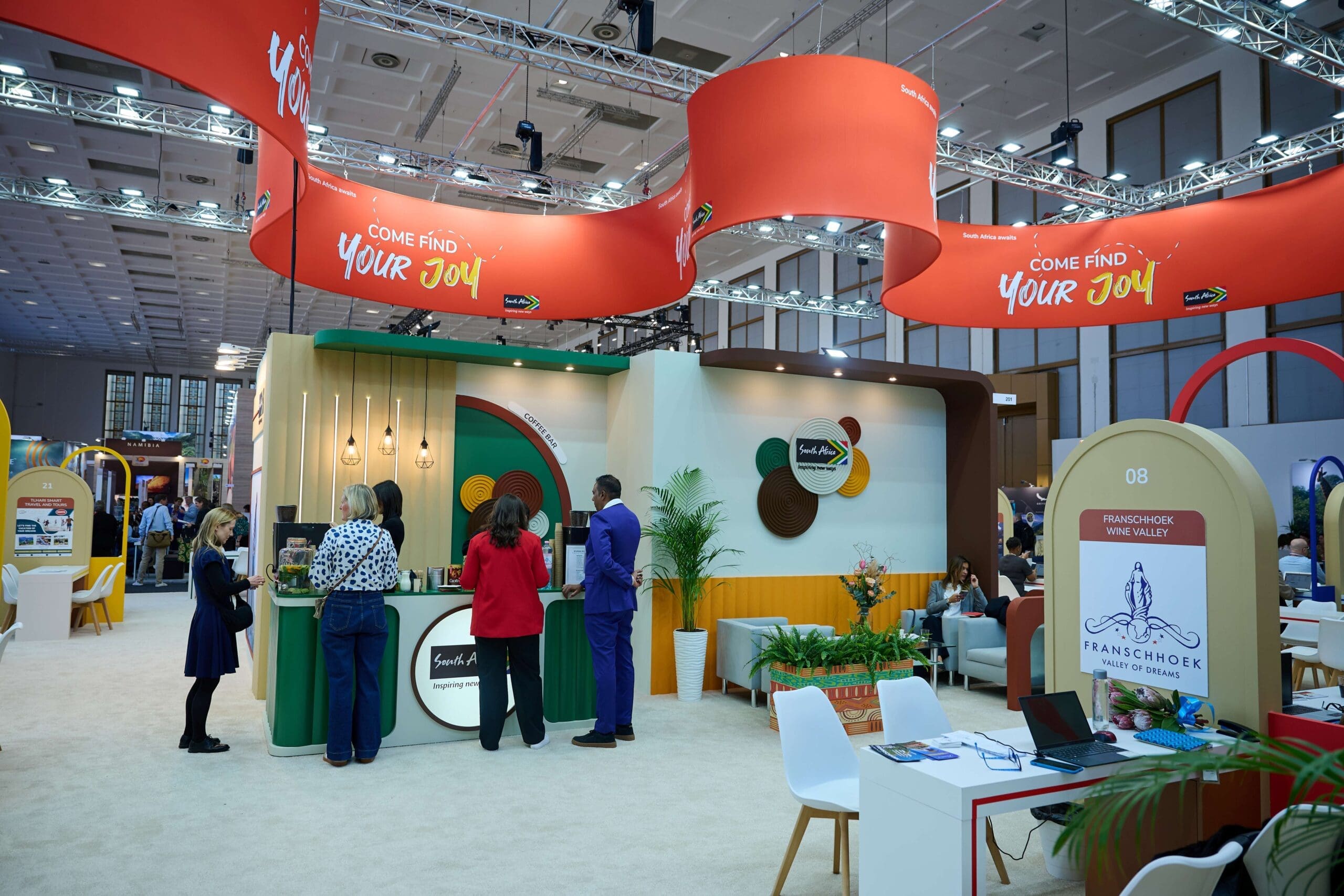
The annual trade show, held in Germany, brings together thousands of tourism businesses, buyers, and industry leaders from around the world. This year, South Africa is participating with a delegation of 49 exhibitors, including 22 small tourism businesses supported through the Tourism Incentive Programme.
The South African delegation to ITB Berlin is led by Deputy Minister of Tourism Maggie Sotyu, who described the event as a key platform to convert global interest in South Africa into economic opportunities.

Tourism SMEs attending the event say their focus is now on translating connections made in Berlin into long-term partnerships that can boost bookings, expand markets, and strengthen South Africa’s tourism value chain
According to South African Tourism, the country is using the platform to strengthen its global tourism presence after welcoming a record 10.5 million international visitors in 2025.
Global platform for SMEs
For small tourism operators, ITB Berlin provides rare access to international buyers who would otherwise be difficult to reach from South Africa.
Vivian Hlayisi, director of Tlhari Travel in Soweto, said the event enables SMEs to position themselves within the global tourism market.
“ITB Berlin is a strategic platform for us. It allowed Tlhari Travel to engage directly with international buyers who are actively sourcing African products,” Hlayisi said.
“As a boutique company specialising in bespoke Southern African travel, access to this marketplace accelerates our entry into Europe, particularly Germany, which is an important source market for South Africa.”
Hlayisi added that support from government programmes plays a critical role in enabling compliant SMEs to access global opportunities.
“We are grateful to the national Department of Tourism and South African Tourism for supporting compliant SMEs like ours. Their support shows that businesses meeting industry standards can compete globally,” she said.
Khosi Mthalane, CEO of Hotel 247, said the platform significantly shortens the time it takes for small tourism businesses to penetrate international markets.
“ITB Berlin offers unparalleled global exposure, giving us direct access to international buyers, tour operators, and industry decision-makers,” Mthalane said.
“For an SME, this platform shortens the time it would normally take to enter new markets and opens doors to partnerships that can translate into increased bookings and diversified source markets.”
Learning global tourism trends
Beyond deal-making, exhibitors say the event offers valuable insights into global tourism trends that could help strengthen local tourism businesses.
Pretty Ngubane, owner of PNS Travel Frenzy in Richards Bay, said the exhibition exposes local operators to innovations shaping the tourism industry.
“We are exposed to global tourism trends such as sustainable travel, digital tools, and changing traveller preferences,” Ngubane said.
“These insights help us improve how we design and promote our tourism products and bring new ideas back to strengthen tourism businesses in South Africa.”
Mbali Msomi, CEO of Perfectly Travel, said understanding global traveller behaviour and digital transformation trends will be important for tourism businesses seeking to remain competitive.
“I want to deepen my understanding of how global traveller behaviour is shifting and which experiences are gaining traction,” Msomi said.
“I also want to connect with partners leading in digital transformation and AI adoption so I can bring back insights that help strengthen tourism businesses at home.”
Barriers to participation
Despite the opportunities, tourism entrepreneurs say many SMEs still face challenges accessing global trade platforms.
High travel costs, exhibition fees, and limited funding remain major barriers.
“One of the biggest barriers is cost. International trade shows require significant financial investment, including flights, accommodation, and exhibition space,” Hlayisi said.
Mthalane added that limited export readiness and administrative hurdles, such as visa delays, can also restrict participation.
Msomi noted that compliance and financial management gaps further limit some operators’ ability to access international opportunities.
“Many SMEs struggle to maintain compliance beyond the initial application stage, often due to gaps in bookkeeping and financial record-keeping,” she said.
“These weaknesses make it difficult for them to access opportunities or present themselves as credible partners in the tourism value chain.”
.