











































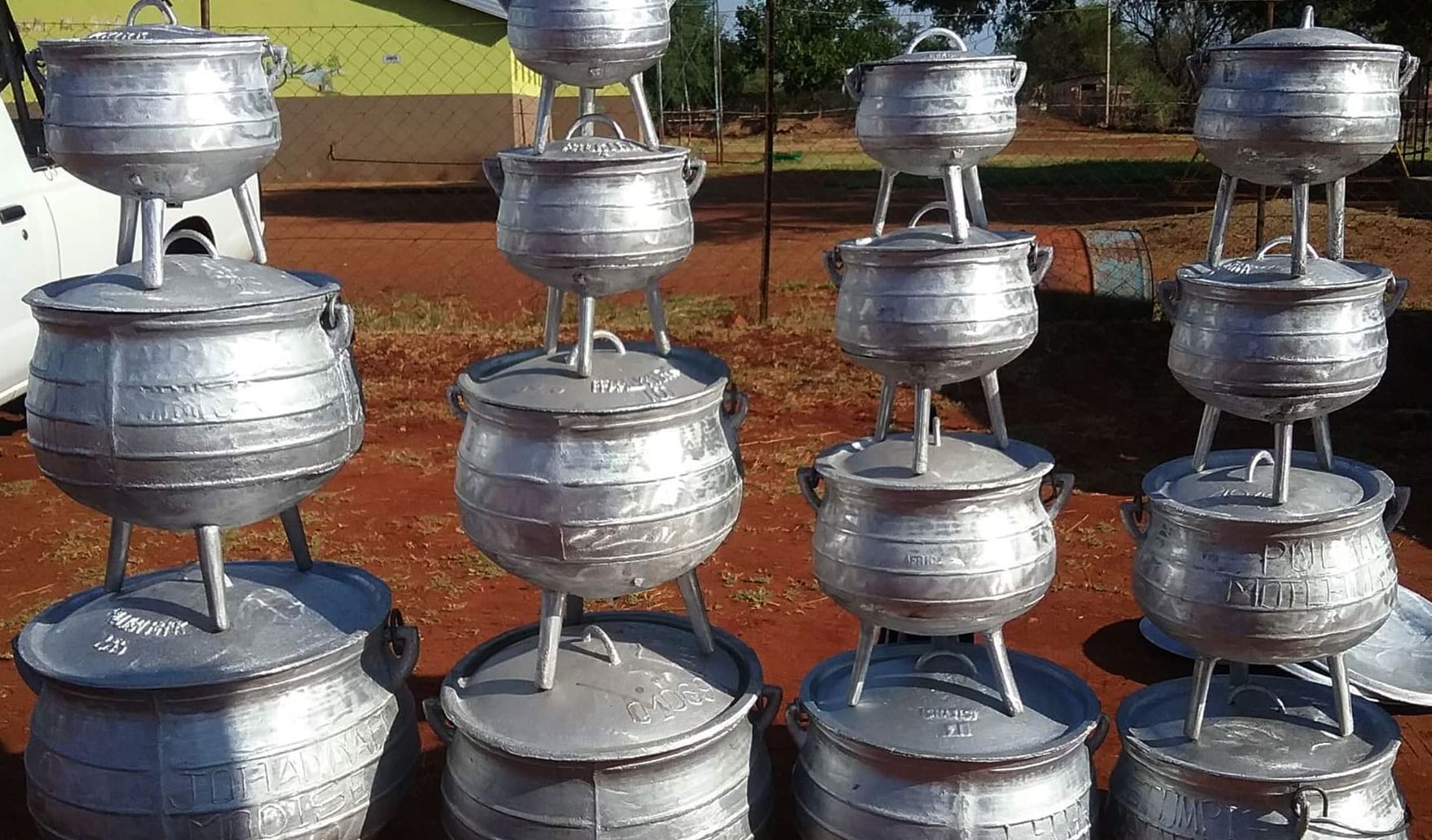
By 9 am at the Tonga taxi rank, the aluminium pots are already on display, stacked high, catching the winter sun, priced to sell.
But something has shifted.
Where customers once bought without hesitation, they now stop, turn the pots over in their hands, and ask a new question: is it safe?
A study linked to the South African Medical Research Council found that all 20 artisanal pots tested contained lead, with more than half exceeding safe limits under cooking conditions.
Across townships, what began as a public health warning is fast becoming something else: a potential economic shock to a fragile network of informal businesses built around a single, everyday product.
The pots are a household essential valued for their affordability and durability.
According to the World Health Organisation, “these pots can leach dangerous levels of lead into food, especially when used for acidic dishes, and there is no level of lead exposure that is known to be without harmful effects.”
A 2019 report by the magazine Aluminium Trading revealed that “aluminium for crafting cooking pots is usually sourced from vehicle wreckage, discarded laundry irons, sandwich makers, kettles and other items. Waste aluminium is melted in backyards of homesteads over simple fires, and the molten metal cast into basic moulds, and then cooled. The final products are not coated with a protective layer, as is the case for most cast iron pots, increasing the risk of leaching of toxic metals into cooked foods.”
Health hazard warnings cripple trade
“Since people started hearing about lead, business is not the same anymore,” said Thabo Mathonsi, a cookware trader who has worked at the rank for over five years.
“Before, customers would come, choose a pot and pay straight away. Now they ask questions, they hesitate, and some of them walk away without buying. You can feel that something has changed,” Mathonsi said.
“If customers walk away, we don’t make money that day, it’s as simple as that. This business feeds my family. I don’t have a salary or savings to fall back on, so even a small drop in sales is a big problem for us,” said Mathonsi.
The informal economy behind the pot
Beyond the health warning lies a largely informal economy.
The production and sale of these pots operate through a decentralised network of scrap collectors, backyard manufacturers and street traders. According to Statistics South Africa, more than 2.5 million people work in South Africa’s informal sector.
For many, cookware is a dependable income stream until demand shifts.
Small-scale producers say they depend on scrap metal to manufacture the pots.
“We collect scrap from scrapyards, from old car parts, sometimes from construction sites, anything we can find, we don’t have equipment to test what is inside that metal. We just melt it and shape the pots. We are not trying to harm anyone, we are just trying to make a living from what is available to us,” said Sipho Dlamini, who runs a backyard operation in Mamelodi.
Even without regulation, traders say the biggest risk is losing customer trust.
The International Labour Organisation notes that informal businesses are “highly vulnerable to economic shocks”.
“In this kind of business, everything depends on trust,” Mathonsi explained. “Once people believe something is dangerous, they don’t wait for government or proof; they just stop buying. And when that happens, our business stops immediately.”