















































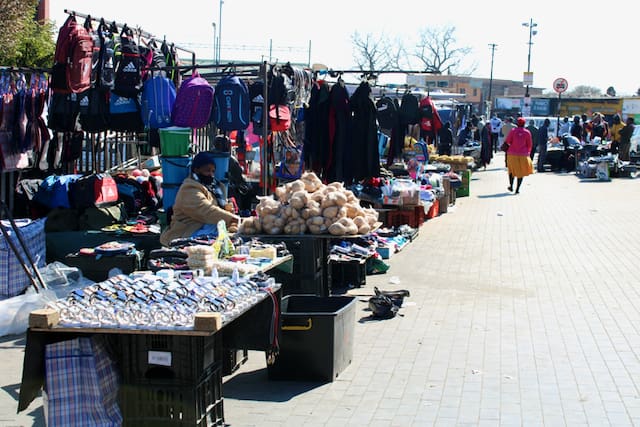
The City of Tshwane has called on informal traders and small businesses in Olievenhoutbosch to register their businesses as part of efforts to formalise and support the local economy.
The registration drive follows a visit aimed at identifying land for informal tradingto the area by Executive Mayor Nasiphi Moya and MMC for Economic Development and Spatial Planning, Sarah Mabotsa.
The City said the initiative is aimed at helping traders comply with municipal bylaws while gaining access to formal support and trading opportunities.
Businesses that complete the registration process will be eligible to apply for trading licences and be allocated designated trading spaces once all requirements are met.
Informal traders will be able to register their businesses on 23 and 24 April at the Olievenhoutbosch Community Hall.
To register, traders are required to bring an ID copy, proof of residence and complete an application form provided at the venue.
The City said formalising businesses is key to ensuring that traders can operate legally and benefit from available support.
Land identified for trading spaces
Moya said the City has identified land that will be allocated to informal traders in Olievenhoutbosch as part of efforts to formalise the sector and restore order.
“Today we are together with MMCs and councillors to identify land where informal traders will be allocated. We are asking traders to bring documents such as ID, proof of residence, and SARS documents if available, so they can register their businesses and receive trading licences and allocated spaces. There are already three pieces of land identified where traders can be accommodated immediately,” she said.
She said recent enforcement action, including the removal of illegal trading structures, was aimed at clearing space and improving organisation in the area.
“When we came to demolish structures, it was to clear the area first. We cannot fix Olievenhoutbosch if there is disorder. This is about restoring order and creating proper trading spaces,” she said.
Moya also warned that allocated trading spaces must be used by registered traders only.
“If we give you a licence and a trading space, it must not be sublet or used by unauthorised persons. That will be a violation of the agreement and will be dealt with through enforcement,” she said.
She urged informal traders to attend the registration process scheduled for Thursday [today] and Friday [tomorrow].
“We are asking traders to come in numbers on Thursday and Friday, register their businesses, and get allocated trading spaces so they can operate legally,” she said.
Mabotsa said informal traders and small business owners are encouraged to take part in the registration drive.
“This will help them comply with the City’s bylaws and access support such as trading licences and designated trading spaces,” she said.
The City said formalising businesses is key to ensuring that traders can operate legally and benefit from available support.
Challenges remain for informal businesses
While the initiative is expected to benefit traders, challenges such as compliance requirements, documentation and limited awareness may affect participation.
Some informal traders often struggle to meet requirements such as proof of residence or navigating registration processes.
Despite these challenges, the City maintains that formalisation is necessary to integrate informal businesses into the broader economy.
Informal trading remains a key source of income for many households and contributes significantly to local economic activity.
As the registration process begins, the success of the initiative will depend on how accessible and inclusive it is for traders on the ground.