
















































South Africa’s newly secured $350 million (approximately R6.5 billion) infrastructure guarantee facility from the World Bank is expected to unlock private investment into critical sectors. Still, concerns are growing that small and medium-sized enterprises may once again be sidelined in large-scale infrastructure projects.
The facility is designed to reduce risk for private investors, particularly in infrastructure segments such as electricity transmission, where large-scale capital is required to expand capacity. By providing guarantees, the funding aims to accelerate project rollout and attract private sector participation.
While the macroeconomic objective is clear, the implications for SMEs are less certain, particularly given longstanding concerns about limited access to procurement opportunities within large infrastructure programmes.
This is significant in a country where SMEs contribute an estimated 60% of employment, making their participation critical to inclusive economic growth.
Unlocking capital, but for whom?
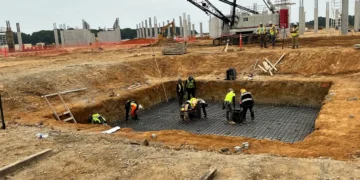
The guarantee facility forms part of broader efforts to crowd in private investment by lowering financial risk on major infrastructure developments. In theory, this could stimulate economic activity across multiple sectors, including construction, engineering and materials supply.
However, industry analysts caution that the structure of large infrastructure projects often favours established firms with the financial and technical capacity to take on primary contracts, leaving SMEs on the margins of project value chains.
“Large infrastructure projects tend to be capital-intensive and highly structured, which naturally limits entry at the top tier,” said infrastructure economist Daniel Sebola. “SMEs typically participate at the subcontracting level, but even that depends on how procurement frameworks are designed.”
This dynamic raises concerns about whether the new funding will translate into broad-based economic participation or remain concentrated among a small group of major contractors.
Procurement remains a critical barrier
The extent to which SMEs benefit from the infrastructure push will depend heavily on procurement practices. While policy frameworks often emphasise inclusive participation, implementation has historically been inconsistent.
For smaller contractors, barriers range from compliance requirements and access to finance to the ability to meet project scale and timelines.
Ayanda Mkhize, who runs a civil engineering firm in Pietermaritzburg, said opportunities linked to large projects are often difficult to access.
“You hear about these big infrastructure programmes, but when tenders come out, the requirements are already too high for small businesses,” she said. “Even subcontracting opportunities are not always transparent.”
This lack of visibility can limit SME participation even when projects are underway, reinforcing existing inequalities within the sector.
Supply chain opportunities could emerge
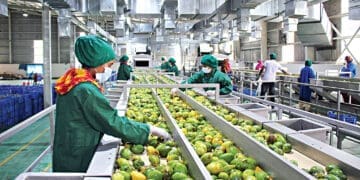
Despite these constraints, the expansion of infrastructure investment could still create indirect opportunities for SMEs, particularly within supply chains. Businesses involved in materials, transport, maintenance and support services may see increased demand as projects progress.
However, these opportunities are often fragmented and lower-margin compared to primary contracts.
Thabiso Maredi, a supplier of construction materials based in Rustenburg, said infrastructure activity can boost demand but does not always translate into sustainable growth.
“You might get more orders when projects start, but it is not guaranteed long-term work,” he said. “And payment delays can make it difficult to manage cash flow.”
This highlights a broader challenge for SMEs, where participation does not always equate to stability or scale.
Bridging the gap between policy and practice
The government and development finance institutions have increasingly highlighted the importance of SME inclusion in infrastructure development, particularly as a means of driving job creation and economic transformation. As part of the World Bank-backed facility, there is growing pressure to ensure that investment outcomes extend beyond large contractors.
However, bridging the gap between policy intention and practical implementation remains a key challenge. Without clear mechanisms to support SME participation, including simplified procurement processes and improved access to financing, smaller firms may continue to face structural barriers.
There is also growing recognition that inclusive infrastructure development requires deliberate planning rather than passive trickle-down effects.
A test for inclusive growth
As South Africa moves to accelerate infrastructure investment, the guarantee facility presents an opportunity to rethink how projects are structured and who benefits from them.
For SMEs, the outcome will depend not only on the scale of investment but on whether procurement systems are designed to accommodate smaller players in a meaningful way.
If inclusion is not actively prioritised, billions in infrastructure investment risk circulating within a narrow group of established firms, leaving SMEs on the periphery of a growth cycle they are meant to drive.
lazola@vutivibusiness.co.za