











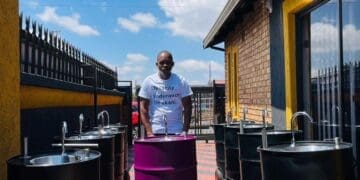












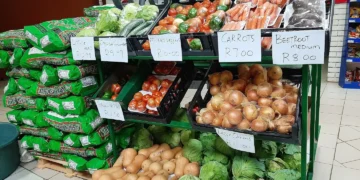


















Small business owner, Vhadoda Tseisa from Pietboi in Mulenzhe village, Limpopo, has built multiple income streams across transport services, informal retail and small-scale agriculture, yet continues to face challenges in formalising and growing his businesses.
He started a transport business in 2022 using his Toyota Etios for e-hailing and delivery services, while registering his business through the Companies and Intellectual Property Commission (CIPC) and other compliance systems.
“I registered on CIPC, CSD and even CIDB, and made sure I had tax compliance and BBBEE status, but the process is still expensive and difficult for young entrepreneurs,” he said.
Tseisa also invested in aquaponics farming and vegetable production, but infrastructure challenges such as water shortages continue to limit expansion.
He attempted to start a spaza shop for his sister and paid registration-related costs, but the process is still ongoing due to municipal requirements.
“Many of us want to operate legally, but licensing costs and delays make it very difficult,” he said.
New declaration to support SMMEs
The government recently adopted a new declaration aimed at supporting small, medium and micro enterprises (SMMEs) at a time when businesses are facing rising costs, weak economic growth and ongoing regulatory challenges.
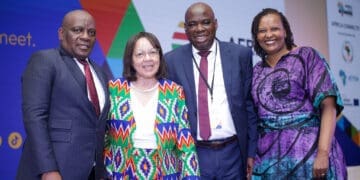
The declaration was adopted during the National Local Economic Development (LED) Summit, led by the Department of Small Business Development in partnership with the South African Local Government Association (SALGA) and the Department of Cooperative Governance and Traditional Affairs (CoGTA).
It comes as many small businesses across South Africa shift their focus from expansion to survival, as economic conditions become more uncertain and operating environments remain difficult at municipal level.
SMEs squeezed by red tape and policy delays
Small businesses are under pressure as slower economic growth reduces demand, while operational challenges such as compliance costs, licensing delays and infrastructure constraints continue to limit their ability to grow and formalise.
Many entrepreneurs say they are now focusing on survival, cutting costs and trying to stay compliant despite difficult trading conditions.
This is worsened by municipal challenges such as unreliable infrastructure and delays in licensing, which SMEs say make it harder to formalise and expand their businesses.
The declaration signals potential changes in how they interact with government systems at local level.
A key commitment is the simplification of business licensing processes, which could reduce the time and cost required to register and operate a business. This is particularly significant for informal traders and micro-enterprises seeking to formalise their operations.
The introduction of one-stop service centres is expected to make it easier for entrepreneurs to access services such as registration, permits and support programmes in one place, rather than dealing with multiple departments.
The declaration also aims to improve access to funding by strengthening coordination between government and financial institutions. If implemented effectively, this could help more SMEs secure finance, particularly those that have struggled to meet traditional lending requirements.
In addition, improved coordination and data-sharing between municipalities could lead to faster decision-making and better support for businesses at local level.
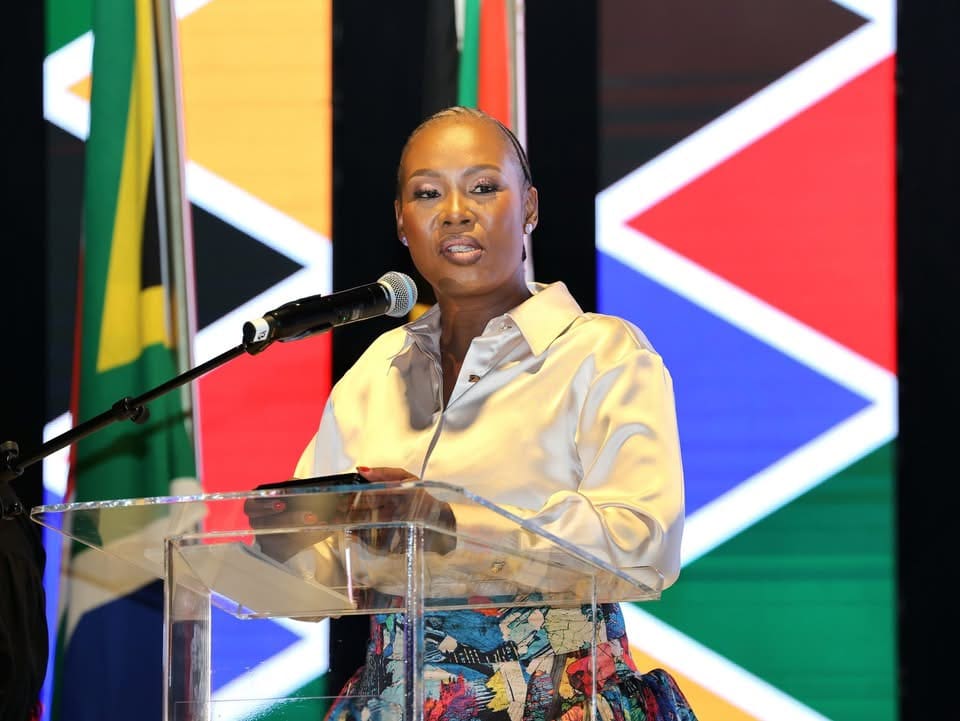
Minister of Small Business Development Stella Ndabeni-Abrahams said the declaration marks a shift towards more coordinated and practical support for small businesses.
“This Declaration represents a collective commitment to act boldly and collaboratively to unlock local economic potential. By simplifying regulatory processes, strengthening municipal capability, supporting MSMEs, and improving coordination, we are laying the foundation for vibrant local economies that create jobs and opportunity for all,” she said.