
















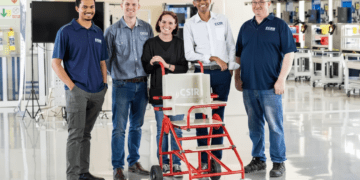


























The Greater Tygerberg Partnership (GTP), in Cape Town’s Bellville CBD together with SA Urban Food and Farming Trust (SAUFFT) and AfriFOODlinks, has piloted co-designed trading prototypes for informal traders which include weatherproof, lockable, mobile units integrated with municipal services.
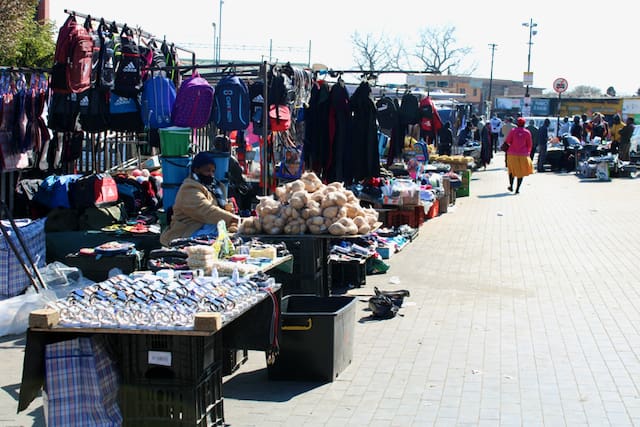
More than 200 permitted informal food traders serve over 50,000 daily commuters in the area, alongside close to 1,000 unlicensed traders.
Despite their vital role, many work in insecure, unhygienic structures and face daily costs and risks that eat into already-slim margins.
Many traders operate without permits because the process is costly or complicated, leaving them vulnerable to fines, displacement or harassment while trying to support their families.
However the solutions offered by the pilot project reduce conflict with authorities, ensure food safety, and allow traders to focus on growing their businesses.
Although informal traders form the backbone of many South African communities, they continue to face challenges that limit their growth. Street vendors, spaza shops, and small-scale food sellers often lack access to funding, safe trading spaces, and essential support from local authorities.
According to Statistics South Africa, the informal sector provides jobs to about 42% of the workforce and contributes roughly 6% of the country’s GDP, with an estimated total value between R750 billion and R1 trillion. Despite this economic impact, many traders remain under-recognised and unsupported.
Recent research by David Campbell Francis and Siphelele Ngidi from the Southern Centre for Inequality Studies at the University of the Witwatersrand, shows that South Africa’s economic policies are not adequately supporting informal traders.
The study highlights five key priorities, including fair competition, better governance, and improved infrastructure, and urges policymakers to recognise the sector’s role in job creation and local economic growth.
Informal traders left out of support systems
Running a business without proper support remains a major challenge for many informal traders.
“They say there are programmes for small businesses, but most of us don’t qualify because we can’t afford formal registration or proper financial records,” said Elvis Nesindande, a spaza shop owner in Dzwerani Mahamatshena in Limpopo.
He added that repeated theft forced him to close one of his shops, including a recent loss of nearly R1,000 in cash and airtime, making it difficult to survive without proper infrastructure and security.
Street vendors face similar struggles.
Maria Ndlovu, who sells fat cakes, coffee, and snacks at Bosman taxi rank in Pretoria, said lack of proper trading spaces remains a major issue.
“We don’t have proper shelters or storage, so when it rains, we lose products and money,” she said, adding that keeping food fresh is a daily challenge while trying to support her family.
Rising costs and lack of funding squeeze informal traders
Beyond a lack of formal support, traders are also struggling with rising costs and limited funding.
“Electricity bills have gone up, gas prices have increased, and even the ingredients for the food and snacks I sell to learners cost more than last year,” said Elizabeth Botsana, an informal food vendor at Hoërskool Pretoria-Wes in Pretoria West.
“I sell to learners, so my earnings are limited, and I barely make a profit at the end of the day. On top of that, I have to go out once or twice a week just to restock, which takes more time and adds to my expenses. During school holidays, I get really stressed because schools are closed, and that means no income at all.”
Botsana supports her son, who will start university next year.
“Without funding or proper infrastructure, it’s hard to save or plan for the future. If there was financial support or a proper setup for my business, things would be so much easier. I could buy stock in bulk, manage costs, and really grow my business,” she said.
Nearly 60% of informal workers earn below R3,500 per month, often without access to credit, insurance, or storage.
Warren Hewitt, CEO of the Greater Tygerberg Partnership, notes that supporting informal traders is not charity. “With proper infrastructure, financial support, and recognition, traders can operate as legitimate business operators, improving both urban efficiency and economic resilience,” he said.