









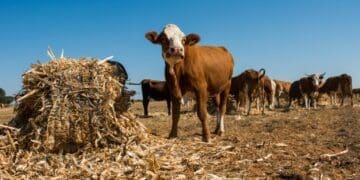


















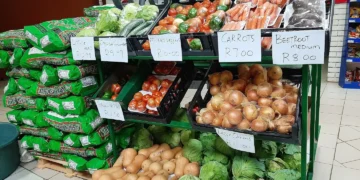



















Letta Mannini Sepipi, a small-scale mixed farmer from Soshanguve in Tshwane produces vegetables such as spinach, potatoes, sweet potatoes and maize, as well as livestock – but like most farmers she is feeling the cost pressures are forcing the sector to rethink how they operate.
“Farming today is not just about working hard. It’s about planning properly and making sure you don’t waste money on things that don’t bring results,” she told Vutivi Business News.
The focus is now shifting from just surviving tough seasons to improving efficiency, managing risks, and making farming more profitable ahead of NAMPO 2026 in Bothaville in th Free State.
Standard Bank will engage with clients across the continent, and industry stakeholders at NAMPO Harvest Day, taking place from 12 to 15 May 2026 in Bothaville, Free State, contributing to discussions focused on turning innovation into commercially resilient agricultural businesses.
NAMPO is the biggest agricultural gathering in South Africa, where all stakeholders including those from acoss the borders, come together for discussions, networking, trading and to learn about new innovations and technology.
“NAMPO Harvest Day remains the most important meeting point of agriculture in South Africa, especially at a time when producers are operating under increasing pressure,” said Dr Dirk Strydom, Managing Director of NAMPO (Pty) Ltd.
“Resilience is no longer only about survival, but about the ability to adapt, make better decisions and remain sustainably profitable. NAMPO brings together the solutions, technologies and conversations producers need to face these challenges with confidence,” he said.
He said the event reflects the reality of modern farming, where farmers need to be more efficient and make better decisions to stay competitive.
The discussions around NAMPO 2026 show that the sector is focusing more on efficiency, risk management, and profitability as key to long-term success.
South Africa’s agricultural sector is changing. Farmers are moving away from just trying to survive tough conditions and are now focusing more on making their businesses profitable and sustainable.
This shift shows how the sector is evolving. Success is no longer only about surviving difficult seasons, but about how well farmers can adapt, improve efficiency, and keep their businesses financially stable over time.
Farmers are dealing with many challenges, including rising costs, climate risks, pests and diseases, and uncertainty in markets and policies. These pressures are forcing them to think differently about how they run their farms and manage their money.
Rising pressure reshapes farming priorities
Farmers are saying the cost of farming is becoming harder to manage, with fuel, fertiliser, transport, and production inputs continuing to rise.
Sepipi said rising input costs are making it difficult for farmers to maintain profits without strict financial discipline.
“You must be careful with every input you use. If you don’t manage your costs well, you won’t survive in farming,” she said.
She added that many small-scale farmers are now focusing more on reinvesting what they earn to keep their operations sustainable.
“Whatever you make, you must put it back into the farm. That’s how you grow and stay in business,” she said.
Profitability becomes the measure of resilience
Experts say resilience in farming has changed. It is no longer just about getting through a bad season.
“Resilience in agriculture has evolved,” said Brendan Jacobs, Head of Agribusiness at Business and Commercial Banking at Standard Bank.
“Beyond just getting through a difficult season, it is about using innovation and better information to make smarter decisions, manage risk and build farming businesses that can remain profitable.”
He said farmers are now using innovation in practical ways that bring real results, such as improving efficiency, planning finances better, and reaching markets more easily.
Instead of adopting technology just because it is new, farmers are choosing solutions that help them save costs and improve output.
“When innovation is applied with intent and supported by sound financial planning, it enables farmers to cope with volatility while also positioning their businesses for sustained growth,” he said.