














































South Africa’s waste problem is usually framed as a municipal failure, but discarded materials represent a multi-billion-rand raw material pipeline waiting to be captured by SMEs.
According to figures from the Department of Forestry, Fisheries and the Environment and research by the CSIR, South Africa generates roughly 107 million tonnes of general waste annually. Up to 90% ends up in rapidly filling landfills, burying an estimated R25.2 billion in total resource value every year.
Research indicates that diverting 20% of industrial waste and 60% of domestic waste from landfills could inject R9.2 billion in direct economic value into South Africa’s gross domestic product.
SMEs face processing bottlenecks
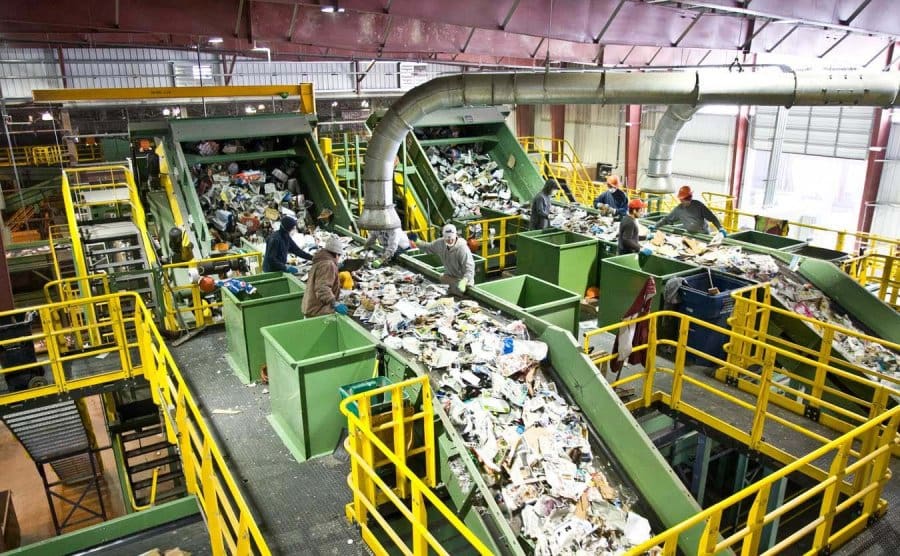
While formal municipal collection services struggle with budget constraints, the informal sector currently drives the bulk of recovery.
An estimated 60,000 to 90,000 informal waste pickers reclaim up to 90% of all post-consumer paper and packaging recycled in South Africa, saving municipalities between R300 million and R750 million annually in landfill management costs.
However, for small businesses looking to turn collected scrap into manufactured products, the gap between collection and processing remains significant. Nontuthuzelo Mthembu, founder of RePlast Solutions in Kempton Park, explains that trading raw scrap yields razor-thin profit margins, while value-addition requires capital investment.
“When we started as a basic buy-back centre collecting loose plastic from street reclaimers, we were trading on thin margins of 50 cents to a rand per kilogram,” Mthembu stated. “The turning point was investing in a granulator to turn HDPE milk bottles into clean, washed plastic flakes. By selling processed flake directly to pipe manufacturers instead of uncompressed scrap, our revenue per tonne tripled.”
High operational costs squeeze manufacturing margins
Despite the market size, small manufacturers face high operational hurdles, including feedstock contamination, electricity tariffs, and transport logistics for bulky waste.
Ellen Naidoo, co-founder of EcoMat Africa, a Durban-based enterprise converting industrial textile offcuts into automotive insulation, emphasises that processing waste requires strict cost controls.
“People assume waste is free raw material, but clean waste is actually expensive to collect and process,” Naidoo noted. “A factory off cut is great input, but if it arrives mixed with oil or dirt, your washing and sorting costs double before you even start production. If you don’t track your yield losses on the factory floor, your margins vanish.”
How EPR could benefit SMEs
Driving demand for local processing is the implementation of EPR regulations under national environmental legislation. The framework mandates that manufacturers, importers, and brand owners fund Producer Responsibility Organisations to support post-consumer collection and recycling.
Industry analysts point out that PRO subsidies and equipment grants give small enterprises a viable pathway to finance heavy machinery such as balers, shredders, and extruders are needed to scale operations.
For South African SMEs, shifting from simple waste collection to localised secondary manufacturing represents one of the clearest avenues to lower input costs, secure off-take agreements, and build sustainable enterprise value.