





































South African SMEs may have viable businesses and opportunities to expand, but securing the capital needed for growth can remain difficult when they cannot demonstrate that their businesses are ready for investment.
The challenge comes as South Africa’s SMEs face an estimated R350 billion financing gap, according to the Organisation for Economic Co-operation and Development (OECD), despite the number of SME funders increasing from 148 in 2018 to more than 300 in 2025.
The Masisizane Fund’s newly launched Investment Readiness Programme is seeking to address part of that gap by helping established businesses strengthen their financial, operational, governance and compliance systems before approaching funders.
https://www.oldmutual.co.za/business/solutions/masisizane/
Why SMEs struggle to get funding
Having a viable product or service is not always enough to secure growth capital.
Funders also need to understand a business’s financial history, performance, governance and plans for using additional capital.
Bahle Mongali, programme manager at Masisizane, said businesses seeking funding need to provide financial records and other information that can demonstrate their ability to manage the capital.
For smaller businesses, the lack of collateral can create another obstacle.
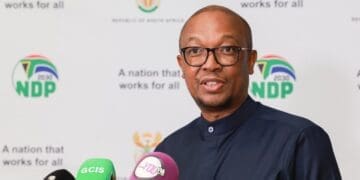
Small Business Development Minister Stella Ndabeni has previously said commercial lenders can regard some black-owned micro-enterprises as higher risk because they lack immovable property or fixed assets that can be used as security.
Programme targets growth-stage businesses
Masisizane’s 12-month Investment Readiness Programme is aimed at established SMEs seeking between R1 million and R20 million in growth funding.
Businesses must be formally registered and operating in South Africa, be at least 51% black-owned, have operated for at least three years and generate annual revenue between R1 million and R50 million.
The programme begins with an assessment of each business’s financial, operational, governance and compliance capabilities.
The findings are then used to create an individual growth roadmap with specific actions, milestones, timelines and accountability measures.
Businesses will also receive assistance with investor documentation and data-room preparation.
Fetola to focus on agribusiness and manufacturing
Two implementation partners will deliver the programme across different sectors.
Fetola will focus on agribusiness and manufacturing, while 22 On Sloane, in partnership with Teksa Holdings, will focus on logistics and services.
The support will include business development, mentorship, financial and operational strengthening, governance assistance, growth planning and specialist advisory services.
Masisizane expects participating businesses to finish the programme with stronger internal systems, better visibility of their business performance, investment documentation and clearer growth strategies.
From investment readiness to growth
For SMEs, securing growth capital can mean buying equipment, increasing production, entering new markets and creating jobs.
But getting investment-ready does not guarantee that funding will follow.
Businesses still need to demonstrate that they can manage the capital and turn it into sustainable growth.
The test for Masisizane’s programme will therefore be whether strengthening businesses before they approach funders ultimately results in more SMEs securing capital and expanding their operations.
For South African SMEs, the challenge may not only be finding the money to grow, but proving they are ready to use it.