









































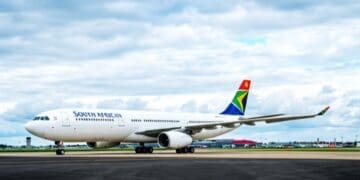






Rising aviation fuel prices are beginning to ripple through South Africa’s logistics sector, with courier companies warning customers that airfreight services could become more expensive following fuel surcharges introduced by airlines.
Low-cost carrier FlySafair recently announced a temporary fuel surcharge on flights after jet fuel prices surged sharply amid global oil market volatility linked to geopolitical tensions in the Middle East.
The airline said the adjustment was necessary after jet fuel costs rose dramatically within a short period, increasing pressure on airline operating costs.
Because domestic airfreight services rely heavily on commercial passenger flights to transport parcels between cities, the fuel shock is now beginning to affect courier companies that depend on those networks.
Logistics costs ripple through SME supply chains
Other businesses that depend on fast national deliveries could also be affected by rising airfreight costs.
Kabelo Thoabala, who runs an online electronics accessories store supplying customers across South Africa, said courier services play a crucial role in maintaining competitive delivery times.
“We ship products to customers in different provinces almost every day, and airfreight is what makes next-day delivery possible,” Thoabala said.
“If courier companies increase prices because airlines are charging more for fuel, small businesses like ours feel that impact immediately.”
He added that higher delivery costs could force many small retailers to rethink pricing or shipping options.
Companies adjust airfreight pricing
In a notice sent to customers, logistics firm The Courier Guy said it would introduce a temporary Airline Fuel Surcharge on all airfreight routes from 11 March 2026.
The notice explained that the surcharge follows the introduction of fuel surcharges by major South African airlines due to the sharp increase in jet fuel prices.
“As these increases also apply to cargo operations, they directly impact all airfreight services within South Africa,” the company said.
While the company did not specify the size of the surcharge, the move signals that rising aviation costs are beginning to filter through the country’s domestic courier network.
Online retailers sound warning
For many online retailers, courier services form a core part of daily operations, particularly for businesses shipping products to customers across different provinces.
Sinenhlanhla Madonsela, founder of an online athleisure wear brand that distributes products nationwide, said rising courier costs could quickly affect the profitability of small e-commerce businesses.
“As an online store we rely heavily on courier services like The Courier Guy to deliver orders to customers across the country,” Madonsela said.
“When courier prices increase, we either have to absorb the cost ourselves or increase delivery fees for customers. The problem is that customers are very sensitive to shipping prices, so even a small increase can affect sales.”
Madonsela said logistics costs are already one of the biggest operational expenses for many small online retailers.
Logistics sector exposed to global fuel shocks
Fuel costs are one of the largest expenses for both airlines and logistics companies. When oil prices rise sharply, the aviation sector often responds by introducing temporary fuel surcharges to offset operating costs.
Because a large portion of South Africa’s domestic parcel network relies on aircraft to move shipments quickly between regions, courier operators are particularly exposed to these fuel price fluctuations.
If higher fuel prices persist, logistics companies may increasingly adjust pricing structures to reflect rising air transport costs.
For small businesses that depend on rapid national delivery to remain competitive, the latest fuel-driven adjustments could mark the beginning of a new wave of logistics cost pressures.