











































Manufacturing SMEs are expected to play a bigger role in South Africa’s industrial growth as government invests in infrastructure, energy and local supply chains.
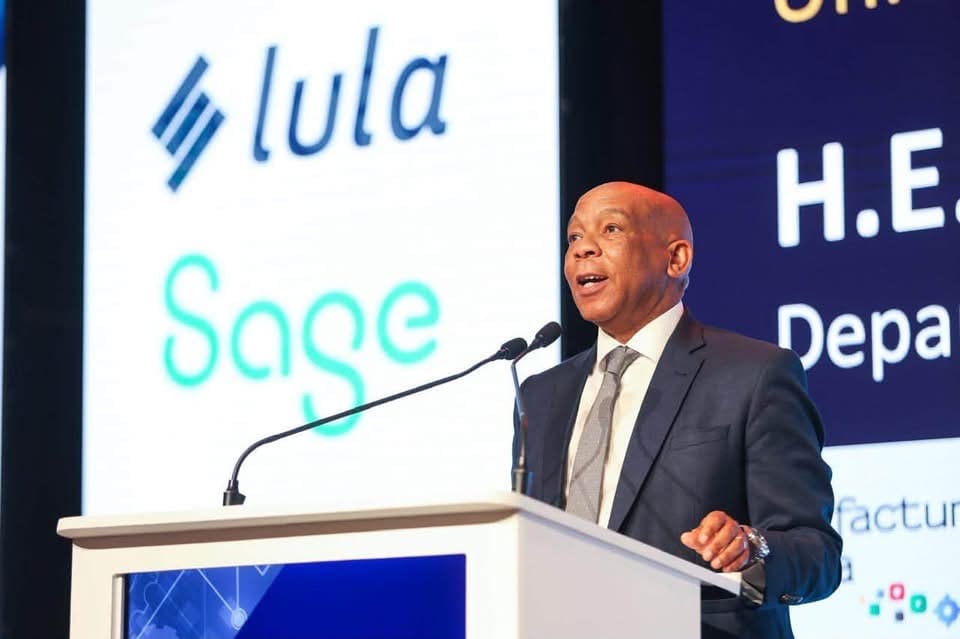
Electricity and Energy Minister Kgosientsho Ramokgopa says the planned R440 billion transmission infrastructure investment could create opportunities for manufacturers, but businesses must develop the capacity and skills needed to participate in the expansion.
Speaking at the 13th Manufacturing Indaba, held in Johannesburg from 14 to 15 July and attended by more than 150 exhibitors from across Africa’s manufacturing ecosystem, Ramokgopa said energy expansion must be matched by industry readiness.
“We are going to grow exponentially,” he said.
The government plans to add 105 GW of new electricity generation capacity over time and expand the national grid with about 14,500 kilometres of new transmission lines over the next decade.
The programme is expected to create opportunities across manufacturing value chains, including steel fabrication, transformers, transmission towers, cables, batteries and other industrial products.
However, Ramokgopa warned that infrastructure investment would not deliver economic growth unless industry and skills development progressed alongside it.
“Industry and skills must be ready to support the build programme,” he said.
For manufacturing SMEs, this means improving production capacity, technical skills and compliance to access future industrial opportunities.
SEDFA-supported SMEs showcase manufacturing potential
While the government outlined plans to expand industrial capacity, SMEs at the Manufacturing Indaba demonstrated how small businesses are already contributing to the sector.
The Small Enterprise Development and Finance Agency (SEDFA) used the event to highlight its financial and non-financial support programmes, which help small businesses, cooperatives and aspiring manufacturers access funding, technology and markets.
Among the exhibitors was STEPS Africa, a digital yextile printing company founded by entrepreneur Vimbai Tshuma.
The company received SEDFA support to purchase its first manufacturing machine and has since expanded into branding, embroidery and textile printing.
“SEDFA believed in our dream and financed our first manufacturing machine. Today we are exhibiting at the Manufacturing Indaba through SEDFA, giving us access to markets,” Tshuma said.
She said the exhibition helped the business connect with potential customers and generate new leads.
Other exhibitors also highlighted the value of industry exposure and networking.
Johannesburg-based Kitchen World Trading, which supplies kitchenware and hospitality equipment, said the event provided an opportunity to connect with businesses across the continent.
Founder Safdar Mehmood said the exhibition offered valuable exposure.
“It felt like discovering the whole of Africa in one place,” he said.
The Mpumalanga Economic Growth Agency (MEGA) also participated, bringing businesses from the province to showcase their products and engage with industry stakeholders.
Regional markets offer SMEs opportunities to scale
Deputy President Paul Mashatile said South Africa’s industrial future depends on moving beyond raw material exports and increasing local value addition.
“We want to process our own resources, make higher-value products, expand supply chains and create industries, jobs and wealth,” Mashatile said.
He said regional trade, strategic partnerships, technology and skills development would be critical to building competitive industries.
Mashatile added that industrialisation was about improving quality, competitiveness and resilience while expanding economic opportunities.
Deputy Minister of Trade, Industry and Competition John Steenhuisen said manufacturing growth could not rely only on domestic demand.
He pointed to markets within the Southern African Development Community (SADC) and the African Continental Free Trade Area (AfCFTA) as opportunities for manufacturers to expand.
“Regional and continental markets represent one of our greatest growth opportunities,” Steenhuisen said.
He added that manufacturing directly employs more than 1.6 million people and supports many more through supply chains.
As manufacturing becomes increasingly technology-driven, experts said SMEs must embrace innovation to remain competitive.
Professor David Romero, Scientific Vice-Chairperson of the World Manufacturing Foundation, said technology must be combined with skills and human expertise.
“True smart manufacturing comes from the combination of information, technology and human ingenuity,” Romero said.
He said businesses should focus not only on acquiring technology but also on ensuring workers have the skills to use it effectively.
As South Africa advances its industrial expansion, SMEs will need access to finance, skills, technology and markets to become competitive suppliers.