







































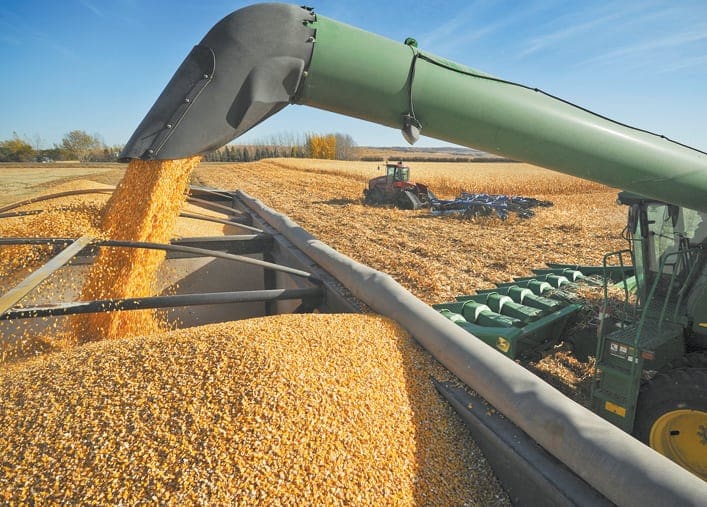
The Eastern Cape provincial government has committed R80 million to commercialise grain and oilseed farming to assist emerging farmers in building sustainable businesses and strengthen the province’s agricultural value chain.
The funding, announced under the Eastern Cape Department of Agriculture’s newly launched Grain Commercialisation Chapter, will support production across 24 000 hectares during the 2026/27 financial year.
Launched during Harvest Day at Sonskyn Farm in Elundini Local Municipality recently, the initiative forms part of the department’s broader Agriculture Commercialisation Programme.
It seeks to move emerging farmers beyond subsistence farming by improving production capacity and providing the resources, infrastructure and market access needed to compete in South Africa’s commercial agricultural sector.
Building agricultural businesses
Eastern Cape MEC for Agriculture Nonceba Kontsiwe said the programme is designed to help farmers transition from subsistence farming into sustainable commercial enterprises.
She said the provincial government has prioritised commercialisation by identifying farmers with growth potential and providing targeted support to expand production.
“These farmers include young people, women and other producers who participate in various agricultural value chains such as grain, wool, citrus, livestock and poultry,” Kontsiwe said.
She said stronger grain production will not only improve food security but also support downstream industries that depend on locally produced grain, particularly the livestock sector.
Strengthening agricultural value chain
The investment comes at a time when South Africa continues to position agriculture as a driver of rural economic development and job creation.
By increasing grain production, emerging farmers can supply processors, feed manufacturers, grain traders and retailers, creating wider economic opportunities beyond primary farming.
For livestock-producing districts such as Joe Gqabi, reliable grain production also supports feed availability, helping livestock farmers manage input costs and improve productivity.
Kontsiwe said quality grain production remains essential for producing quality livestock.
“Grain farmers are playing a critical role in producing food for both people and animals,” she said.
The investment is expected to create opportunities beyond primary agricultural production, with benefits extending across the agribusiness value chain.
South Africa’s 2025/26 summer grain and oilseed harvest is estimated at 21.49 million tonnes, the largest on record, according to the Crop Estimates Committee.
Young entrepreneur shows commercial potential
The programme also showcased the success of 21-year-old farmer Iviwe Sondlo, who leases Sonskyn Farm where the launch was held.
Inspired by his father from an early age, Sondlo entered farming with his cousin in 2025, leasing the farm and planting maize on 47 hectares.
The business now supplies maize to established agricultural companies, including BKB in Nqanqarhu (formerly Maclear) and Bester in Mthatha.
“We are planning to diversify into more grain crops in the future, expand our enterprise and create employment opportunities for more young people,” Sondlo said.