














































By Tumelo Khotha
North West province SMEs say a lack of access to markets remains the biggest challenge they face as the clock ticks towards the local government elections.
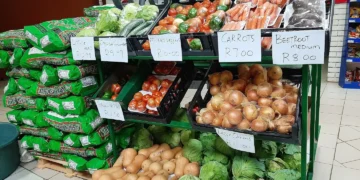
Phenyo Obakeng, who sells fruit and vegetables in the streets of Zeerust, said the business runs smoothly,
except for the daily challenges, such as a lack of marketing. Obakeng appeals to the provincial government to support SMEs in achieving better outcomes.
“We wake up every morning, even when we don’t feel like it, just to see progress for our businesses at the end of the day, but we sometimes feel like we are stepping on the same spot, ” he said.
Another business owner who specialises in rooms for rent, Sesinyi Nare, said the upcoming elections may
have a positive impact on SMEs, only if political leaders listen to the concerns of businesspeople.
Nare said the business is a challenge itself. He requested that political party leaders come up with solutions to the challenges, such as the lack of market that SMEs face.
Michael Mogorosi, an independent business analyst, encouraged SMEs to continue fighting for their rights by casting their votes, as this will be the only way to highlight their grievances. Additionally, Mogorosi encouraged SMEs to collaborate closely and share information, particularly when opportunities arise within the government.
He believes the upcoming local government elections will give promising results for SMEs, particularly those who remain vigilant for opportunities to access markets and are willing to convert their challenges into solutions.
He also encouraged local government officials to help SMMEs have clear communication and understanding of how they can easily access other resources, such as financial support, without waiting too long while opportunities are open.
Rustenburg Chamber of Business spokesperson, Pieter Malan, blamed poor municipal infrastructure,
insisting that it undermines all services.
“There’s an ideology of anti-business prevalent in most councils, resulting in reluctance to create
an enabling environment for business to flourish and create jobs,” Malan said.
He further mentioned that in the North West, municipalities in general, they're business-friendly. It is often perceived as a factor in the economy.
“Many times, the focus is on Micro scale, rather than a mixed, integrated scale involving current, existing bigger businesses to leverage development of smaller enterprises,” he said.
To the newly elected councils expected to take over in the upcoming local government elections, he
encouraged them to work in collaboration with the existing, bigger businesses to use them as leverage for
creating new opportunities.
He said they must stop relying on BEE legislation.
“Most of the mid-sized businesses are family-owned and are therefore not interested in new shareholders outside of the family,” he said.
Action SA’s provincial secretary and Rustenburg mayoral candidate, Ofentse Kombe, said his party will
ringfence a portion of revenue generated from the industrial and commercial areas for direct reinvestment in the replacement, maintenance, and upgrade of economic infrastructure, roads, water reticulation, and electrical networks that sustain business activity in that area.
“We will ensure municipalities budget at least 8% of the value of property, plant, and equipment towards repairs and maintenance, in line with the National Treasury norms established through MFMA Circular 71. Most ANC-and EFF-governed coalition municipalities in the North West fall far below this benchmark,” said Kombe.
In terms of Agriculture and manufacturing support for SMMEs, Kombe said the party will develop agriculture development support programs across every municipality it governs.
“Where possible, we will make land available for agricultural use and provide both financial and non-financial support, including structured mentoring programmes for prospective and emerging farmers,” he added.