
















































South Africa and Uganda want to make it easier for businesses to trade and invest in each other’s markets by reducing trade barriers, improving customs procedures and addressing regulatory challenges.
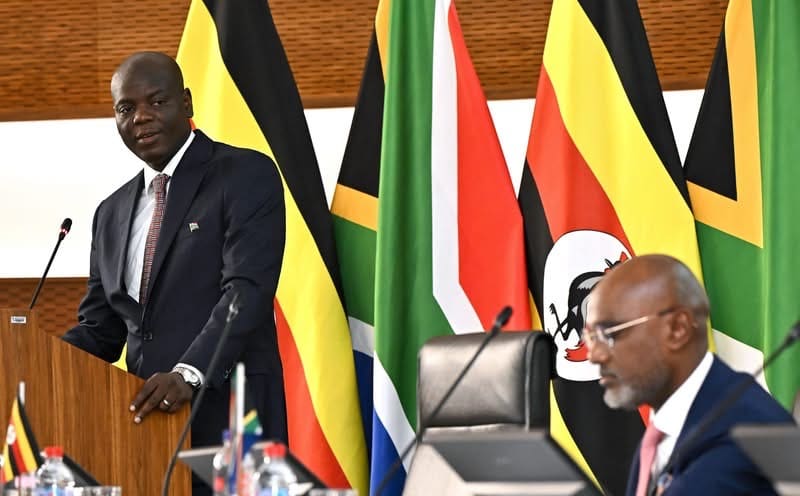
The issue was raised during the third session of the South Africa–Uganda Joint Commission for Cooperation in Pretoria on Tuesday, where International Relations and Cooperation Minister Ronald Lamola called for stronger trade and investment ties.
Lamola said the countries had opportunities to expand cooperation in mining, energy, agriculture, agro-processing, manufacturing, infrastructure, financial services, telecommunications and tourism.
“I welcome Uganda’s emphasis on economic diplomacy and on converting diplomatic engagement into tangible trade and investment opportunities. This is an area in which our two countries can work particularly closely. The economic discussions are therefore particularly important,” Lamola said.
South African companies, including MTN, Standard Bank Group, Absa and Sanlam, already operate in Uganda. However, Lamola said the investment relationship between the two countries had not yet reached its full potential.
Trade barriers remain a challenge
Lamola called on both governments to identify practical ways to make it easier for businesses to enter and operate in each other’s markets.
Regulatory and administrative barriers can make cross-border trade more difficult, particularly for smaller businesses that may have fewer resources to manage complex requirements in another country.
The proposed Joint Working Group on Trade and Investment could help identify investment opportunities in both countries and monitor challenges experienced by companies operating in their respective markets.
The two countries want to build on existing commercial ties while improving the conditions under which companies invest and operate.
Although no specific funding or business contracts were announced, reducing barriers could create opportunities for smaller businesses involved in agriculture, manufacturing and agro-processing to explore markets beyond their home countries.
Easier travel could support business ties
Travel arrangements were another issue raised during the meeting. South Africa’s Electronic Travel Authorisation (eTA) system has been expanded to include eligible Ugandan ordinary passport holders, with the aim of streamlining travel authorisation for qualifying travellers.
Uganda’s Foreign Affairs Minister Adonia Ayebare welcomed the development. Ayebare said businesspeople and students have already received approvals within an hour of applying online. He called on the two countries to consolidate the implementation of the system.
However, outstanding agreements still need to be addressed, including a returns agreement and a memorandum of understanding on immigration cooperation. Uganda also expressed interest in future visa-free travel between the two countries.
Uganda’s participation in the East African Community also presents opportunities to advance the African Continental Free Trade Area (AfCFTA), which aims to increase trade between African countries.
Lamola highlighted the importance of the Bilateral Air Services Agreement in improving connectivity and supporting the movement of people, goods and business. He called for more efficient customs procedures and predictable regulations to help companies trade across borders.