







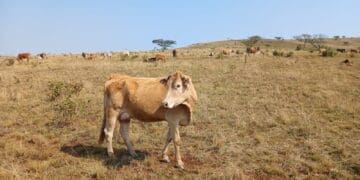



































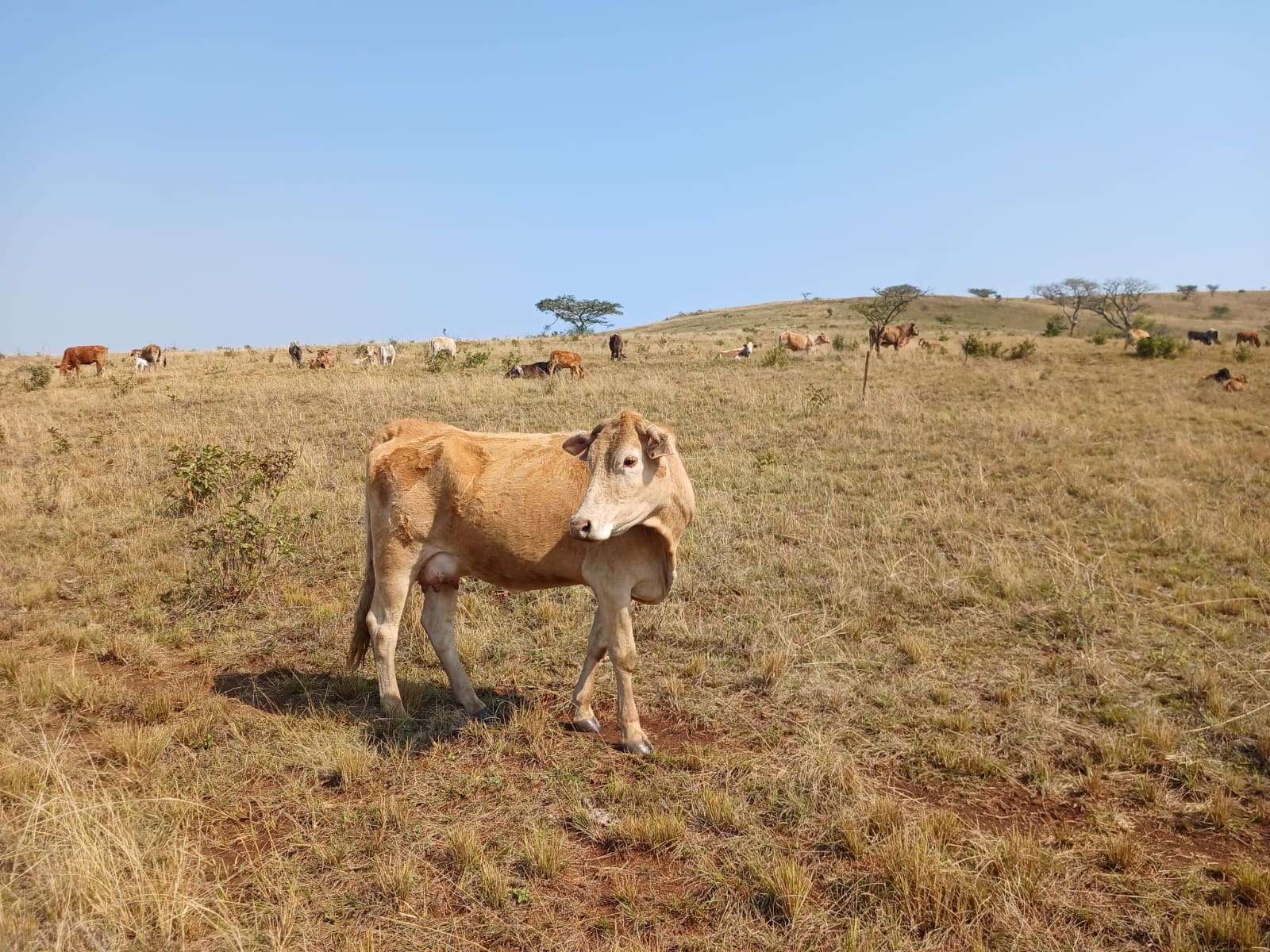
KwaZulu-Natal livestock farmers in drought-affected areas are struggling with the severe effects of the dry winter season, as negligible rainfall has critically depleted water supplies and grazing fields.
These harsh conditions are placing extreme pressure on agricultural businesses, forcing owners to spend heavily on supplemental feed and water to keep herds alive. For farmers dependent on livestock, maintaining animals through this period has become both costly and demanding.
Zuziwe Farm in Dlomodlomo, Vryheid, is among the ranches navigating these operational hurdles. During dry spells, livestock require intensive monitoring. With natural grazing unavailable, farmers must exert additional effort to protect herd health. This includes purchasing feed, securing water truck deliveries, and closely tracking animal condition—all driving up daily operating overheads.
“During the dry season, we spend more time on the farm taking care of the livestock. This helps us identify which animals are not eating well, especially older cows and those that are breastfeeding,” explains Philani Nxumalo, a worker at Zuziwe Farm.
As natural pastures dry up, farmers rely on commercial hay bales. Hay provides soft, digestible roughage while preventing hungry animals from eating toxic plants.
“We buy many packs of hay bales to ensure sufficient feed throughout the dry season. We want to prevent them from eating the Lantana plant, locally known as ubukhwebezane, which can cause severe health issues or death,” Nxumalo adds.
The farm has also adapted its herd management strategy. Calves are separated from mothers to prevent excessive weight loss in lactating cows. Additionally, cows are separated from bulls during winter to prevent winter pregnancies, ensuring cows retain strength until spring rains restore natural grazing.
While the drought inflates costs for livestock owners, it has created strong demand for feed suppliers. Local hay seller Sphephile Sibiya notes that winter sales spike dramatically as farmers scramble for alternative feed.
As summer approaches, farmers anxiously await rain to restore pastures, lower feed expenses, and ease the financial strain on regional agriculture.