












































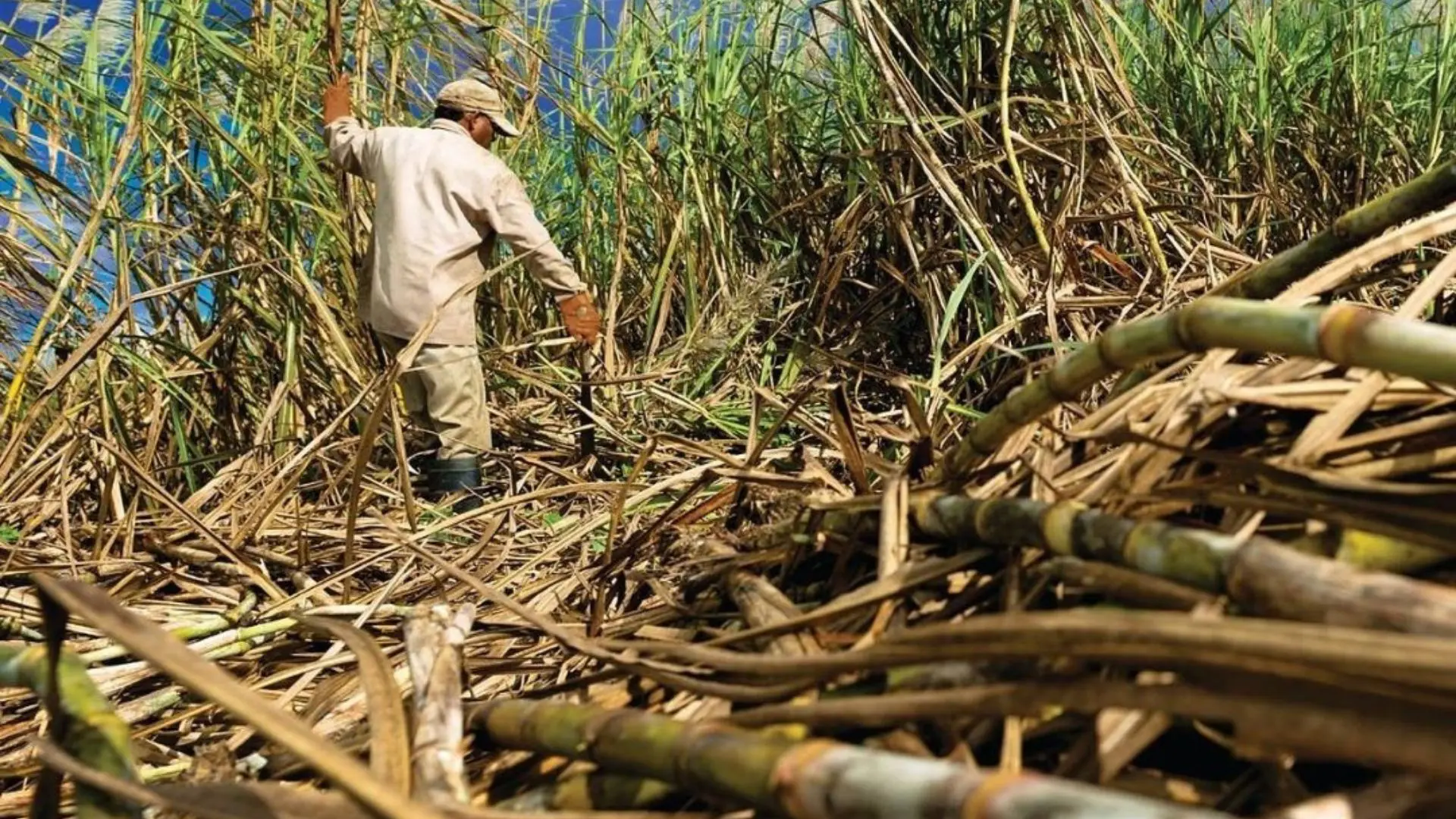
South Africa’s sugarcane industry could unlock a new revenue stream through bioethanol production as government considers changes to fuel-blending requirements to expand the country’s biofuel market.
The proposed changes could create opportunities for sugarcane growers and millers to supply an alternative energy industry, moving beyond the traditional production of sugar.
Deputy Trade, Industry and Competition Minister Zuko Godlimpi said government is pursuing legislative amendments to support diversification into the bioethanol value chain, in coordination with the Department of Minerals and Petroleum.
Speaking to small-scale sugarcane growers in Mzinti, Mpumalanga, on 31 October, Godlimpi said adjustments to fuel-blending requirements could create new business opportunities for producers.
“An agreement with the Department of Minerals and Petroleum regarding blend requirements could create significant business opportunities for producers,” he said.
Bioethanol is a renewable fuel produced by fermenting agricultural materials containing sugar or starch. Sugarcane can be processed to produce ethanol, which is blended with petrol for use in vehicles.
The opportunity forms part of the second phase of the Sugarcane Value Chain Master Plan to 2030, adopted in April, which seeks to diversify the industry into products beyond conventional sugar, including bioethanol, sustainable aviation fuel and electricity generation.
Investment and production capacity
The expansion could require investment in processing infrastructure, including distilleries at existing sugar mills or new production facilities.
A report by Parliament’s Portfolio Committee on Trade, Industry and Competition on the South African Sugarcane Value Chain Master Plan identifies bioethanol as an opportunity to diversify the industry and create additional demand for sugarcane.
Citing studies by the South African Sugar Association (SASA), the report estimates that South Africa could produce up to 750 million litres of ethanol annually from sugar feedstocks while maintaining domestic sugar supplies.
The report’s section 5.2.3.1, titled Bioethanol, states that this production capacity could support an 8% petrol-blending ratio, based on annual national petrol consumption of approximately 9 billion litres. Which potentially generate about 21,000 jobs through the expansion of sugarcane cultivation.
The report estimated that establishing a 125-million-litre-per-year plant could require approximately R1.1 billion in capital investment under a brownfield development model, which involves expanding existing industrial facilities.
However, the commercial opportunity depends on creating a viable market and securing sufficient agricultural feedstock.
South Africa’s bioethanol industry has also faced investment and policy challenges. Industry reporting in May 2026 indicated that the country still lacked commercial-scale bioethanol production capacity, despite years of policy development.
Small-scale farmers could benefit
Increased demand from fuel producers could provide an additional market for their sugarcane crops and encourage investment in agricultural production.
Godlimpi said government was concerned about ensuring sufficient sugarcane supplies to meet potential bioethanol quotas without disrupting existing production.
“A primary concern remains guaranteeing sufficient feedstock (sugarcane) to meet potential bioethanol quotas without compromising existing supply,” he said.
He said milling capacity in areas such as Umfolozi and Zululand appeared sufficient, but consistent feedstock supplies remained a priority.
Godlimpi also highlighted the importance of developing smallholder farmers into medium-sized producers through models such as RCL’s community holding approach.
“Expanding smallholder farmers into medium-sized producers is essential to meeting future demand,” he said.
He added that improving competitiveness would require the industry to address production costs rather than depend on higher sugar prices.
“To improve competitiveness without relying on price increases, the sector must optimise energy costs and water resourcefulness,” he said.