




































A University of Mpumalanga (UMP) student is turning discarded plastic into a commercial product, with plans to grow his innovation into a manufacturing business, although limited equipment is restricting his production capacity.
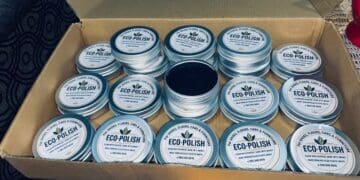
Sandile Mzimba, founder of EcoPolish, developed a multi-surface polish from plastic waste after identifying an opportunity to transform discarded materials into a marketable product.
The idea started in 2024 while he was in matric at Auroville High School, where he participated in an innovation initiative through the Eskom Expo. Despite having limited resources, he used research and his knowledge of chemistry to develop his prototype.
“We did not have resources at the time, but through research and applying the knowledge of chemistry, I managed to develop the prototype,” said Mzimba.
After enrolling at UMP, he received support from the SIFERI Centre for Entrepreneurship and Rapid Incubators, which helped him move beyond product development towards establishing a business.
The support included refining the prototype, improving its branding and developing his ability to pitch the business to potential partners and investors.
Early sales test the market
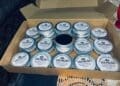
EcoPolish produces a black multi-surface polish that can be used on shoes, floors, cars and furniture. The product currently sells for R25 per unit, a price Mzimba introduced to test the market.
He recently produced approximately 160 units, selling about 120 and leaving around 40 in stock. At the current selling price, the units sold represent a potential gross sales value of R3,000, before production and other business costs.
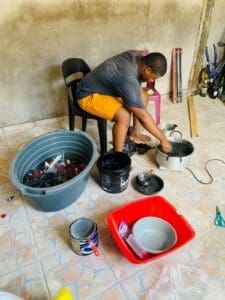
However, the business is still operating on a small scale, with production taking place manually from home. The lack of manufacturing machinery limits its ability to increase output and fulfil larger orders.
Mzimba said access to machinery, product testing and market opportunities would be critical to expanding production and reaching more customers.
“We need strategic partnerships with organisations, businesses and institutions that share our vision. They can support us with machinery, manufacturing infrastructure, product testing and market access,” he said.
The entrepreneur has received recognition through the SDSN South Africa Youth Innovation Challenge and the Absa X Young African Entrepreneurship Institute 2025 Innovation Challenge.
He said funding received through these opportunities helped improve the product, packaging and branding.
Expanding beyond product sales
Mzimba’s ambitions extend beyond selling polish. He wants to establish a business model that creates economic opportunities throughout the plastic waste value chain, including collection, sorting, processing, manufacturing and distribution.
Although EcoPolish previously employed two students, the business currently operates without a formal team as he focuses on strengthening its operations. His family continues to assist with production and other activities.
He is also exploring partnerships with schools, where the product could be supplied in bulk for resale, creating an additional income opportunity for participating institutions.
Individual consumers, retailers and small businesses are among the markets EcoPolish hopes to reach as it expands its distribution network.
Customers can currently contact the business through Linkedin https://www.linkedin.com/company/eco-polish/ , WhatsApp, Instagram and TikTok, while a dedicated website is being developed.
Mzimba’s long-term ambition is to establish EcoPolish as a South African manufacturing brand capable of producing and distributing its products at scale. “Beyond the product itself, I want to build a business model that demonstrates how waste can become an economic resource, create employment and contribute meaningfully to environmental sustainability,” he said.