














































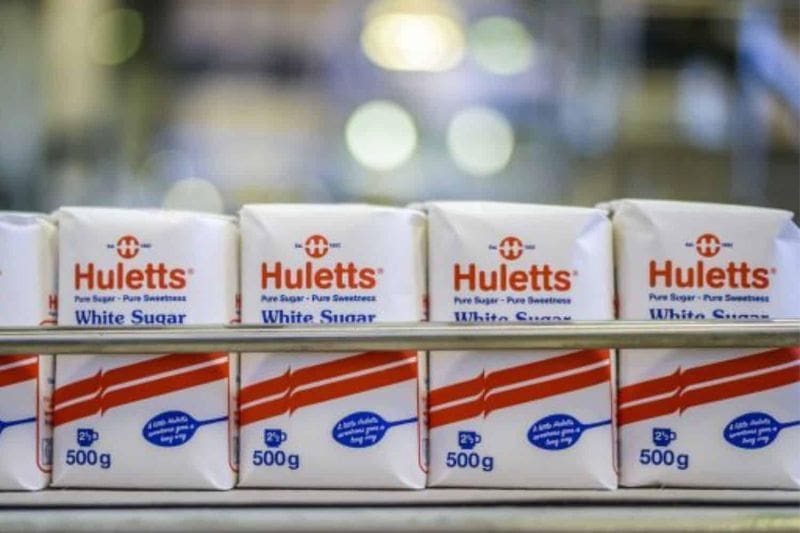
The court application to place Tongaat Hulett Limited under provisional liquidation has sent shockwaves through KwaZulu-Natal’s sugar industry, with growers warning that a total shutdown would devastate the provincial economy.
The South African Sugar Association (SASA) expressed concern about the move by Business Rescue Practitioners to seek provisional liquidation of Tongaat Hulett’s South African operations.
SASA said it would continue to monitor developments and work closely with industry leadership and stakeholders, describing the situation as a serious development for the broader sugar value chain. Tongaat Hulett is one of six milling companies in the country, accounting for 27 percent of national sugar production.
Growers warn of economic fallout.
For growers in the company’s catchment areas, the implications are immediate. Nkosinathi Msweli, a sugarcane farmer from Kearsney near Stanger, said a full shutdown would have ripple effects far beyond the farms.
“If there is a total shutdown for Tongaat, it will be the worst thing that will affect not only the farmers. The whole value chain will suffer, and the whole KZN economy will collapse as most towns are boosted by cane growers,” he said.
Msweli added that he had recently met with Vision Group chairperson Robert Gumede, who provided assurances about the company’s current status.
“He assured us that this is a funded liquidation. Mill workers have already been paid for February, and off-crop maintenance is commencing as scheduled. Growers will be paid at the end of March,” said Msweli.
He urged fellow growers to remain calm during the uncertainty.
“The government has to come into the party urgently, as they have promised to look into the matter. We growers need to remain calm during this time, as jumping ship to another miller will cause more strain in resolving the Tongaat matter, and this will also affect the whole industry if it is not resolved,” he told Vutivi Business News.
Small-scale growers are highly exposed
According to the South African Farmers Development Association (SAFDA), approximately 60 percent of the industry’s 25,653 small-scale growers operate within Tongaat Hulett’s catchment areas, supplying cane to the Maidstone, Amatikulu, and Felixton mills.
In the current season alone, these growers delivered more than one million tons of sugarcane, generating around R845 million in revenue. Any interruption in milling or delays in payment would place thousands of growers, farm workers, and rural enterprises under severe financial strain.
“Small-scale growers are highly exposed,” said Nondumiso Cebekhulu, Media and Communications Practitioner at SAFDA. “Any disruption in milling operations or payment delays would place thousands of growers, farm workers, households, and rural enterprises under severe financial strain.”
Cebekhulu noted that milling operations are continuing and workers are being paid, meaning there is no operational crisis at present. However, she cautioned that the risk would escalate if no sustainable solution is secured and the liquidation process proceeds further.
The government stresses economic stability.
The KwaZulu-Natal Department of Economic Development, Tourism and Environmental Affairs (EDTEA) has emphasised the need to safeguard the province’s sugar industry and rural livelihoods.
MEC for EDTEA, Rev. Musa Zondi, highlighted the sector’s economic importance: “KwaZulu-Natal is largely an agricultural province with a diversified industrial base, and the sugar industry is deeply embedded in our rural economy. Tongaat Hulett has long been the backbone of this sector. Any disruption of this scale carries serious consequences for workers, small-scale growers, and households across our districts,” said Zondi.
He added that he would brief the KwaZulu-Natal Premier, Thamsanqa Ntuli, to ensure a coordinated provincial response and engage with Minister Parks Tau to explore solutions to safeguard jobs, stabilise the industry, and support affected communities.
EDTEA called on all parties to engage constructively and expressed hope that solutions can still be found that prioritise economic continuity, investor confidence, and the welfare of workers and growers.
Calls for urgent intervention
SAFDA confirmed that urgent engagements are underway with the government, industry stakeholders, and financial institutions. The discussions aim to prevent the provisional liquidation from progressing, avoid mill closures, and protect growers from income disruption.
The association is calling for immediate, coordinated intervention to safeguard small-scale growers’ livelihoods and rural economies, and to explore sustainable funding or restructuring solutions.
SAFDA has warned that the consequences of inaction would be devastating not only for growers and farm workers, but also for rural communities and the broader economy.
Looking ahead
The coming weeks will be critical for South Africa’s sugar industry. Much will depend on the outcome of the court process and the success of engagements between industry bodies, financiers, and government.
If a restructuring or funding solution is secured, the sector could stabilise and avoid major disruptions to production and rural livelihoods. However, failure to reach a sustainable resolution would not only threaten Tongaat Hulett’s operations but could also place pressure on other milling companies to absorb displaced growers, straining logistics and regional economies.
For KwaZulu-Natal, where sugarcane underpins several rural towns, the outcome will determine whether the sector weathers another crisis or enters a prolonged period of instability.
Related content: