
















































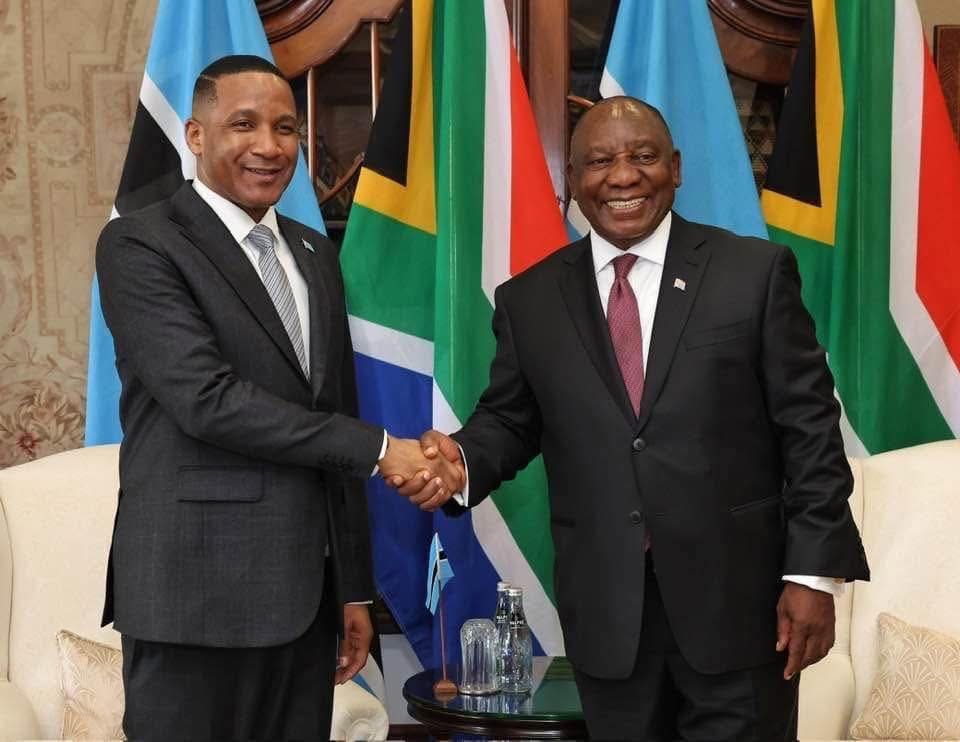
Small businesses and emerging entrepreneurs could benefit from stronger cross-border trade opportunities between South Africa and Botswana as government leaders push for faster implementation of regional economic agreements aimed at boosting investment, industrialisation and job creation.
Speaking at the South Africa-Botswana Business Forum in Gaborone on Wednesday, Deputy Minister of Trade, Industry and Competition Alexandra Abrahams called for a more implementation-driven approach to economic cooperation between the two neighbouring countries.
The forum formed part of the 6th Session of the South Africa-Botswana Bi-National Commission and brought together government officials, investors, business leaders and entrepreneurs from both countries.
Abrahams said governments must focus on creating an environment where businesses are able to operate, expand and create jobs.
“As it is the private sector, businesses, that provide the dignity of jobs for our people, it is our role as government to create a predictable and enabling environment for you to operate and thrive,” she said.
She highlighted opportunities for collaboration in sectors including agriculture, logistics, infrastructure development and mineral beneficiation, saying South Africa and Botswana have complementary economic strengths that could support regional industrial growth.
For small businesses, improved trade cooperation could open opportunities in supply chains linked to transport, agriculture, manufacturing and cross-border services.
Abrahams pointed to diamond beneficiation as one area where regional partnerships could help move Southern Africa beyond the export of raw materials and toward higher-value industrial activity.
“Instead of competing against one another, we identify each of our strengths in the value chain and form partnerships for our mutual benefit,” she said.
She said the success of regional agreements now depends on implementation.
“To achieve this, we must move beyond dialogue and start with implementation and action. That is what businesses and citizens expect,” she said.
Abrahams added that the African Continental Free Trade Area could expand opportunities for women-owned enterprises, youth entrepreneurs and emerging firms.
“The decisions made in this room today will create jobs, build industries, and position both countries as serious players in the continental economy being shaped by the African Continental Free Trade Area,” she said.
Ramaphosa calls for stronger trade and faster integration
President Cyril Ramaphosa said the outcomes of the Bi-National Commission should translate into concrete economic results.
He said the agreements reached between the two countries represent the “practical and legal expression” of their partnership, but stressed that implementation must now take priority.
“We have identified priority areas to scale up economic partnership between our countries. Levels of bilateral trade and investment must be substantially increased,” he said.
He also emphasised improving border efficiency and transport corridors, including one-stop border posts, to reduce delays affecting trade.
The President said the partnership should deepen regional integration within the Southern African Development Community (SADC) and strengthen participation in the African Continental Free Trade Area (AfCFTA).
He described the engagement as reinforcing a “strong and evolving” bilateral relationship between South Africa and Botswana, with a commitment to continued implementation of agreed projects.