











































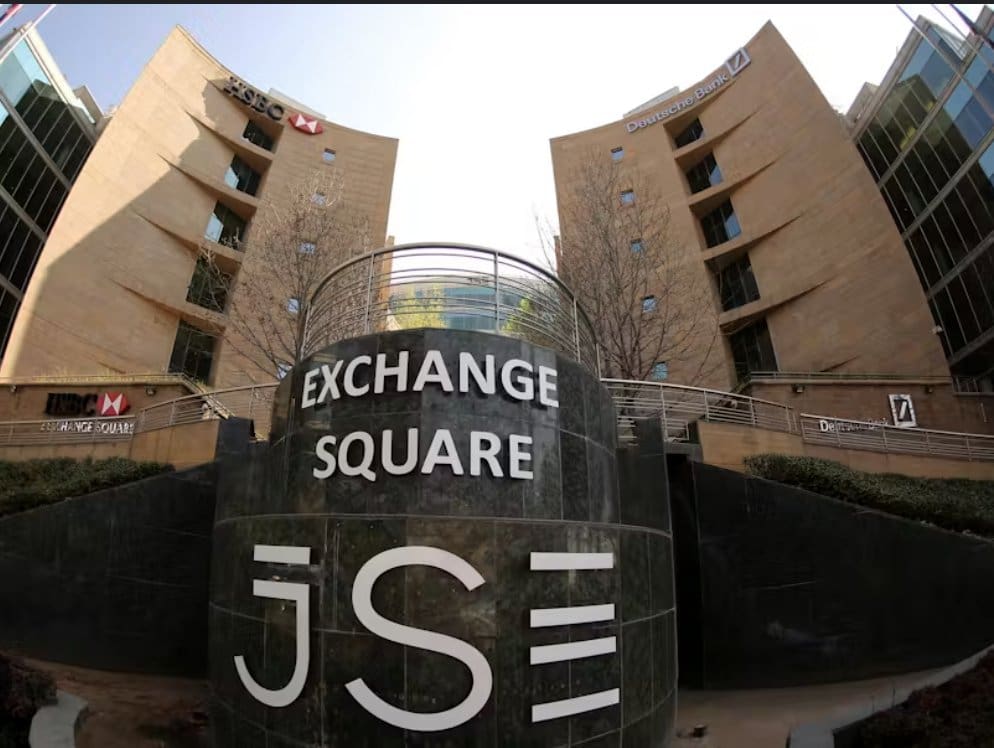
Economist Duma Gqubule says the numbers on black ownership in JSE-listed companies don’t add up — and it’s all about how they’re measured. Different studies have used different methods, leading to wildly contrasting results and fresh confusion over how much transformation has really taken place in South Africa’s stock market.
“Some of the figures used to explain transformation results are not the same when compared to real market values,” Gqubule said.
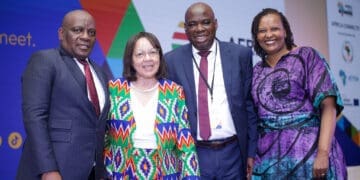
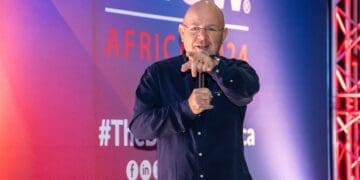
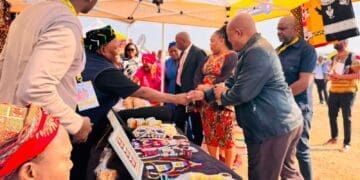
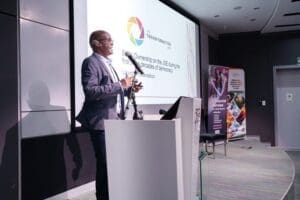
Business leaders, economists and development finance institutions met in Johannesburg this week to discuss South Africa’s economic transformation system and whether it is working as expected.
The meetings included the launch of economist Duma Gqubule’s research on black ownership on the Johannesburg Stock Exchange (JSE), a Black Management Forum (BMF) discussion on Broad-Based Black Economic Empowerment (B-BBEE), and a National Empowerment Fund (NEF) engagement on access to funding and infrastructure investment.
The main focus was on how transformation is measured, whether current systems reflect the real state of the economy, and how access to money and ownership can be improved.
Different figures raise questions about JSE black ownership
Gqubule said South Africa may need to move away from “scorecard” systems because they do not always show the real picture of ownership in the economy.
Earlier research shared at the event showed very different estimates. Some studies say black ownership is about 1% in major listed companies, while others show higher numbers.
Gqubule referred to a 2015 IntelliDex report which estimated black ownership at $209 billion in the top 100 companies, equal to about 1.9% of the JSE’s total market value.
He also mentioned a 2017 London School of Economics study done for the National Treasury, which found black ownership at about 1% in the top 25 listed companies.
However, he warned that later estimates, including a 2022 B-BBEE Commission figure of 39%, are worrying.
If applied to the JSE’s estimated market value of $20.5 trillion, it would mean black-owned assets could be about $8 trillion, a figure he said is not realistic. He said this shows serious problems in how ownership is measured.
B-BBEE still important but needs changes
The Black Management Forum (BMF) argued that B-BBEE is still important in addressing inequality, but it must be improved over time.
BMF president Mpho Solomon Motsei said the policy has helped open parts of the economy, but ownership and access to funding are still uneven.
“Like any policy framework, B-BBEE is imperfect and needs to be improved to make it more effective and accountable,” Motsei said.
He warned that removing the policy without a proper alternative would make inequality worse and reduce economic inclusion.
BMF Managing Director Monde Ndlovu added that South Africa should focus on direct ownership, not indirect ownership structures.
“There is no proxy for ownership. We want direct ownership, direct control and direct decision-making,” Ndlovu said.
He said transformation should be measured by real results, not only scorecards and that if ownership is indirect, it becomes difficult to hold companies accountable for transformation.
NEF highlights funding and infrastructure challenges
The National Empowerment Fund (NEF) said lack of access to funding is still one of the biggest problems facing black businesses.
NEF CEO Mziwabantu Dayimani said the economy still does not reflect the country’s population.
“We voted in 1994 and celebrated political freedom, but the economy still does not reflect the demographics of the country,” he said.
He said more must be done to help black entrepreneurs get access to money and business opportunities.
NEF executive Joel Mphela added that infrastructure projects also struggle because funding is risky and limited.
He said blended finance, a mix of grants, cheaper loans, and private investment, can reduce risk and help more projects succeed.
Mphela said this approach can increase investment, create jobs and support long-term economic growth.