












































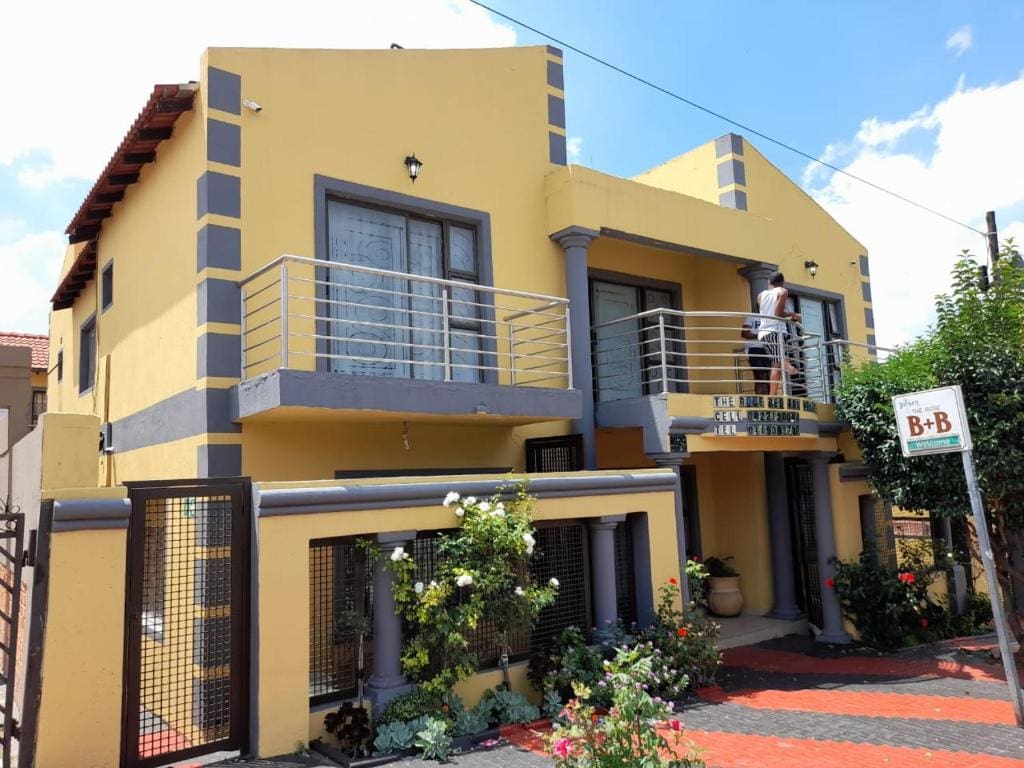
Township entrepreneurs are turning to property stokvels and private investment groups to finance guesthouses, short-term rentals, and boutique hospitality ventures after years of struggling to access traditional bank funding.
In underserved nodes like Soweto, Khayelitsha, and Umlazi, localised investment vehicles like the National Property Stockvel Network are helping micro-entrepreneurs pool collective community capital to construct premium assets without carrying high-interest bank debt.
Recent sector metrics from AirROI indicate that Soweto functions as a highly competitive micro-market where median properties generate roughly R11,000 per month.
However, best-in-class listings utilising premium features achieve over R36,000 monthly, making the business case for high-end upgrades clear. To command these premium nightly rates, properties rely heavily on digital booking aggregators, automated check-in systems, and smart remote access locks that require continuous power.
“We have the digital demand and the premium properties, but municipal instability is our biggest operational drag,” stated Soweto hospitality operator and local property developer Luzuko Koti.
He explained that entrepreneurs are forced to channel capital away from basic expansion into expensive off-grid redundancies to protect the customer experience.
“To keep our automated booking systems and smart locks running during local outages, we have to bundle every tech upgrade with solar systems and independent water tanks,” Koti added.
Township entrepreneurs have historically struggled to access commercial property finance due to limited collateral, valuation challenges, and stricter lending requirements. To breach this gap, private development syndicates pool monthly contributions from members to fund construction costs.
For a typical R1,2 million property conversion, such as transforming a residential structure into a secure boutique stay, a property stokvel can provide the necessary upfront capital liquidity that traditional mortgage lenders routinely decline to clear.
Hard data backs the premium rental market
This community-capital model is finding a natural partner in the expanding local tourism market. According to independent economic modelling conducted by Genesis Analytics, short-term digital rental platforms contributed over R23.5 billion to South Africa’s gross domestic product and supported nearly 50,000 economy-wide jobs in a single annual cycle.
“The headline of the report is that Airbnb is bringing some real benefit to the South African economy,” stated Velma Corcoran, the regional lead for Middle East and Africa at Airbnb.
She highlighted that the platform has doubled its contribution to gross domestic product, serving as an essential economic cushion.
“Fifty per cent of hosts say they are hosting to afford the rising cost of living.”
Smart tech meets infrastructure constraints
While alternative financing successfully unlocks local real estate assets, township hospitality innovators face unique operational hurdles on the ground.
Other local operators emphasise that safety and perception management are vital components of building a sustainable township hospitality brand.
“Media has portrayed Soweto as unstable and dangerous, but we actually have a can-do attitude,” stated Busi Msimango, a prominent home and experience host based in Soweto.
She explained that local operators work together to ensure guests experience true township warmth in a protected environment.
“We have to find ways to get by. We find solace in community and in being hospitable and making sure everyone around us is safe,” Msimango added.
If alternative funding mechanisms continue to grow alongside increasing tourism demand, property stokvels could play a larger role in helping township entrepreneurs participate in South Africa’s expanding short-term rental economy.