













































Ahead of the 4 November local government elections, Limpopo entrepreneurs say reliable service delivery and business-friendly municipalities matter more than campaign promises.
Municipalities are responsible for providing many of the services businesses rely on every day, including roads, water, waste management, local economic development programmes and business support initiatives.
When these services fail, entrepreneurs often face higher operating costs, disruptions and fewer opportunities to grow. Municipal performance is not only a governance issue but a daily business reality.
According to the Department of Small Business Development, South Africa had about 2.69 million small, medium and micro enterprises (SMMEs) in 2023, supporting nearly 11.9 million jobs, highlighting the sector’s importance to economic growth and employment.
Service delivery shapes business confidence
Abby Lehola, secretary of the Makhado Business Forum, said the biggest challenge facing SMMEs is the lack of meaningful support, particularly from municipal Local Economic Development (LED) departments.
“The biggest challenge facing SMMEs is lack of support for SMMEs, particularly from the LED department. The lack of information sharing and unequal distribution of business opportunities to all SMMEs across the board,” he said.
Lehola said poor service delivery also discourages investment and weakens confidence in local economies.
“If waste is not collected on time, sewerage is left unattended for a long time but only gets dealt with during election times, what happens afterwards? Does this mean it will only be given attention again in the next elections?” he asked.
He said municipalities should prioritise township and village economies by ensuring local entrepreneurs have equal access to business opportunities, information and development programmes.
“The LED must share information with business. Nothing must be done for us without us,” he said, calling for the establishment of an SMME “war room” where entrepreneurs and municipalities can jointly address business challenges.
Infrastructure and competition remain key concerns
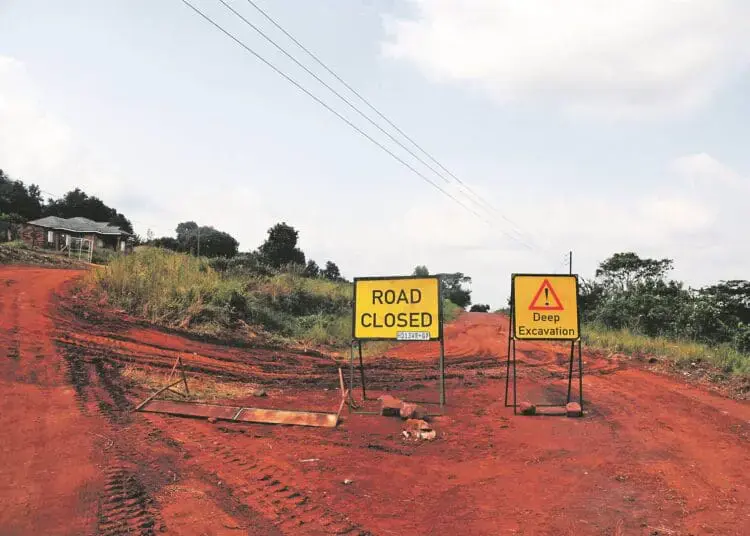
“When roads are damaged, we spend more money on repairs and fuel. Suppliers struggle to reach us and customers also struggle to access services. Better roads would benefit transport operators, businesses and the entire community,” said Lutendo Mandinda, a taxi operator from Dzwerani village.
Mandinda said poor road infrastructure remains one of the biggest challenges affecting his business. He said the roads in his village have long been gravel and riddled with potholes, with heavy flooding earlier this year worsening the situation.
He said improved road infrastructure would reduce business costs and make it easier for suppliers and customers to access the area.
Earlier this year, Vutivi Business News reported on the challenges facing informal traders in Limpopo, including the case of a spaza shop owner who was forced to close one of his two businesses after repeated thefts.
Nephalama Thendo, a supermarket owner from Mashau, said she has registered to vote because she hopes municipalities will become more responsive to the needs of SMEs.
“I’ve registered to vote because I’m hoping for change. SMEs need municipalities that listen to us and create an environment where we can grow,” she said.
Thendo said local entrepreneurs face stiff competition in the informal retail sector, adding that many South African-owned businesses struggle to compete with foreign-owned spaza shops in their communities.
She said excessive red tape also continues to hinder business growth.
“When small businesses spend more time dealing with paperwork than growing their businesses, productivity suffers.”
Thendo called on municipalities to simplify business processes, improve communication and ensure SMEs have fair access to business opportunities and support programmes.
Government outlines priorities
Responding to concerns raised by entrepreneurs, Limpopo Premier Phophi Ramathuba said improving roads, water infrastructure, job creation and municipal service delivery remain key priorities for the provincial government.
“All what the people of Limpopo want is water, roads and jobs,” Ramathuba said.
She acknowledged the province’s infrastructure backlog, particularly after recent floods, but said 21 road projects have been appointed, with a further 17 expected to begin during the current financial year.
Supporting the provincial government’s position, Leo Gama, spokesperson for the Limpopo Economic Development Agency (LEDA), said municipalities play a critical role in creating an enabling environment for SMMEs.
He said LEDA continues to work with municipalities through initiatives such as Special Economic Zones to attract investment and create opportunities for local businesses despite infrastructure and budget constraints.