















































Small businesses and informal traders were among the most affected by yesterday nationwide marches demanding for the government to take stronger action against illegal immigrants.
Spaza shops, street vendors and informal service providers closed early while others remained shut for most of the day due to safety concerns and reduced customer movement.
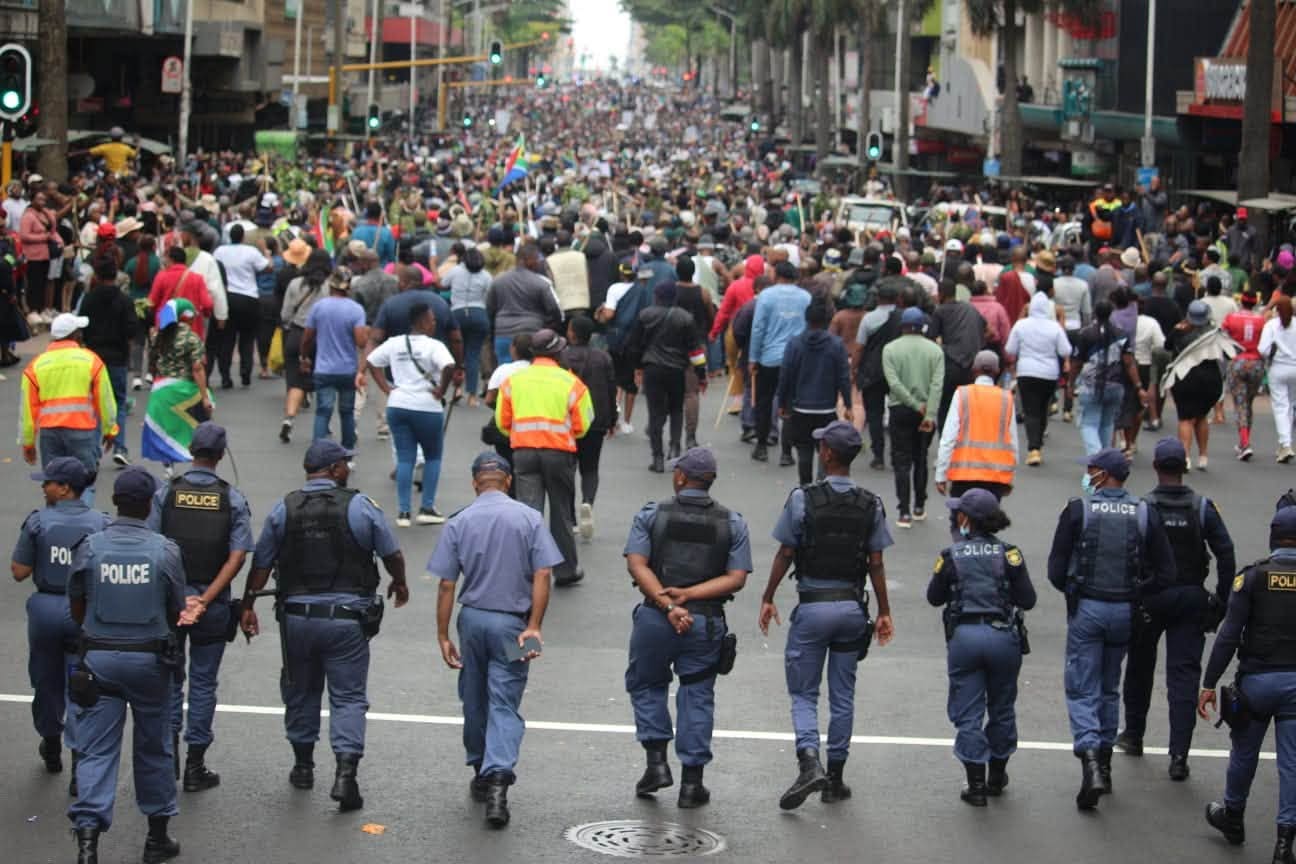
Thousands of people marched across South Africa in coordinated demonstrations calling for stronger action on undocumented migration, with protests spreading across several provinces and briefly disrupting informal trade and small businesses.
The marches were reported in areas including Pretoria, Durban, Cape Town’s Greenmarket Square, KuGompo, Elim, Nquthu and Mangaung, where residents gathered in different numbers throughout the day.
Police said the demonstrations were mostly peaceful nationwide, although isolated incidents of looting and attempted looting were recorded in some places.
SAPS confirmed deployments across the country to monitor protests, protect businesses and maintain order.
While the marches reflected concerns about unemployment, migration and local economic pressure, they also highlighted the vulnerability of small businesses during large public demonstrations.
In Sunnyside, Quagga and Thembisa, traders reported sharply reduced sales as foot traffic dropped.
E-hailing drivers also said demand declined significantly during peak protest hours.
In Cape Town, Greenmarket Square usually filled with traders including immigrant-run stalls was largely empty during the demonstrations.
In Elim, Limpopo, most formal businesses remained open, but several immigrant-owned spaza shops closed as a precaution.
Similar slowdowns were reported in KuGompo, Nquthu and Mangaung, where trading activity was reduced in affected areas.
Koketso Moloi, a spaza shop owner in Philip Nel, Tshwane, said she supports efforts to enforce fair business practices, even though the protests affected daily sales.
“I own a spaza shop myself, but business is very slow because there are many foreign-owned spaza shops in this area,” she said.
Moloi added that while the day’s disruptions affected income, many traders believe the issue is part of a bigger conversation about fair competition and economic survival.
“We are protesting because we want better for our people. Even if we lose sales today, we are hoping for a better future for our children and fair opportunities for local businesses,” she said.
SMEs remain the most exposed during protests because they rely heavily on daily cash flow and informal trading activity.
Government outlines migration system and coordination efforts
Last night the Government Communications and Information System (GCIS) said in a statement that the government reaffirmed its unwavering commitment to implementing the Comprehensive Approach for Migration Management as announced by President Cyril Ramaphosa.
“This five-point plan focuses on strengthening the enforcement of immigration and labour laws, securing our borders, improving migration management systems, closing legislative and policy gaps, and working with countries across the continent to address migration challenges in a coordinated manner,” the GCIS said in a statement.
Minister of Justice and Constitutional Development Mmamoloko Kubayi said the government acknowledges concerns raised during the marches, including migration management, unemployment and pressure on township economies.
Kubayi said government’s migration system includes asylum processing, deportation procedures and voluntary repatriation, all conducted through legal frameworks and coordinated with embassies.
She referred to operations at the Musina processing centre, saying it remains fully operational with officials deployed full-time to manage arrivals.
Kubayi said government is working with municipalities, departments and stakeholders to coordinate transport and processing systems.
She added that buses used in Musina include both government and non-government transport, with some arranged by embassies and organisations assisting voluntary repatriation.
She also clarified that domestic buses are not permitted to cross borders due to permit restrictions and are only used to transport people to processing centres.
Public concerns and economic pressure
Acting Minister of Police Firoz Cachalia said SAPS responded to isolated incidents of looting and attempted looting, while most demonstrations remained peaceful.
He said police remain deployed across provinces to protect businesses, infrastructure and public safety.
“We urge citizens to exercise their constitutional rights responsibly. Criminal acts during protests will be dealt with according to the law,” Cachalia said.
Community activist Xolani Khumalo said the marches reflect deep frustration over unemployment and lack of access to economic opportunities.
“What communities want is jobs, fair access to business opportunities and a better local economy,” he said.
The protests come at a time when South Africa continues to face high unemployment, with more than four in every ten working-age adults who want work unable to find employment.
Public sentiment data shows many citizens believe migration contributes to job competition, adding pressure to government policy discussions.
Despite temporary disruption in trading activity across several provinces, authorities said the demonstrations remained largely peaceful and reflected ongoing national discussions about jobs, migration and economic inclusion.