

































Small businesses could play a bigger role in South Africa’s manufacturing economy as government positions Special Economic Zones (SEZs) at the centre of its long-term industrialisation strategy.
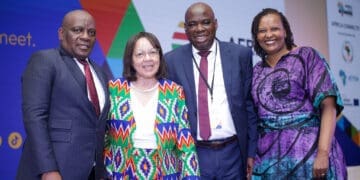
Speaking at the second International Special Economic Zones Conference in Durban recently, Deputy President Paul Mashatile said SEZs are critical to re-industrialising the economy and ensuring that local businesses and communities benefit from investment.
South Africa has 13 designated SEZs across the country. Coega and East London in the Eastern Cape; OR Tambo and the Tshwane Automotive SEZ in Gauteng; Musina-Makhado in Limpopo; Nkomazi in Mpumalanga; Maluti-a-Phofung in the Free State; Dube TradePort and Richards Bay in KwaZulu-Natal; Atlantis and Saldanha Bay in the Western Cape; Bojanala in the North West; and Namakwa in the Northern Cape.
According to Mashatile, these zones have attracted more than R32 billion in investment over the past eight years and created approximately 30,000 jobs.
He said the government wants the zones to become more than investment destinations by creating opportunities for SMMEs to participate in industrial value chains as suppliers, service providers and manufacturers.
“A young person in Mthatha should be able to envision a career path that starts at a TVET college, progresses to an SMME supplier, moves to a factory floor in the East London Industrial Development Zone and ultimately leads to an export market,” Mashatile said.
He said each SEZ should build on the competitive strengths of its region, whether in automotive manufacturing, agro-processing, logistics, mining, renewable energy, green technology or mineral beneficiation, while supporting local economic development through the District Development Model.
This could create opportunities for small businesses in component manufacturing, engineering services, packaging, transport and logistics, maintenance, construction, catering, cleaning services and other support industries linked to SEZ operations.
Mashatile said South Africa cannot compete with more than 5,000 SEZs around the world by offering the lowest costs alone.
“We cannot compete simply by being the cheapest. We compete by being the most strategic, the most reliable, and the most inclusive,” he said.