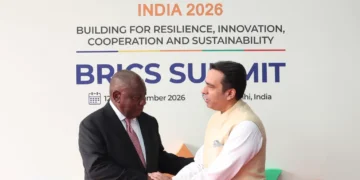






































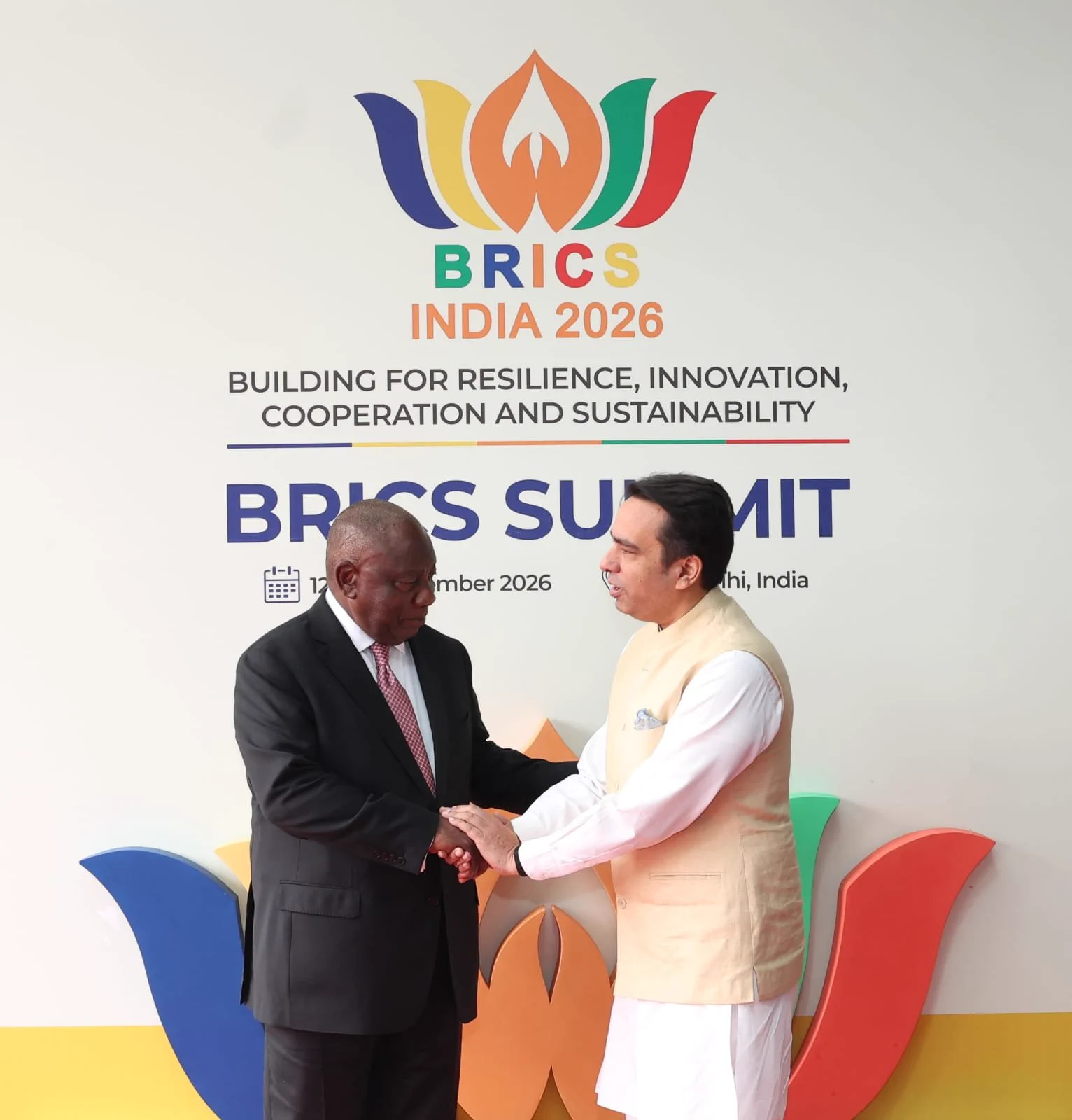
The 18th BRICS Summit in New Delhi has placed trade integration and resilient supply chains high on the bloc’s economic agenda.
However, for South African SMEs, the bigger question is whether stronger intra-BRICS trade can help local businesses capture more value from the country’s raw materials.
The BRICS Business Forum, held ahead of the leaders’ summit, focused on connecting businesses across member countries and turning complementary capabilities into commercial partnerships.
For South African manufacturers, processors and suppliers, India’s industrial market presents potential opportunities in areas including electric-vehicle (EV) battery supply chains, specialised manufacturing and processed minerals.
This is particularly relevant to South Africa’s manganese industry, which accounts for an estimated 70% of the world’s manganese resources. More than 80% of SA’s manganese ore has historically been exported for beneficiation outside the country.
The gap between having the resource and capturing more of the value created from it is at the centre of South Africa’s broader beneficiation challenge.
Speaking during the BRICS Business Forum Leaders’ Dialogue, President Cyril Ramaphosa said developing economies had historically remained concentrated at the lower-value end of global supply chains.
“For too long, developing economies have participated in global value chains mainly as suppliers of raw commodities,” Ramaphosa said. “We cannot accept a future where Africa supplies the minerals on which the next generation of industries depends, while value addition and manufacturing take place elsewhere.”
From manganese exports to battery value chains
The transition towards electric vehicles is creating new industrial demand for battery materials, making manganese increasingly relevant beyond its traditional applications.
For South Africa, the opportunity is not simply to export more manganese to India. It is to develop greater processing and manufacturing capacity domestically so that local businesses can participate further up the battery value chain before products reach international markets.
Research by Trade & Industrial Policy Strategies found that more than 80% of South Africa’s manganese ore was being exported and beneficiated outside the country, highlighting the extent of the value-addition gap.
India’s push to develop its electric-vehicle and battery manufacturing industries creates a potential market for processed critical minerals and battery-related inputs. However, the opportunity should not be confused with an established large-scale South Africa-India trade flow in battery components.
For SMEs, the potential lies in developing the capacity to supply higher-value processed materials and specialised inputs into international manufacturing networks.
That would align directly with Ramaphosa’s call for BRICS countries to deepen productive relationships rather than simply increase trade volumes. He said investment should be directed towards manufacturing and beneficiation, industrial technologies, energy systems, infrastructure and logistics.
Smaller suppliers face barriers
Turning that opportunity into actual contracts, however, requires more than access to a large market. Smaller manufacturers face challenges including non-tariff measures, regulatory requirements, customs processes, logistics costs and technical standards. These can raise the cost of entering foreign markets and make it harder for smaller suppliers to compete internationally.
Indian External Affairs Minister Subrahmanyam Jaishankar told the BRICS Business Forum that the priority should be to make it easier for businesses across member countries to find partners, access markets and connect supply networks.
“The common thread is how to make it easier for businesses in our countries to find more partners, access more markets, connect supply networks and convert complementarities into viable commercial partnerships,” Jaishankar said.
Jaishankar also highlighted the need for dependable logistics, predictable business environments, diversified commercial relationships and transparent trade and investment.
For smaller South African manufacturers, these issues can determine whether an international market remains a theoretical opportunity or becomes a viable revenue source.
Turning BRICS commitments into contracts
Indian Commerce and Industry Minister Piyush Goyal also called for deeper and more diversified supply chains between BRICS economies.
“We believe trade amongst partners should be deep, resilient, with diversified supply chains,” Goyal said. “We should open our markets for each other’s products, including for raw materials and critical minerals.”
Goyal further called for BRICS countries to reduce non-tariff barriers, simplify regulatory procedures and facilitate faster clearance of consignments, measures that could reduce some of the friction faced by smaller exporters.
lazola@vutivibusiness.co.za