










































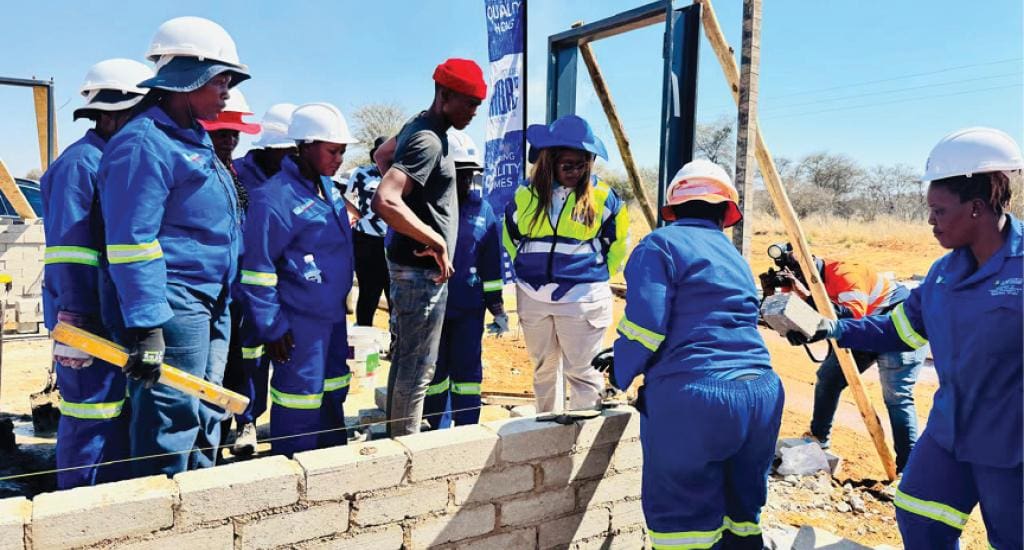
The Department of Public Works, Roads and Transport increased its share of contracts awarded to women-owned construction businesses from 45% in the 2025/26 financial year to 57% in the first quarter of 2026/27.
Similarly, the Department of Cooperative Governance, Human Settlements and Traditional Affairs (COGHSTA) raised its share from 32% to 42%.
Although these figures pointed to progress in opening the provincial construction sector to women, emerging contractors say contract access was only the initial step toward building sustainable enterprises.
Ongoing challenges surrounding subcontracting, delayed payments, rate reductions, and insufficient monitoring continued to limit the tangible benefits of government procurement.
Navigating entry into construction
For Zanele Lambo, a former professional nurse, military veteran, and disabled entrepreneur, establishing her business, Sphiwosonke Academy, represented a new chapter.
Lambo had operated in business since 2009, initially working in HIV/AIDS awareness and career guidance before transitioning into business skills training. She subsequently expanded into the construction industry after identifying local commercial opportunities.
Lambo secured a subcontract to plaster four classrooms for a school construction project in Savannah City. However, securing the award did not guarantee financial sustainability.
Small, Medium, and Micro Enterprises (SMMEs)—particularly those led by women, youth, people with disabilities, and military veterans—were expected to benefit from a designated portion of the primary contractor’s overall budget. Despite these provisions, Lambo noted that her appointment occurred toward the end of the construction timeline.
Although the plastering portion carried an overall allocation of nearly R1.4 million split among three companies, financial discrepancies quickly emerged. The rate initially communicated for the plastering work was R120 per square metre.
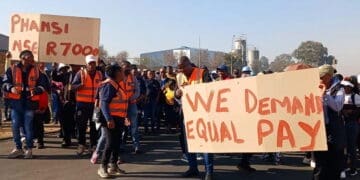
Once operations commenced, however, the main contractor reduced the offered rate to R40 per square metre. Lambo reported that the company introduced new terms after work had already begun. This drastic reduction placed severe pressure on her capacity to cover operational costs and maintain fair compensation for site workers.
She estimated that the 100-day project timeline forced her to consider drastically reduced daily rates for plasterers and general labourers.
Subcontracting hurdles and systemic challenges
The obstacles confronting emerging contractors extended beyond individual contract valuations. Thembela Nkosi, a construction health and safety consultant, highlighted that subcontractors frequently suffered when main contractors delayed or failed to issue payments.
Nkosi advocated for stronger government monitoring and evaluation of infrastructure projects to ensure SMMEs actively benefited from procurement targets.
She observed that government entities awarded tenders to primary contractors without verifying whether fair rates were passed down to subcontractors. To resolve these systemic barriers, Nkosi called for direct government engagement and dedicated workshops for women in construction, urging authorities to allocate direct contracts rather than forcing businesses to rely on intermediary subcontracting arrangements.