











































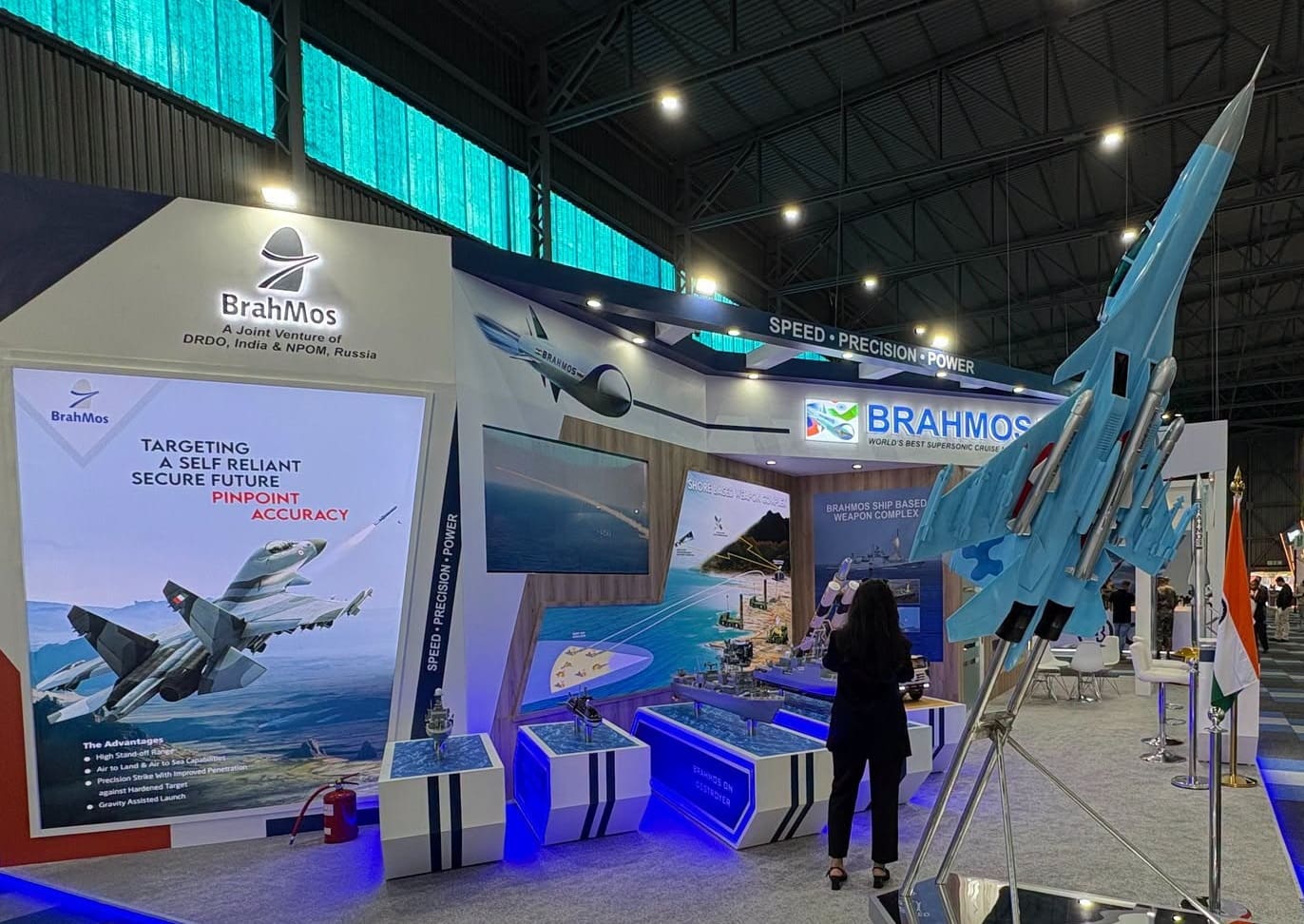
South Africa’s small and medium enterprises are being positioned as an important part of the country’s drive to build a stronger aerospace and defence industry.
With the government highlighting the role of local businesses in developing technologies, jobs are being created and international markets.
At Africa Aerospace and Defence (AAD) 2026, the focus on smaller businesses comes as 10 SMMEs selected from 119 applicants are exhibiting through an Armscor enterprise and supplier development programme.
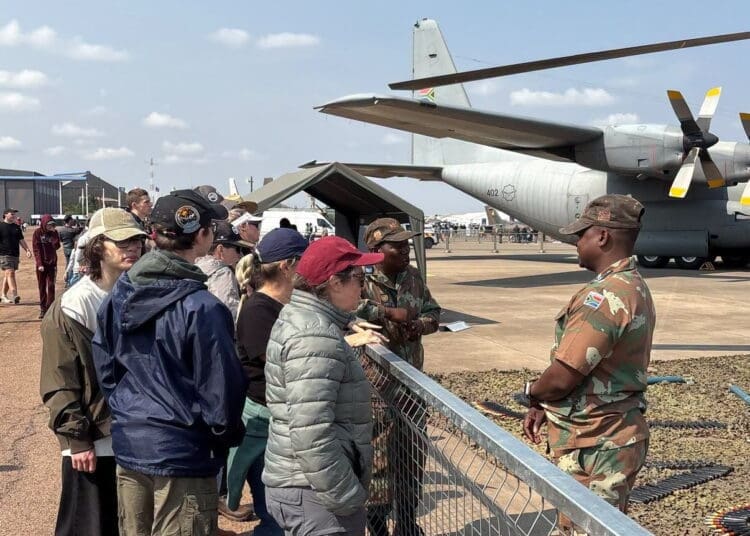
The businesses are using the exhibition at Air Force Base Waterkloof to showcase their capabilities and engage potential customers, investors and industry partners.
Speaking at the 20th anniversary of the Aerospace Industry Support Initiative (AISI) at AAD2026, Industry and Competition Minister Parks Tau said South Africa made a deliberate decision two decades ago to build its own aerospace and defence capabilities rather than remain dependent on imported technology.
He said the results of that decision can now be seen in the companies, engineers and entrepreneurs participating in the sector.
“I can tell you the choice that was made is paying off,” Tau said.
Supporting smaller businesses
The AISI, implemented through the Council for Scientific and Industrial Research (CSIR), was established to strengthen South Africa’s aerospace and defence industrial capabilities and help companies become globally competitive.
Tau said over the past decade, AISI has supported 142 small and medium enterprises, helped create and sustain more than 1,200 jobs, enabled the development of 148 new technologies and products, and helped companies secure 49 international certifications and standards.
The interventions had generated approximately R1.8 billion in local industrial output and more than R2.2 billion in direct exports, according to Tau.
“Behind every one of these figures is a company,” he said.
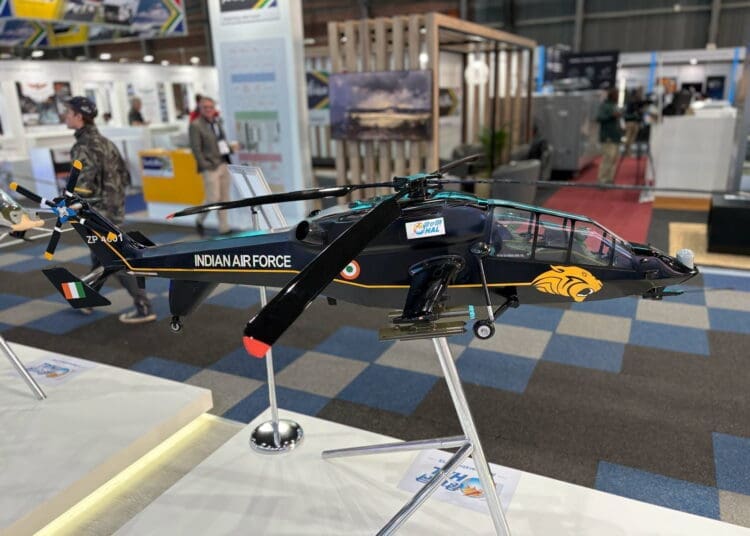
Tau highlighted several businesses that have benefited from the programme, including companies that had developed aerospace components, satellite technology, flight-certified systems and unmanned vehicles.
One example he cited was Yunker, which he said had received AISI and CSIR support for testing and certification and was now exporting its products to Europe.
Another company, NewSpace Systems, had developed space-qualified global navigation satellite system antenna technology for low Earth orbit applications, he said.
Tau also pointed to Aerosud, Denel and other companies as examples of South Africa’s existing engineering and manufacturing capabilities.
From exhibition space to market access
The opportunities for smaller businesses are also visible on the AAD2026 exhibition floor.
One of the SMMEs participating through the Armscor programme is Sparcx, which is showcasing technology from US-based Axon Enterprise for public safety, security and defence applications.
An Axon executive responsible for Africa told Vutivi Business that Sparcx acts as the company’s local distributor in South Africa.
The technology being demonstrated includes body-worn cameras, in-car cameras, drones, less-lethal weapons and a connected command centre.
“If we start with the weapons, the weapons will have a sensor on it, and when it’s activated, they will activate our Axon camera,” the executive said.
The system can then send a signal to a command centre, allowing authorised personnel to monitor what is happening through connected cameras.
The company is also working with South African entities, including Denel, around a drone that can be integrated into the Axon system.
“Basically, that drone will connect to our system to provide the support. So that’s a South African drone,” the executive said.
The company is also engaging with Armscor, SITA and the CSIR, he said.
“We are putting efforts and involving a lot of our engineering and staff to bring this to South Africa. It’s a high priority for us,” he said.
Building local capability
The partnerships reflect one of the central questions facing South Africa’s aerospace and defence industry: how local companies can participate in increasingly complex technology value chains.
Tau said the global economic and technology environment was changing rapidly, with artificial intelligence, cybersecurity and strategic technologies reshaping aerospace and defence.
“Countries that fail to innovate become dependent on those that do,” he said. “South Africa cannot afford to do nothing.”
He said government wanted to strengthen partnerships between government, industry, academia and science councils while supporting emerging businesses until they became globally competitive companies.
Defence and Military Veterans Minister Angie Motshekga has similarly linked AAD2026 to efforts to strengthen the local defence industry.
She said the exhibition should build on the outcomes of the Defence Industry Lekgotla and bring government, industry, universities and research institutions closer together.