













































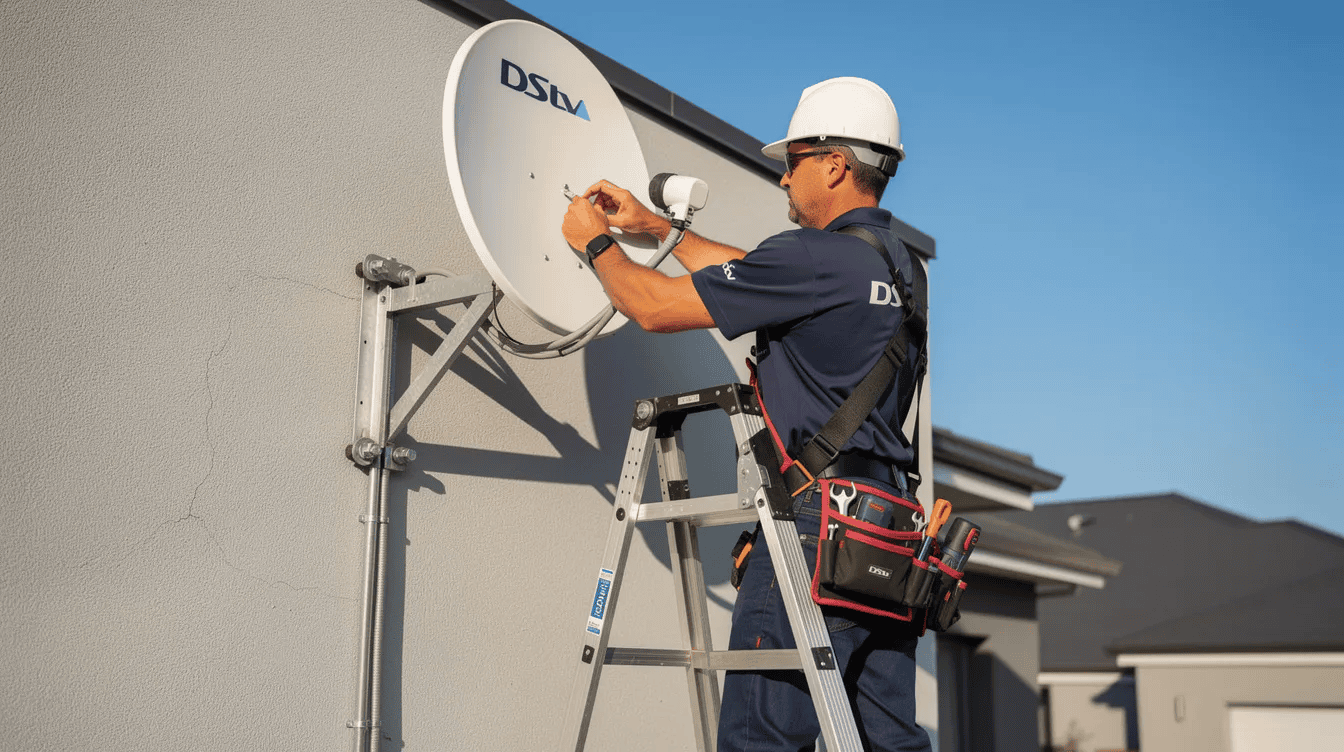
The rise of streaming and Smart TVs is changing the work traditionally done by satellite dish installers, as households gain more ways to watch television without a satellite dish and decoder.
For years, installation businesses and independent technicians have made money from fitting satellite dishes, connecting decoders, running cables and fixing signal problems. But as customers move towards internet-based viewing, some of that work can now be done without a physical installation.
MultiChoice said the South African market is being affected by an “ongoing global shift in video consumption towards cheaper streaming services, social media video and free or pirated video services.”
The company’s latest financial results show the change in viewing habits. Active DStv subscribers in South Africa fell by 8% to 7 million in the year ended March 2025, while DStv Stream subscribers increased by 38% and streaming revenue rose by 48%.
The shift is also being supported by the growth of Smart TVs.
In June 2026, Canal+ and Samsung announced that the DStv Stream app would come pre-installed on new Samsung Smart TVs across 18 African countries, including South Africa.
David Mignot, CEO of Canal+ Africa and MultiChoice Group, said: “As viewing habits continue to evolve rapidly across the continent, strengthening the accessibility and discoverability of our content offer on connected devices is key.”
For an installer, the change is more than a shift in how people watch television. It could affect the type of work available and how businesses built around DStv installations make money.
Who still installs DStv?
The traditional installation business has not disappeared.
MultiChoice reported that decoder sales increased by 17% during the 2025 financial year, showing that customers are still choosing satellite television. DStv also continues to use accredited installers to provide installation services.
The growing use of streaming, however, means installers are operating in a market with two different types of customers.
A household choosing satellite DStv still needs a decoder, dish, cables and an installer. A customer using DStv Stream on a compatible Smart TV can access the service through an internet connection without needing the same satellite equipment.
That difference matters to installation businesses because a customer choosing streaming may no longer need a technician to install a new dish or connect a decoder.
The change does not mean every installer is losing business. Customers who continue using satellite television still need new installations, repairs, dish realignment and signal-related services.
But the growth of streaming raises questions about how much of an installer’s future income can continue coming from traditional satellite work.
A changing business model
The issue is not simply whether DStv still needs installers. It is whether installation businesses can continue relying mainly on dishes and decoders as customers gain more ways to access the service.
A business that has traditionally depended on satellite installations may have to deal with a customer base that increasingly uses Smart TVs and internet-connected devices.
This could change the services customers ask technicians to provide, with work potentially extending into Smart TV setup, Wi-Fi connections, home networking and other connected-home services.
That does not mean abandoning satellite work. Traditional DStv remains part of the market, particularly among households that prefer satellite television or have limited access to reliable internet.
The market is instead becoming more divided between satellite and streaming.
For installers, the challenge is understanding where customer demand is moving and whether their businesses can adapt as television becomes less dependent on physical satellite equipment.
The traditional DStv installation business is therefore still operating, but the technology behind the customer’s television is changing, and that could eventually change the work available to the businesses built around it.