














































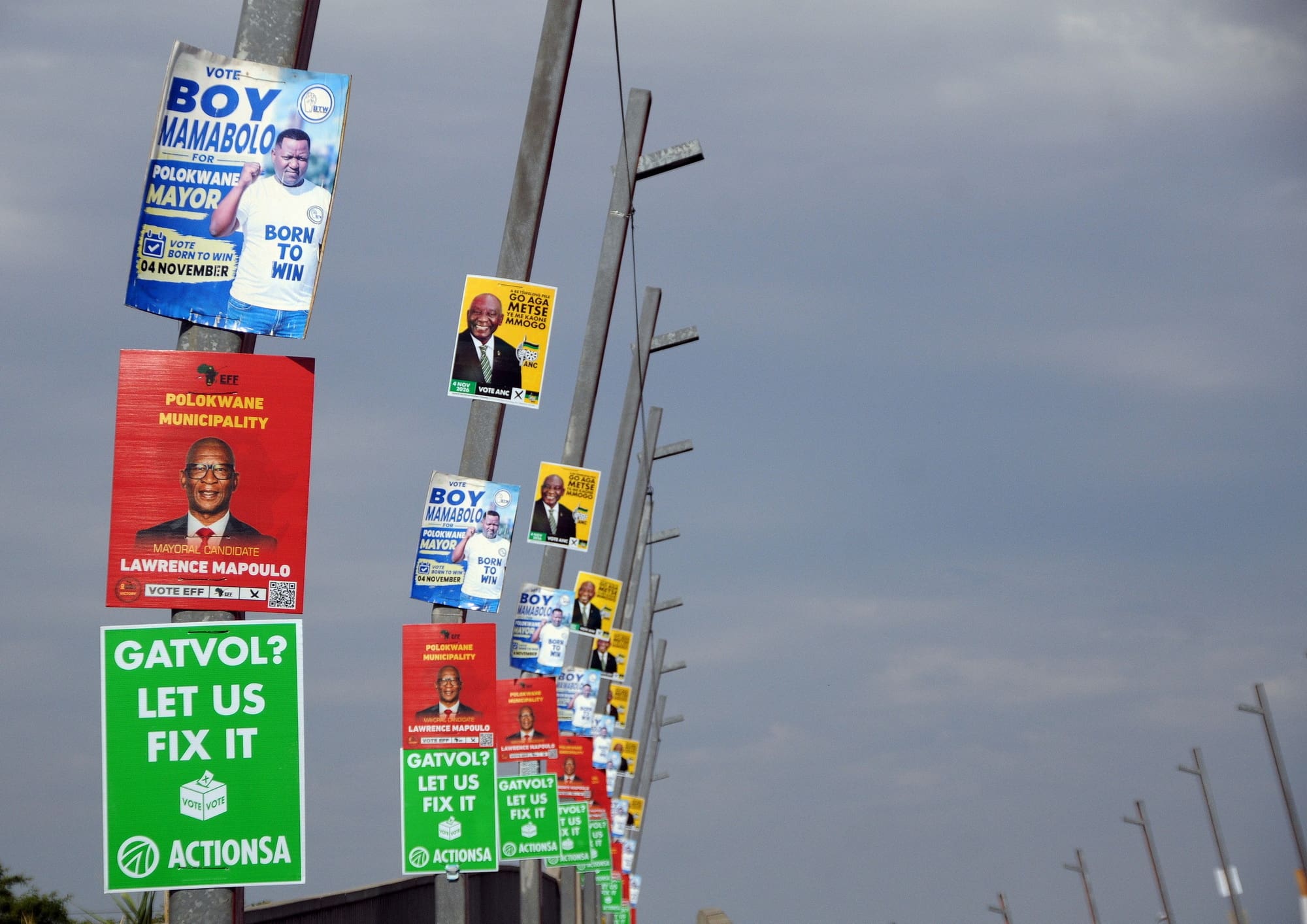
The political economy of an election extends beyond political parties competing for votes. Behind the campaign posters on street corners and the ballot papers voters use are businesses supplying the materials needed to make the electoral process possible.
Ahead of the 4 November 2026 local government elections, the Electoral Commission of South Africa (IEC) relied on printing, packaging and manufacturing businesses to produce and distribute election materials.
The IEC’s ballot-printing tender, IEC/LG-04/2026, covered approximately 75.4 million ballot papers, with production required within 21 days and delivery to nine provincial warehouses.
The procurement extended beyond ballot papers to include envelopes, ballot boxes, voting templates, stationery, directional signs and security supplies.
The businesses printing the vote
Lebone Litho Printers was awarded a contract worth approximately R17.1 million for ballot-paper printing. It also secured contracts worth about R3.2 million for special voting envelopes and R3.1 million for printing and distributing the voters’ roll.
Shereno Printers received R9.2 million for cardboard ballot boxes and R2.3 million for universal ballot templates, while Merpak Envelopes was awarded approximately R5.6 million for marked ballot envelopes.
Ballot production faced additional pressure after a Constitutional Court ruling affected candidate lists in several municipalities.
The IEC confirmed that 28 million ballots already printed and delivered were no longer suitable, prompting the reprinting of 33 million ballots. The reprinting was completed on 1 November, with packaging and distribution still being finalised the following day.
IEC deputy chief electoral officer Masego Sheburi had warned about the financial implications of changes to candidate lists after printing had begun.
“If we were to include the ANC candidates in those municipalities, those printed ballots are sunken costs that can never be recovered, we have printed them,” Sheburi said.
IEC general manager for electoral matters James Aphane highlighted the security requirements surrounding ballot production.
“The ballot paper is a high-security feature. As you know, it’s almost equal to a bank note,” he said.
Equipment, stationery and logistics
Other contractors supplied the equipment required at voting stations. Corruseal Corrugated KZN received contracts for cardboard voting compartments, home-visit ballot boxes, cardboard tables and chairs, and directional signs.
Thuthukani Paper was awarded R11.5 million for election stationery packs, while ABSTO Industrial Supplies received approximately R5.3 million for tamper-evident sealing tape.
Logistics companies also formed part of the supply chain.DSV Road was awarded R7.77 million for warehousing and distributing election security materials, covering storage, packaging and road transportation of approximately 62,000 parcels.
Political parties create another market
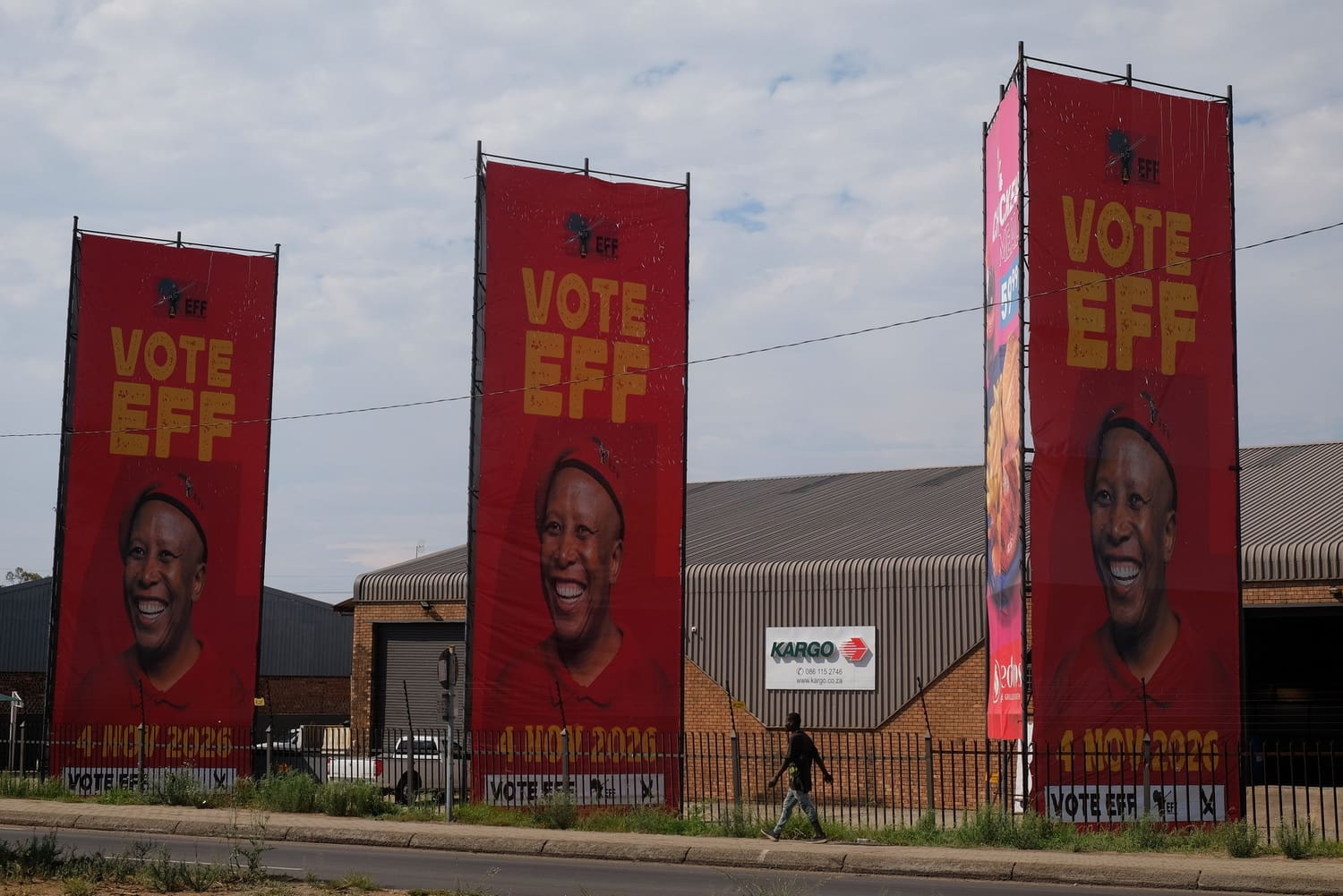
Outside IEC procurement, political parties generated demand for banners, posters, flags and branded clothing.
Ezulweni Investments produced 30,000 PVC banners for the ANC’s 2019 campaign. Rise Mzansi’s third-quarter 2023/24 party-funding disclosure recorded an in-kind contribution of R559,958 from Kairos Communication for printing and nationwide poster distribution.
KIG Group has also advertised ANC-branded T-shirts and DA campaign bibs, although this does not establish that it held contracts for the 2026 elections.
Pressure on local manufacturers
The election-related contracts come as South Africa’s printing industry faces pressure from imports, changing demand and rising operating costs.
Jermaine Naicker, managing director of Printing SA, has highlighted declining employment in the printing, packaging and signage industries. He called for “the establishment of an industry master plan to protect the local industry, inject spending into it, and close the skills gap”.
Ayabonga Cawe, chief commissioner of the International Trade Administration Commission, has also raised concerns about cheaper imports and shifting demand for paper.
Although ballot production had to take place in South Africa, not all inputs were locally manufactured, raising questions about how much election spending benefits domestic manufacturers.