









































South Africa’s informal sector shed 98,000 jobs in the third quarter of 2026, raising concerns about employment conditions for smaller enterprises as the country’s unemployment rate increased to 33.7%.
Statistics South Africa’s (Stats SA) latest Quarterly Labour Force Survey, released on 10 November, shows that the number of employed people increased by 101,000 to 16.8 million, while unemployment increased by 97,000 to 8.6 million.
The formal sector added 268,000 jobs during the quarter, but the informal sector lost 98,000. Employment in private households also declined by 68,000.
Dr Lerato Ntuli, an economist at Anchor Capital, said the global economic environment was adding to existing pressures on South African businesses.
“The global oil shock has exacerbated existing pressures on businesses and households, adding to operating costs and weighing on an already strained domestic economy,” she said in her November labour-market assessment.
Access to finance remains a challenge
Access to funding is another issue affecting smaller businesses’ ability to grow and employ people.
The Organisation for Economic Co-operation and Development’s (OECD) Financing SMEs and Entrepreneurs 2026 report estimates South Africa’s micro, small and medium-sized enterprise financing gap at R350 billion.
The report also found that only 8% of MSMEs had an existing business loan in the 2025 data.
Professor Waldo Krugell, an economist at North-West University, said smaller enterprises often depend on personal finances rather than formal business lending.
“Particularly, microenterprises are often financed through informal channels, such as the founder’s own savings, a personal loan, or loans from family members,” he said.
He said moving into formal financing was difficult because lenders required businesses to demonstrate cash-flow visibility, tax compliance, forecasting accuracy and debt-servicing capacity.
Agriculture among the affected sectors
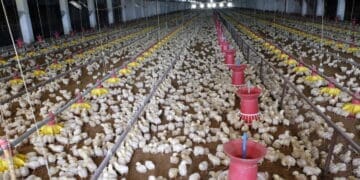
The employment decline was not limited to informal businesses. Agriculture lost 34,000 jobs between the second and third quarters, while construction shed 8,000.
Wandile Sihlobo, chief economist at the Agricultural Business Chamber of South Africa (Agbiz), said the agricultural sector was facing several challenges despite maintaining employment above its historical average.
“We are in a challenging space,” he said, pointing to rising input costs, foot-and-mouth disease and the threat of an El Niño drought.
Sihlobo said agricultural employment stood at 911,000, compared with a long-term average of approximately 800,000.
He also identified rising fuel and fertiliser costs as pressures facing farmers.
The agricultural employment decline has implications for smaller farming operations and businesses supplying the sector, including agricultural input suppliers, transport operators and food processors.
Infrastructure affects business investment
Professor Jannie Rossouw of Wits Business School attributed the unemployment increase to sluggish economic growth, saying the economy was not expanding quickly enough to absorb more workers.
Speaking in an interview on 11 November, Rossouw said municipalities needed to improve basic services to create conditions that would encourage businesses to invest.
“We need functioning municipalities. We need municipalities that can deliver basic services like clean water, uninterrupted electricity, streets without potholes, and working robots,” he said.
He added that an investment-friendly local environment would support employment creation.
Meanwhile, the formal sector recorded employment gains in finance, manufacturing and mining, which added 111,000, 33,000 and 31,000 jobs respectively during the quarter.
The figures show that employment growth remains uneven across the economy, with smaller businesses and the informal sector continuing to face challenges.