














































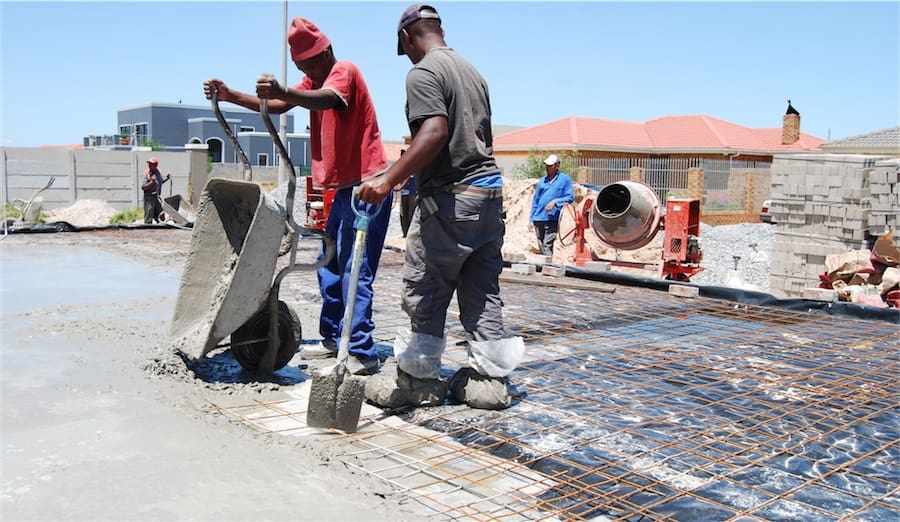
Small construction businesses are calling for regulations that protect workers without placing pressure on contractors. Industry leaders say compliance should be made more practical and affordable for smaller firms already operating in a difficult trading environment.
According to the Building Industry Bargaining Council (BIBC) Cape of Good Hope, the real question is not whether regulation should exist, but how it can remain practical, balanced and effective in supporting both economic sustainability and worker protection.
Danie Hattingh, spokesperson for business at the BIBC, highlighted the distinction between inefficient bureaucracy and appropriate regulation.
“In a labour-intensive industry such as construction, those principles are essential for long-term sustainability,” said Hattingh.
The discourse comes as South Africa’s construction sector continues to face rising costs and sluggish growth. While Hattingh acknowledged the compliance challenges for smaller businesses, he cautioned regulation as a barrier to growth.
“There are practical reforms that can ease pressure on low-risk businesses without weakening the protections that workers rely on,” he said.
“Reducing unnecessary administrative burdens should not mean removing safeguards around fair wages, worker safety or basic employment standards.”
Compliance challenges for small contractors
Construction entrepreneur Shadrack Muthambi, director of Limpopo-based Muthambi Construction, said compliance can be demanding for small contractors, particularly when projects are delayed and cash flow becomes constrained.
“Many small contractors want to comply with labour and safety regulations, but the administrative costs can be difficult to manage,” Muthambi told Vutivi Business News.
“At the same time, regulation is important because it creates a level playing field and protects reputable businesses from being undercut by companies that ignore the rules.”
He added that greater support for small contractors, including streamlined compliance processes and training programmes, could help businesses remain competitive without compromising worker protections.
Protecting workers and industry standards
The sector remains one of South Africa’s largest employers, offering entry-level jobs and pathways into skilled trades, but it continues to face challenges such as labour exploitation, informal employment, and unsafe working conditions.
According to Hattingh, these problems often emerge when businesses attempt to reduce costs through unregulated labour practices.
“The pressure on businesses is real,” he said. “However, exploitation cannot become the solution to economic challenges.”
A growing concern is the use of undocumented and vulnerable workers through informal labour networks and labour-only subcontracting. This was recently highlighted during a joint operation by the Department of Home Affairs and the Border Management Authority at a residential development, where most workers on site were found to be foreign nationals.
Hattingh stressed that the concern is not nationality, but the employment conditions.
“The problem arises when vulnerability becomes a business model,” he said. “Underpaid workers are unprotected and easily replaceable, creating unsustainable labour market.”
Industry observers say informal employment practices can lead to poor workmanship and higher safety risks, with costs falling on property owners, investors and insurers.
“There are no examples anywhere in the world where exploitation consistently produces high-quality outcomes,” Hattingh argued. Poor labour conditions and poor building standards often go hand in hand,” he said.