














































Thulamela Local Municipality, which falls under the Vhembe District in Limpopo, has heightened operations in the Thohoyandou central business district, focusing on illegal trading and alleged undocumented foreign nationals operating businesses.
This comes amid growing pressure from businesses and national movements calling for stricter immigration and by-law enforcement. The municipality says the compliance drive is aimed at enforcing by-laws, restoring order in the CBD, and ensuring that only legally compliant traders operate in designated business spaces.
Law enforcement teams have been conducting inspections, targeting traders operating without valid permits or outside designated areas.
During recent operations, officials reported cases involving foreign nationals found trading without proper documentation. In one instance, a trader was unable to produce authorisation to conduct business and was found in possession of a visitor’s permit.
Mayor Athongozwidivha Sarah Rambuda said enforcement is part of routine compliance work and not targeted.
“These operations are part of ensuring that everyone trading in the CBD complies with municipal by-laws and national regulations. We cannot allow unregulated trading to continue in public spaces,” she said.
The municipality reiterated that all traders must comply with immigration requirements, trading permits, and local by-laws before operating.
Formal traders raise concerns
Formal business owners in Thohoyandou have long raised concerns about overcrowding, unfair competition, and the impact of informal foreign trading on customer flow and safety in the CBD.
A formal trader in the area, Thanyani Tshifhango, said the situation has been affecting business conditions for years.
“We are not against people trying to make a living, but the streets are overcrowded. Customers struggle to move freely, and it affects all of us who are paying rent and municipal fees,” he said.
Municipal officials say enforcement is also aimed at protecting formal businesses that comply with regulatory requirements.
Trader relocation to designated areas
As part of the enforcement process, informal traders operating on pavements have been relocated to designated trading areas following engagements with municipal officials.
Some traders welcomed the intervention and committed to complying with municipal regulations.
They also confirmed plans to establish a committee and appoint a marshal to serve as a liaison between traders and the municipality to improve communication.
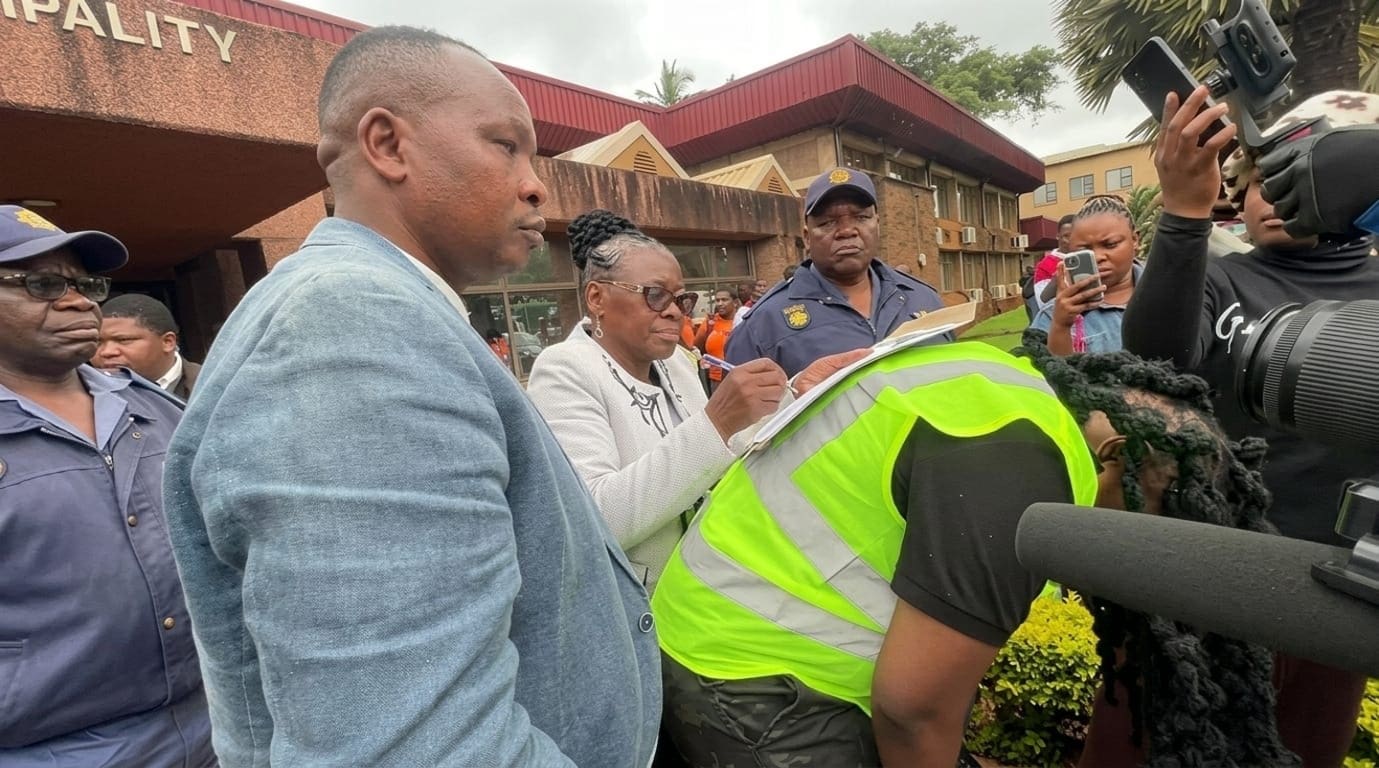
Community activism has also played a role in shaping the enforcement climate, with a march in Thohoyandou led by the community organisation Keep Vhembe Clean.
The march was led by its founder, Rita Nephawe, who said the movement’s concerns reflect broader national debates on illegal immigration.
She said the campaign aligns with similar movements across South Africa calling for stricter enforcement of by-laws.
Some stakeholders have also linked rising tensions in the CBD to increased informal trading activity and movement of foreign nationals into the area from other major South African cities, although these claims remain unverified.
The memorandum submitted during the march called for stronger enforcement action and improved coordination between the municipality, police, and labour authorities. The movement gave officials 14 days to respond.
“We have submitted our memorandum to all relevant authorities, and we are waiting for a response. The CBD was cleaner after the march, which shows what happens when enforcement is taken seriously,” Nephawe said.