












































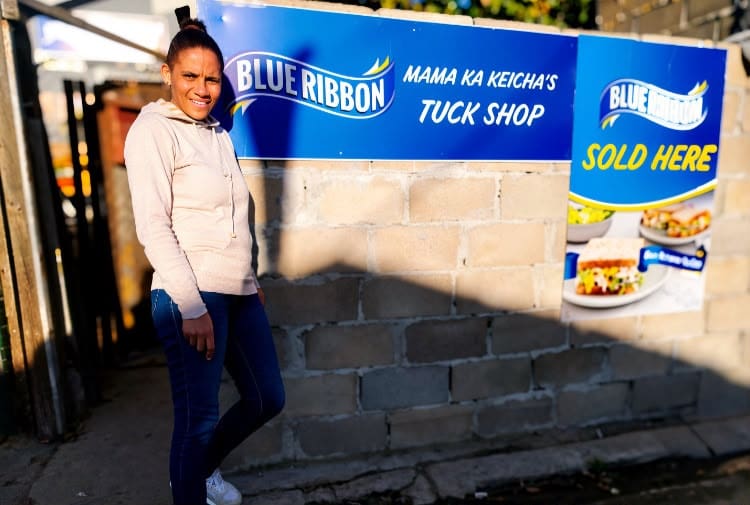
Leane Hendricks, a 38-year-old mother of three from Wallacedene in Kraaifontein, Cape Town, started a spaza shop in her community with just two bags of chips, sweets and lollipops.
She was driven by her dream of becoming her own boss and serving her community.
“I started a spaza shop because there is a big need for shops in our area. I wanted to keep my prices low because many foreign-owned shops overcharge people,” she said.
A bumpy start and lessons learnt
Hendricks’ foray into the sector wasn’t without glitches. She stocked what was labelled as maize meal, only to discover, to her horror, that the package contained bread flour instead, highlighting the ongoing challenge of counterfeit goods in the market.
“I decided I would only sell genuine products, so I travel to Giant Hyper to buy my stock,” she said.
As the business grew, Hendricks secured daily Blue Ribbon bread deliveries and now wakes up at 3:30 am to receive fresh stock before leaving for work. Her husband manages the shop during the day, making it a family-run business.
“I know the struggles our people face every day, so I’m trying to help them instead of overcharging them,” she said.
Hendricks also operates as a Shop2Shop trader, allowing customers to make card payments and access other services.
“One day, when I went to load my Shop2Shop machine, someone told me, ‘But you are South African. We are not used to South Africans owning Shop2Shop machines,’” she said.
https://vutivibusiness.co.za/business/shop2shop-and-pay-launch-sme-bill-payment-service/
“As far as I know, there are only two South Africans running spaza shops in my area. I don’t know if people are scared or if they are just used to supporting foreign-owned shops.”
Bongani Dlamini is one of a rising number of South Africans reclaiming the spaza shop market after recent anti-illegal immigration protests calling for undocumented foreign nationals to shut their businesses and leave the country.
“Our economy can improve because our money will continue circulating within our communities and within our country. We must encourage one another, be courageous and continue building businesses,” he said.
How to build a compliant and sustainable spaza shop
ASC Food Safety Consultants warns that entrepreneurs planning to operate a food business must first understand the legal requirements.
Both South African and foreign nationals must obtain a Certificate of Acceptability from their local municipality before operating a food business. Foreign nationals must also hold an immigration permit that allows them to trade in South Africa.
The certificate is issued only after a municipal inspection confirms compliance with Regulation R638 under the Foodstuffs Act, which covers hygiene, pest control, waste management, and food storage and handling.
Beyond compliance, industry experts say sustainable growth depends on sound business practices.
Many entrepreneurs start small, often from a garage, front room or container, before expanding as demand grows.
Instead of stocking everything at once, business owners should focus on fast-moving essentials such as bread, milk, maize meal, cooking oil, sugar, snacks, cool drinks, airtime, electricity vouchers and household goods.
Keeping accurate sales records, tracking customer demand, managing stock wisely, reinvesting profits and embracing digital payments can improve cash flow and support business growth.
https://www.spazashopfund.co.za/