













































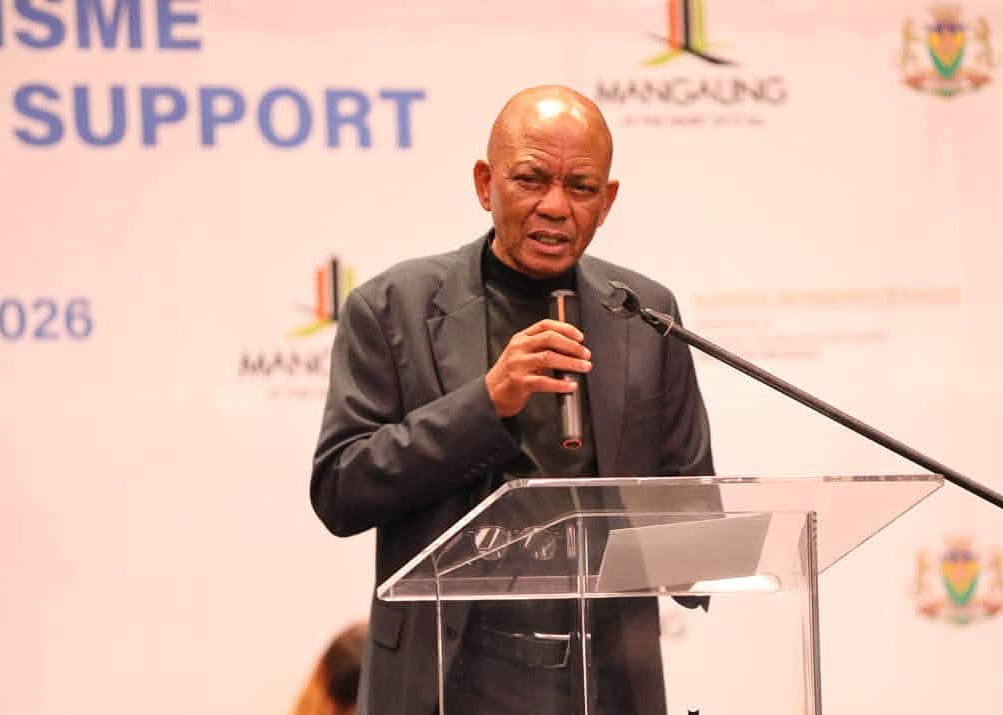
By Ntombizodwa Volwana
The Free State provincial government has launched a three-year programme to build a coordinated support system for micro, small, and medium enterprises (MSMEs).
Unveiled at the Free State MSME Development, Innovation and Investment Indaba at Mangaung City Hall in Bloemfontein, the initiative aims to move beyond fragmented interventions by connecting businesses to compliance assistance, funding, market access, and investment.
The launch coincides with the opening of the 2026/27 online business funding incentives programme, managed by the Department of Economic Development, Small Business Development, Tourism and Environmental Affairs (DESTEA).
According to DESTEA’s budget vote, targets for the financial year include supporting 1,200 MSMEs through non-financial interventions, providing structured mentorship for 50 businesses, and supporting six key value chains.
However, public comments surrounding the indaba highlighted practical hurdles that could affect whether small enterprises benefit. Attendees raised concerns over event registration, seating arrangements, and logistical support for entrepreneurs travelling from outside central Bloemfontein. These issues underscore a key challenge facing the new approach: ensuring support reaches emerging businesses beyond those already connected to government networks.
High demand for state support remains clear. During the previous funding cycle, DESTEA received 2,034 applications across two windows. While compliance, training, and digital adoption are central to the provincial strategy, local traders continue to face immediate cash-flow pressures and strict supplier accreditation requirements.
Speaking at the indaba, Mangaung Executive Mayor Gregory Nthatisi emphasised the role of local entrepreneurs in addressing unemployment and unlocking the township economy.
“We are faced with a high unemployment rate as a country, and I believe that in this room, we have the power to come up with solutions,” Nthatisi said, noting that compliance information is essential to help businesses thrive.
Ultimately, the success of the three-year programme will depend not just on workshop attendance or application numbers, but on whether local MSMEs can translate state support into sustainable operations, contracts, and long-term economic growth across the province’s townships and rural areas.