

















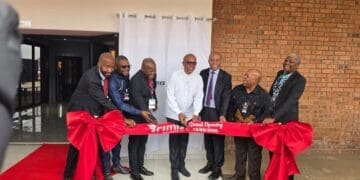






























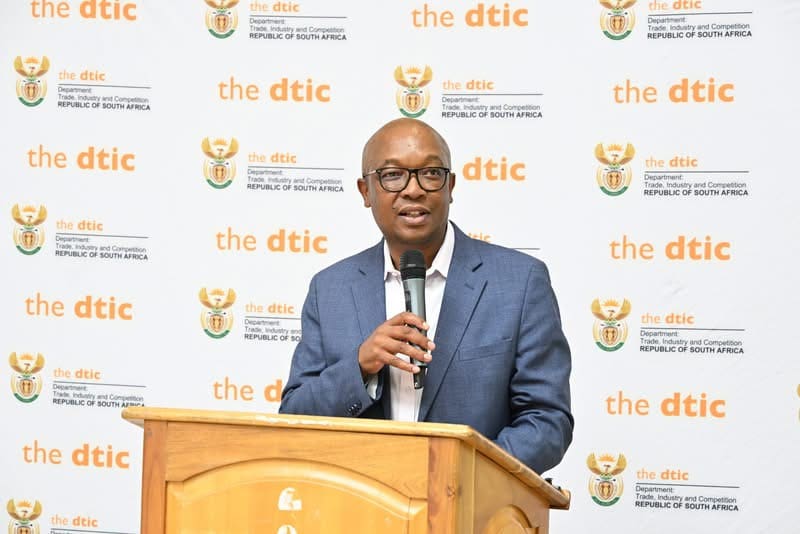
Trade, Industry and Competition Minister Parks Tau has called for clear deadlines for nine investors in the first phase of the Fetakgomo-Tubatse Special Economic Zone (SEZ) in Limpopo, as government works to turn investment commitments into construction, production and jobs.
Speaking at a ministerial engagement in Steelpoort on Tuesday, 20 October, Tau said each investor needs clear milestones covering approvals, construction and the start of production.
The call is part of an eight-point plan aimed at improving accountability, speeding up infrastructure delivery, and ensuring investments benefit local businesses.
The zone has an investment pipeline worth R52.6 billion, projected to support about 8,000 jobs in the short to medium term and potentially 20,000 over ten years.
“We must know what stands in their way, and we must remove it,” Tau said, referring to the nine investors.
SEZ programme attracts investment
Tau announced that 141 companies have committed to invest more than R548 billion across South Africa’s SEZs. These investments are expected to create more than 60,000 permanent jobs once operational.
The country’s SEZ programme hosts 234 private companies, with a combined investment value of more than R47 billion, according to figures presented by Tau. The programme has created 134,478 jobs, of which 32,904 are permanent.
Designated in May 2026, the Fetakgomo-Tubatse SEZ is positioned to support mineral processing, metal fabrication, manufacturing, renewable energy and related industrial services.
Located between Lion Ferrochrome and Samancor Ferrochrome, the zone is surrounded by major platinum and chrome operations.
“Our industrial policy is clear that we must process more of what we mine, and we must manufacture more of what we use. We must also export more of what we manufacture,” Tau said.
Infrastructure deadlines needed
Tau said electricity, water, roads, stormwater and sanitation projects needed a coordinated schedule with clear deadlines and responsible parties.
Infrastructure development has started on approximately 75 hectares. Site clearance is complete, perimeter fencing is 95% complete and guardhouse construction is about 65% complete.
However, electricity and water infrastructure still require further work. Eskom is conducting technical assessments for electricity infrastructure, while bulk water and water-treatment projects remain at the concept and viability stage. Detailed water designs are targeted for completion by January 2027.
Road and stormwater designs have been completed and received provisional approval from the South African National Roads Agency.
The Limpopo provincial government has committed R445 million towards bulk infrastructure development.
Provincial economic development MEC Tshitereke Matibe said the funding demonstrates the province’s commitment to preparing the zone for investment.
“Our provincial government has committed R445 million towards build infrastructure development. This demonstrates our commitment to laying the foundations required to attract investors and support industrial operations,” Matibe said.
Local suppliers must benefit
Tau urged mining and smelting companies to share their demand for goods and services and open their supply chains to local manufacturers.
Construction companies, transport operators, artisans and other suppliers in surrounding communities must have a fair opportunity to participate in projects linked to the zone.
Matibe said the province wanted to retain more economic value from its mineral resources.
“Our vision is to ensure that minerals extracted in Limpopo create greater economic value within our province,” he said.
Partnerships with Sekhukhune TVET College, the University of Limpopo and Tshwane University of Technology are also expected to prepare young people for employment opportunities.
Tau called for a reporting dashboard to track infrastructure delivery, funding, investment realised, jobs created, local procurement and skills development.
The zone has access to approximately 1,010 hectares secured through a lease agreement with the Dithamaga Trust. Its development forms part of government’s wider effort to expand industrialisation and manufacturing.