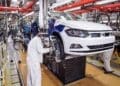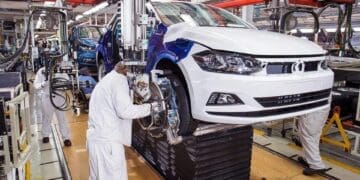





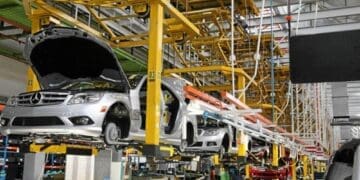








































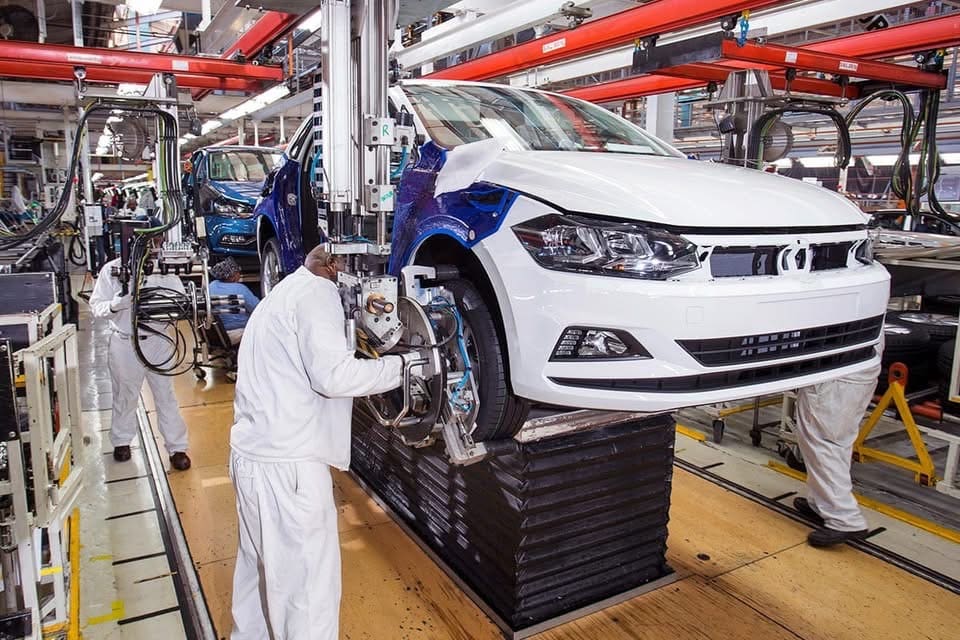
South Africa plans to phase out semi-knock-down (SKD) vehicle assembly operations, where vehicles are assembled using imported parts rather than having more of their components manufactured locally.
The government wants to increase local production, but the change comes as automotive component manufacturers face job losses, business closures and competition from imports.
Trade, Industry and Competition Minister Parks Tau announced the plan on 15 October at SA Auto Week in Durban.
The government also plans to stop providing policy support for new SKD facilities. Medium and heavy commercial vehicles will be excluded from the changes.
The announcement forms part of a review of the Automotive Production Development Programme (APDP2), which the government is undertaking with industry bodies and organised labour.
Tau said any additional protection for the industry would have to come with commitments to production, localisation, employment, transformation, exports and investment.
Government aims to increase the local content of vehicles from about 38% to 60% by 2035 under the South African Automotive Masterplan.
Local suppliers face job losses
The policy changes come as South Africa’s automotive component industry struggles with job losses and business closures.
National Association of Automotive Component and Allied Manufacturers (NAACAM) chief operating officer Nduduzo Chala said the industry has lost about 7,500 jobs and around 15 businesses shut down over the past three years.
The association also reported that 63% of its members had either reduced their workforce or were considering further job cuts.
“Over time we have seen the import coming far more stronger than what the sales are for local manufacturers,” Chala said.
He said weaker sales of locally produced vehicles were affecting component manufacturers because they were selling fewer locally made products.
The pressure on the industry raises concerns about the future of businesses that supply parts to vehicle manufacturers. Smaller suppliers may struggle to compete if they cannot secure enough orders to keep production going.
New vehicle makers could create opportunities
NAACAM chief executive Renai Moothilal said the arrival of new vehicle manufacturers could create opportunities for South African component suppliers, including businesses working with new-energy vehicles.
“What we would not want is new entrants who effectively bring in all their components on containers and simply assemble vehicles for sale in South Africa and other markets,” Moothilal said during an Engineering News and Metair webinar on the future of the automotive component industry.
He said new-energy vehicles could open opportunities for businesses supplying batteries, electric motors, power electronics, high-voltage wiring harnesses and thermal-management systems.
However, suppliers would need vehicle manufacturers to commit to local production and provide certainty about future demand before investing in new equipment and capacity.
Turning localisation into contracts
Tau said the automotive industry was undergoing major changes as vehicles shift towards new energy sources. He also highlighted battery recycling as a potential new industry, with government working on an End of Life Vehicle policy.
These changes could create new markets for local businesses, but supplying vehicle manufacturers may require finance, specialised skills and the ability to meet strict production and quality standards.
Phasing out SKD operations does not automatically mean that all vehicle components will be manufactured in South Africa. The impact will depend on how the changes are implemented and whether local suppliers can secure contracts.