






























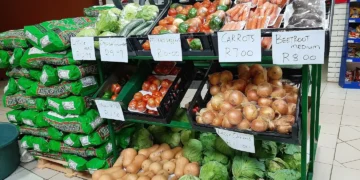




















Farmers and agricultural SMMEs could gain new opportunities to grow their businesses as the Mpumalanga International Food Market (MIF) begins trading, connecting producers with buyers while opening another supply option for spaza shops, restaurants and food retailers.
The market commenced operations this week, with farmers already delivering produce. The facility aims to improve market access, strengthen agricultural trade and create opportunities across Mpumalanga’s food value chain.
Premier Mandla Ndlovu said the market’s opening marked an important milestone for the province’s agricultural sector.
“The Mpumalanga International Food Market has officially commenced operations, marking an important milestone in strengthening the province’s agricultural sector and creating economic opportunities,” said Ndlovu.
For emerging farmers, the opportunity lies in securing consistent buyers and generating reliable income. However, Zakhele Mahlangu , a farmer who want to supply the market. Said the market’s commercial value will depend on whether smaller producers can meet purchasing requirements, negotiate viable prices and deliver produce consistently.
“Access to a reliable market is important for small-scale farmers because producing crops is only one part of running an agricultural business. Farmers also need buyers who can purchase their produce consistently and help them generate sustainable income,” said
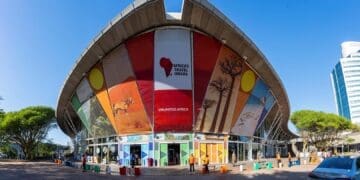
The facility includes 17 specialised buildings covering 29,000 square metres, with trading halls, cold storage, ripening rooms, meat, fish and flower markets, as well as export and bulk-breaking facilities.
These facilities could help businesses improve produce handling, storage and distribution, while creating opportunities for transporters, packagers and other service providers.
Located less than 10km from Mbombela’s central business district, the market sits within the Maputo Development Corridor, linking Mpumalanga and Gauteng to the Port of Maputo and the Nkomazi Special Economic Zone.
Small businesses invited to buy
The market is also inviting traders, retailers, spaza shop owners, restaurants and other food businesses to register as buyers.
According to the market’s buyer registration information, businesses can register online at https://buyers.mif.market/ or at the facility. Buyers must then visit the market to activate their registration and collect a buyer card.
Money can be deposited onto the card using cash or electronic funds transfer. A once-off fee of R50 plus VAT applies and is deducted from the buyer’s deposited funds when the first deposit is made.
For smaller food businesses, access to another produce supplier could offer greater choice. However, whether buying through the market improves profitability will depend on produce prices, availability, transport costs and purchasing conditions. “Small businesses need suppliers that offer consistent quality and prices that allow them to remain profitable. The important thing is whether buying through the market helps us control costs,” said Lebo Mashigo, owner of EggsellentbyLebo.
Jobs and business opportunities
The market has already created 47 direct jobs and is expected to support approximately 156 direct jobs when fully operational. Another 4,033 indirect jobs are projected through farming, processing, logistics and related activities.
Ndlovu also said SMMEs benefiting from the Agrofund programme could be able to supply produce to the market. The programme has reportedly create to the creation of 1,153 jobs among beneficiary SMMEs.
“Access to a dependable buyer can help agricultural businesses increase production and plan for growth, provided the prices and supply requirements make commercial sense,” said Mashigo.
The project was first introduced 12 years ago under former premier David Mabuza. Construction began in November 2018, with an initial budget of R1.5 billion, but delays and cost overruns pushed the investment beyond R2 billion.