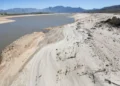








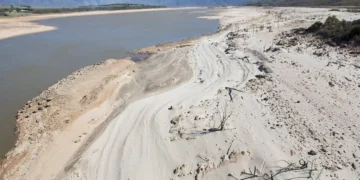
































Water allocations for irrigation in the Western Cape are being reduced by 15%, while domestic and industrial users face a 7% cut, raising concerns about the implications for agricultural production and business operations.
The Department of Water and Sanitation expects the reductions to save 56.8 million cubic metres of water annually as authorities respond to declining dam levels, below-average winter rainfall and the risk of drier conditions associated with El Niño.
Water and Sanitation Minister Pemmy Majodina announced the allocation reductions on 16 November 2026, with agriculture expected to account for 29.6 million cubic metres of the annual savings.
Majodina said the Western Cape Water Supply System remained essential to the region’s economic activity.
“The Western Cape Water Supply System is the lifeblood of economic and social development in the Province,” she said.
She added that the system supplied Cape Town, the West Coast, several towns and agricultural users contributing to food production and economic growth.
The reductions have raised concerns about the ability of water-dependent businesses to maintain production, particularly in agriculture, manufacturing and food processing.
Agricultural production and exports at risk
Agri Western Cape chief executive Jannie Strydom said the sector supported responsible water management but questioned the distribution of the burden of restrictions.
“The agricultural sector supports responsible water management and wants to prevent a repeat of a potential Day Zero,” he said.
Strydom said the Western Cape accounted for 58% of South Africa’s primary agricultural exports and provided 250,000 permanent agricultural jobs.
He warned that the restrictions came at a critical point in the production cycle of several commodities, including table grapes, wine grapes, stone fruit, berries, vegetables and citrus.
“This affects not only production and export earnings, but could also have a negative impact on jobs in rural communities,” he said.
Strydom also raised concerns about water losses in municipal infrastructure, arguing that productive industries should not carry the burden of water wastage.
“We cannot hamstring a productive sector amid such waste of this scarce resource,” he said.
Businesses urged to prepare
Cape Chamber of Commerce and Industry president Jacques Moolman described the restrictions as a necessary risk-management measure in response to lower-than-average winter rainfall and forecasts of drier El Niño conditions.
He said early intervention was preferable to waiting for a more severe supply crisis.
“The greatest threat to the regional economy would be a return to Day Zero anxiety that would severely disrupt business continuity and undermine investor confidence across the province,” Moolman said.
In Cape Town, Level 1 water restrictions will take effect on December 1, requiring residents, businesses and visitors to reduce consumption by at least 10%.
Commercial car washes will be allowed to continue operating provided they follow water-conservation practices, including recycling at least 50% of the water they use.
Meanwhile, the City of Tshwane introduced Level 2 water restrictions on November 12, requiring businesses and institutions to implement internal water-conservation measures.
The municipality said its September 2026 water consumption was 34% above its permanent licence allocation and 19% above its temporary allocation. Rand Water requested a reduction of approximately 200 million litres per day.
The restrictions also trigger approved Level 2 water tariffs according to consumers’ respective categories and consumption bands.
Moolman said restrictions alone would not address the underlying water infrastructure challenges facing businesses and communities.
“If demand-side restrictions are a necessary precaution for households and businesses, they must be matched by sustained public-sector investment in leak repairs, maintenance, and long-term bulk supply,” he said.