















































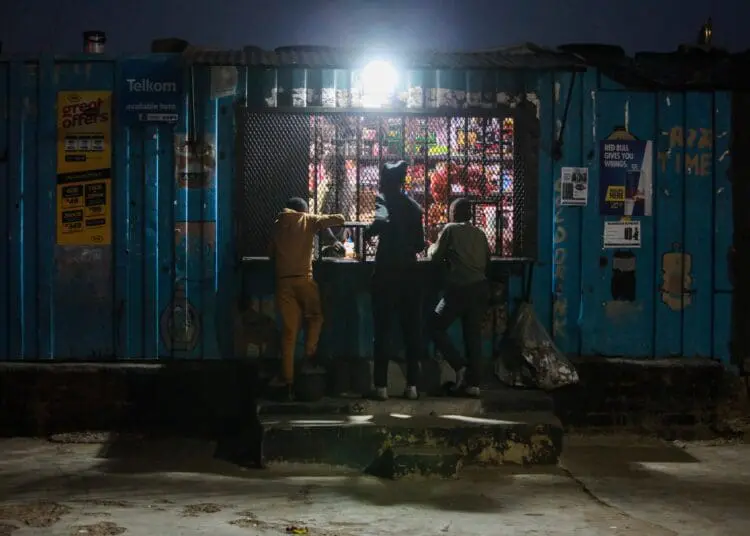
An estimated R6.3 billion generated through foreign-owned spaza shops in Tshwane was allegedly moved out of South Africa through informal money networks, raising questions about tax compliance, financial visibility and competition in the township retail market.
The figure comes from a report examining SADC immigrants operating businesses in Tshwane’s informal economy. It looks at how money generated through informal businesses is transferred across borders through channels outside the formal banking system.
The report says these transactions can make it harder for authorities to track financial flows, assess their economic impact and ensure compliance with tax and financial regulations.
“Consequently, tax authorities and financial regulators face considerable difficulties in tracking financial flows, assessing their economic impact and ensuring compliance with relevant fiscal and financial regulations,” the report said.
The issue has a direct business angle because financial records help businesses track income, manage cash flow and demonstrate their financial position when seeking funding.
Why some businesses use informal channels
Spaza shops operate largely on cash and serve as important retailers in township communities. Some owners also send money across borders to support families or pay suppliers.
The report says informal remittance channels can be attractive because they may be cheaper, quicker or easier to access than formal services.
The Financial Intelligence Centre has also identified cash and alternative remittance systems as common among low-income communities.
“Financial transactions within these communities rely predominantly on cash. Unregulated, alternative remittance networks like hawala and mobile money are highly favoured by low-income groups,” the FIC said.
Using an informal channel does not automatically mean that a business owner is avoiding tax or involved in criminal activity. The business question is whether the scale of these transactions makes it harder to establish how much businesses are earning and where their money is going.
What does it mean for competition?
The issue also raises questions about the different costs faced by small retailers.
A business operating through the formal financial system may pay bank charges, keep financial records, comply with tax requirements and carry other administrative costs.
A business that relies mainly on cash and informal money networks may have a different cost structure.
That does not automatically mean it has an unfair advantage, but it raises questions about whether businesses competing in the same market are operating under similar financial and compliance conditions.
The cost of transferring money can also affect a spaza shop’s cash flow. Money spent on fees is money that cannot be used to buy stock, pay workers or cover other operating expenses.
If formal transfer services are more expensive than informal alternatives, a business owner may have a financial reason to use an informal channel.
The tax question
The R6.3 billion figure should not automatically be described as lost tax revenue.
Money moved through informal channels is not necessarily undeclared income, and the figure does not by itself prove that tax was avoided.
The important question is how much of the money represented business income, whether it was declared and what tax obligations applied.
SARS has a formal tax system aimed at qualifying small businesses, including spaza shops. Greater financial visibility could help authorities establish the size of businesses and improve compliance.
But increased requirements could also create additional costs for small retailers already operating on tight margins.
The financial crime concern
The report also raises concerns that informal money networks could be used to move funds linked to money laundering and terrorist financing.
These claims need evidence and should not be used to label foreign-owned spaza shops generally as criminal businesses.
The FIC has highlighted the difficulty of separating legitimate cross-border remittances from transactions that may present financial crime risks.
This creates a challenge for authorities: improving financial visibility while allowing legitimate businesses and families to continue making affordable cross-border payments.
The R6.3 billion estimate therefore raises a wider business question about how South Africa can bring more informal retailers into the formal financial system without making it harder for small businesses to operate.
Understanding why businesses choose informal channels, the costs involved and how these transactions affect competition could help shape a response that addresses financial risks without treating legitimate small-business activity as criminal.