








































What began with R500, a crochet hook, and a passion for handmade crafts has grown into a profitable business for Lubi Hooked’s founder.
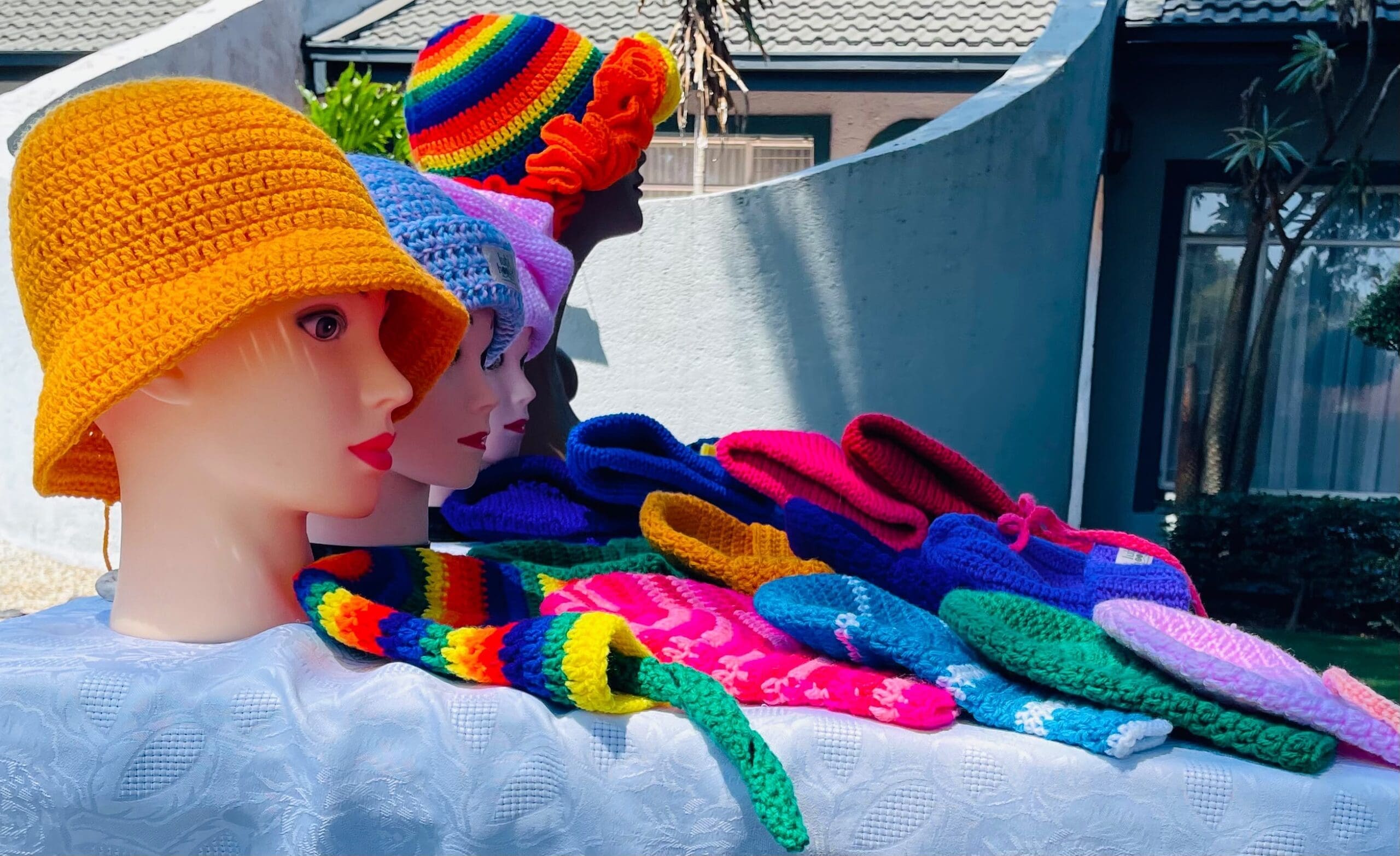
Launched in 2025, the Limpopo-based business produces handmade crochet products, including beanies, bucket hats, and bikinis, and accepts customised orders.
For founder Mbali Hlayisi, Lubi Hooked was never intended to become a business.
“I started crocheting just for fun, but when people began offering to buy what I made, I realised there was real potential here,” she says.
That moment marked a turning point, as she suddenly found herself thinking about costs, pricing, and how to reach new customers.
“It was no longer just a hobby—it was something bigger,” Hlayisi said.
The very first item she sold was a crochet beanie, a sale that still stands out as the beginning of her entrepreneurial journey.
That first transaction became an important turning point because it showed there was a market.
Since then, the business has expanded its product offering, with beanies selling for R230 and bucket hats for R210, while the price of bikinis varies according to size and design.
The business also takes custom orders, allowing customers to request products according to their preferred designs and sizes.
With production currently at around 50 items a month and sales largely driven by WhatsApp, word of mouth and social media, the next challenge is turning demand into a repeatable business model.
But behind the creative side of the business is a simple business calculation: how much does it cost to make an item, how long does it take to produce, and what price will allow the business to remain profitable?
Mbali estimates that materials cost about R87.66 for every 40 cm by 40 cm quantity of material, although the cost increases for larger products.
Production times also vary. Simpler pieces can take a few hours, while more detailed designs can take several days to complete.
This makes production capacity one of the business’s biggest challenges.
Currently, Lubi Hooked can produce about 50 items a month. While this provides an existing production base, the founder believes there is room to increase output if the business has access to better resources.
Unlike mass-produced accessories, crochet products can be customised according to a customer’s preferences. For Lubi Hooked, that personalisation is part of its value proposition.
However, the business is also competing with other small crochet businesses and retailers selling similar accessories.
Its challenge is therefore not only producing more products, but also building a recognisable brand and finding customers outside its existing network.
The founder estimates that R50,000 in funding could help move Lubi Hooked from a small operation towards a more structured business.
The planned investment would be spread across materials, equipment, packaging and marketing.
Increasing the amount of stock and materials available would allow the business to accept more orders, while improved packaging and marketing could help it present itself as a stronger consumer brand.
The founder also wants to expand the product range and improve Lubi Hooked’s online presence to reach customers outside Limpopo.
For a handmade business, increasing production is particularly important because growth cannot simply come from selling more stock from a wholesaler.
Every item still has to be made.
That is where the founder sees another opportunity: bringing other young people with crochet and creative skills into the business as it grows.
Rather than keeping Lubi Hooked as a one-person operation, the long-term goal is to collaborate with or employ other young creatives, allowing the business to increase its production capacity while creating income opportunities.