






































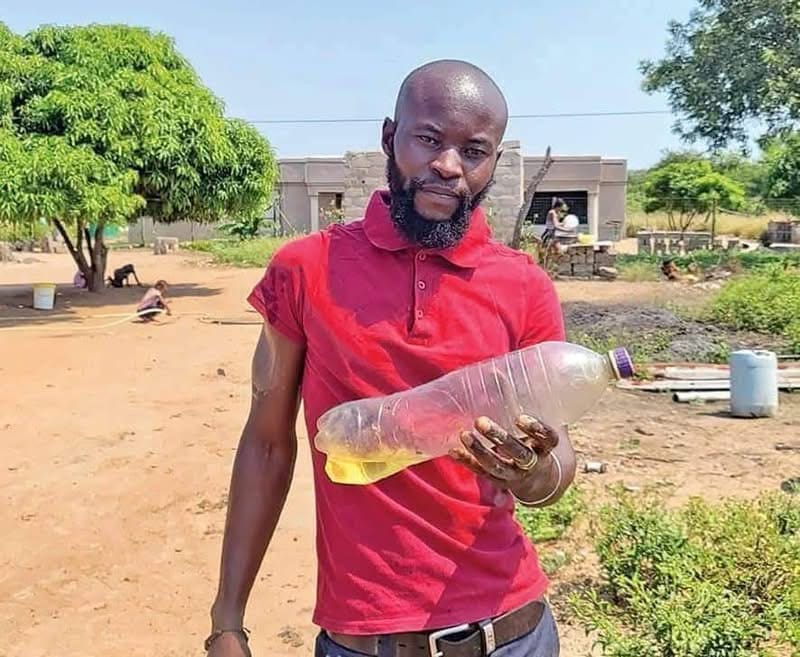
A waste-to-fuel innovator from Sibange Village under Nkomazi Local Municipality in Mpumalanga says his recycling-based energy project could help ease pressure from rising fuel prices in South Africa, but the business is currently on hold as he finalises regulatory compliance requirements.
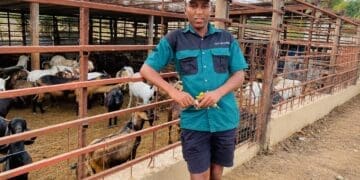
Sibusiso Shabangu developed the idea in his home village, inspired by local waste pollution challenges. He uses plastic waste and old tyres collected from communities and processes them through pyrolysis to produce diesel and other fuels supplied to local users such as tractor operators and sand miners.
The initiative has created jobs and produced hundreds of litres of fuel during its operational phases, but is now delayed as he finalises key licences required under environmental and energy regulations.
He says compliance costs remain one of the biggest challenges facing small-scale innovators trying to scale their businesses.
Vutivi Business News spoke to Sibusiso Shabangu about his waste-to-fuel innovation, the challenges he faces, and the future of the project.
Vutivi Business News: Can you briefly explain your business?
Sibusiso Shabangu: Our business collects waste from local dump sites and also does house-to-house collections. We work closely with community members. Once we are done with collection, we process the waste and then distil fuel from it. The aim is to reduce waste in the environment while also creating usable energy products.
Vutivi Business News: How does your business generate income?
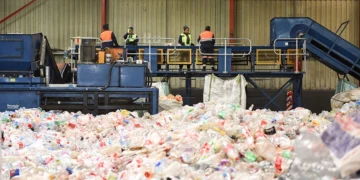
Sibusiso Shabangu: How we make income in our business is by collecting waste such as 2-litre bottles, scrap metal, boxes, paper, plastics and many other recyclable materials. We then sort and sell them to other companies. That is one part of the business. The second part is that we also process plastics and tyres to produce fuel, which is another source of income.
Vutivi Business News: Can you explain the fuel production process?
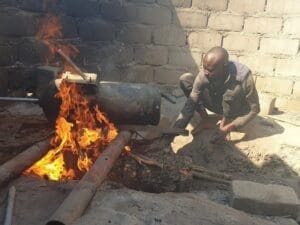
Sibusiso Shabangu: In our pyrolysis process, we collect plastics and tyres and place them into a reactor tank. Once the materials are inside, we start the heating process. The reactor must remain completely closed so that no oxygen enters or leaves the system. This means the waste is processed in the absence of oxygen. Through this process, we produce oil, which we then distil into diesel, petrol, kerosene and gas. We are also looking at producing black carbon ash and recovering waste wire from the tyres.
Vutivi Business News: What is your current production capacity?
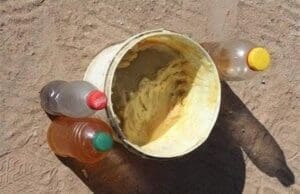
Sibusiso Shabangu: Currently, we are producing approximately 350 litres of diesel. However, our operations are currently paused while we complete all compliance requirements with support from government institutions. Even though we are paused, this is the level we were able to reach during active production.
Vutivi Business News: Who do you currently sell to?
Sibusiso Shabangu: At the moment, we sell our products to local sand miners, tractor operators and construction trucks that collect sand from the bush areas. These are the people who rely on affordable fuel sources in rural communities.
Vutivi Business News: What are the biggest challenges you face?
Sibusiso Shabangu: One of the biggest challenges we have faced is being paused from operating. Another major challenge is that obtaining all the required regulations is very expensive. Starting this kind of business is also very costly, especially for young entrepreneurs.
Vutivi Business News: What licences are required?
Sibusiso Shabangu: The licences required include a petroleum licence, emission licence, waste management licence, fire safety, air quality and hazardous chemical permits. We have already acquired the waste management licence and environmental authorisation. We are now working on finalising the remaining approvals, including the feasibility study.
Vutivi Business News: How many jobs has the project created?
Sibusiso Shabangu: So far, I have created approximately 10 jobs, with five males and four females, including myself. These are community members who are directly involved in the operations of the project.

Vutivi Business News: What support have you received?
Sibusiso Shabangu: We are receiving support from Small Enterprise Development Agency (Seda) and the Department of Trade and Industry (DTI), rural development structures, national departments and local municipalities. This support is helping us move through the compliance and development stages of the business.
Vutivi Business News: What are your long-term goals?
Sibusiso Shabangu: In five years, I see my business growing and creating more than 100 job opportunities locally. We also hope to expand our operations once all regulatory processes are fully completed.
Vutivi Business News: What advice would you give to young entrepreneurs?
Sibusiso Shabangu: My advice is never to give up on your dreams. Do not fear the unknown and do not stay in your comfort zone for too long. Every failure should be seen as a lesson. What matters is to keep trying until you get it right.
*Do you have an interesting story to share with us? Please drop us an e-mail at news@vutivibusiness.coza