








































Long before climate-smart agriculture became a funding category, producers were already adjusting planting schedules, managing water differently and trying to reduce exposure to rising input costs. Now financial institutions are increasingly positioning climate adaptation as an investment opportunity.
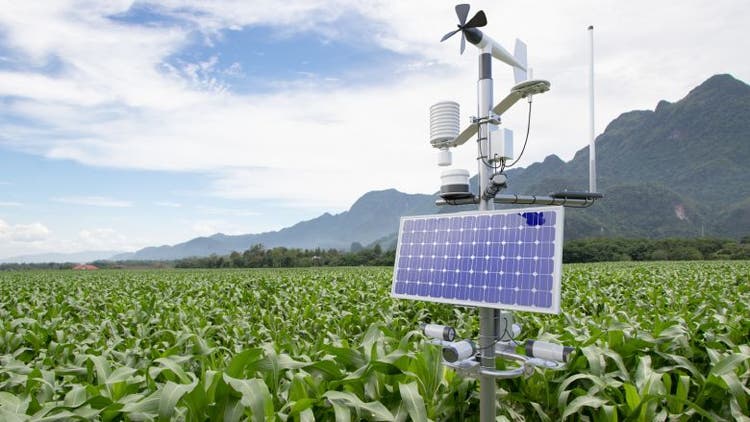
Standard Bank Group says it mobilised R3.45 billion for climate-smart agriculture over the past year, supporting areas including water-efficient irrigation, renewable energy and regenerative farming practices.
But whether those investments change realities on farms may depend less on the amount announced and more on whether producers can access the support.
For many farmers, climate-smart agriculture is not a new concept. The challenge is affordability.
Adaptation comes at a cost
Across farming communities, weather uncertainty is increasingly becoming part of everyday business planning.
Producers are balancing fuel costs, electricity pressures, water availability and changing production conditions while trying to remain profitable.
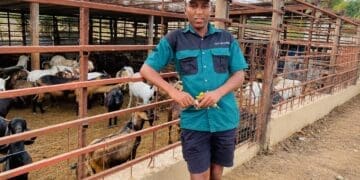
Senzo Mabuza, a small-scale farmer in Mkhondo, said adaptation decisions are often delayed because of financial pressure.
“People sometimes speak about climate-smart farming as if farmers are resisting change. That is not the reality. Many of us know what improvements would help, whether that is irrigation, energy alternatives or better systems, but every decision depends on cash flow and whether the investment makes business sense,” said Mabuza.
Climate resilience must make business sense
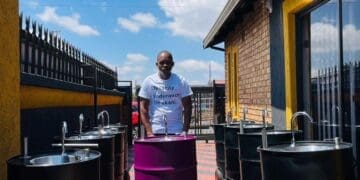
Zaza Letsholo, founder of Zaza Mahlangu Foundation in Kwa Mhlanga, said climate adaptation is increasingly linked to survival rather than sustainability targets.
“Weather patterns are changing, and farming decisions are changing with them. We spend more time thinking about efficiency than before, how much water is used, how energy is managed and where costs can be reduced,” Mahlangu.
The access remains uneven across the sector.
“Larger businesses often have more options available to them. Smaller and mid-sized farms may want to invest but cannot always absorb the cost of experimenting with new systems,” said Letsholo.
For producers, resilience increasingly means protecting margins.
Tech alone won’t win—finance matters too
Julia Shabangu of Siphandane General Trading in Nkomazi said discussions about innovation often overlook funding realities.
“Technology itself is not always the biggest obstacle. The bigger issue is whether financing structures match how farming works. Agriculture operates in cycles and investment returns are not always immediate,” said Shabangu.
She added that adaptation becomes easier when finance aligns with production realities.
“If more funding becomes available and practical to access, more farmers will invest. Farmers generally do not avoid efficiency; they avoid unnecessary financial risk,” she said.
Supporters argue these investments can reduce long-term operating costs and strengthen food systems. But on farms, adoption often comes down to one question: who can afford the transition?
The R3.45 billion investment may signal growing momentum behind climate finance. Whether it changes outcomes will depend on whether farmers themselves experience the benefit.