















































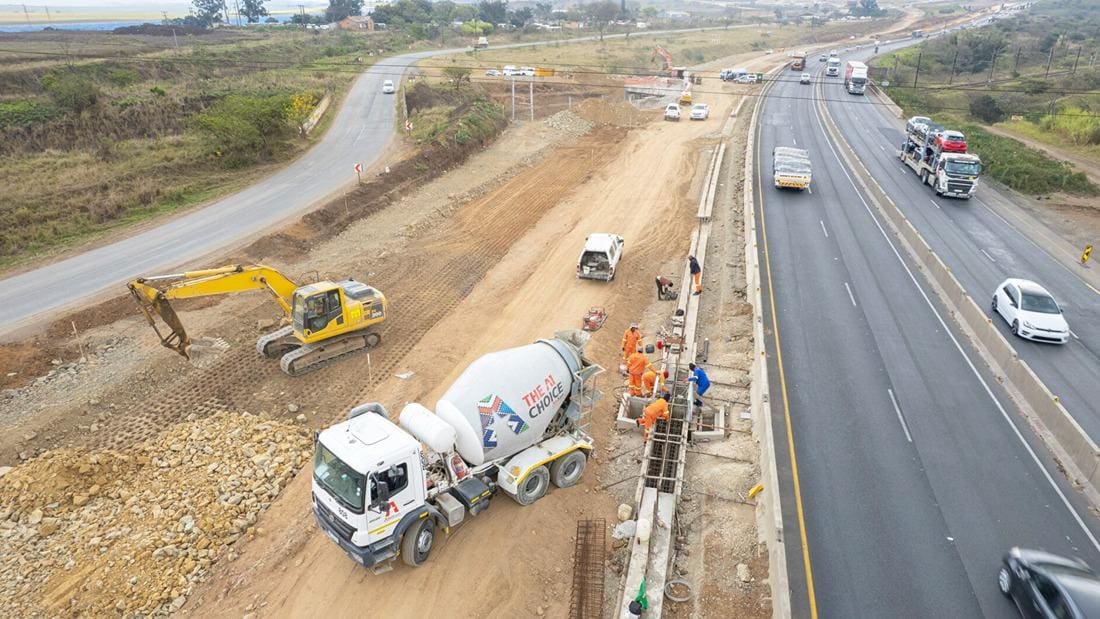
The announcement of further investment in the N4 Development Corridor has renewed expectations that improved transport infrastructure will strengthen trade between Mpumalanga, Gauteng, Limpopo and neighbouring countries.
Yet for many small businesses, the most important question is not how many kilometres of road will be upgraded, but who will benefit from the contracts created along the way.
The N4 corridor is one of South Africa’s busiest freight routes, linking the country’s industrial heartland with the Port of Maputo in Mozambique while serving as a key logistics route for agriculture, mining, manufacturing and tourism.
The government says continued investment in the corridor will improve mobility, reduce congestion, support economic growth and create employment during construction.
For local businesses, however, success will ultimately be measured by procurement opportunities rather than construction milestones.
Local contractor Sipho Maseko, who operates a civil construction company in Nkomazi, said emerging businesses are eager to participate but often struggle to access procurement opportunities.
“We always hear that infrastructure projects will create jobs, but many small contractors never get the opportunity to bid. Sometimes the requirements are beyond the capacity of developing businesses, even though we have the skills and experience to perform subcontracting work. We hope this project will deliberately include local enterprises.”
Localisation remains key
Infrastructure spending generates greater long-term benefits when procurement policies prioritise local suppliers.
Business coach Dingane Rahlapane said localisation helps circulate money within regional economies instead of allowing most spending to leave the province.
“Large infrastructure investments create significant economic multipliers when local companies participate in the value chain. Every contract awarded to a local supplier supports additional employment, develops business capability and strengthens regional economic resilience,” Rahlapane said.
He added that procurement transparency remains essential.
“The government should publish procurement opportunities clearly and monitor whether localisation targets are achieved. Measuring local participation is just as important as measuring construction progress,” he added.
Business organisations call for supplier development
Business chambers have repeatedly argued that emerging enterprises require more than access to tenders.
Training in compliance, safety standards, financial management and contract administration can improve the ability of small businesses to compete successfully.
Local business leader Thandi Mokoena believes supplier development should be embedded in every major infrastructure programme.
“Mega-projects should leave behind stronger businesses, not only better roads. If local companies gain experience on projects like the N4 corridor, they become more competitive for future work and create permanent employment in their communities,” Mokoena said.
She said partnerships between large contractors and local SMMEs would help transfer skills and expand opportunities beyond the construction period.
The project is expected to strengthen connections between Mpumalanga’s agricultural, mining and manufacturing sectors while supporting exports through the Maputo Development Corridor.