



































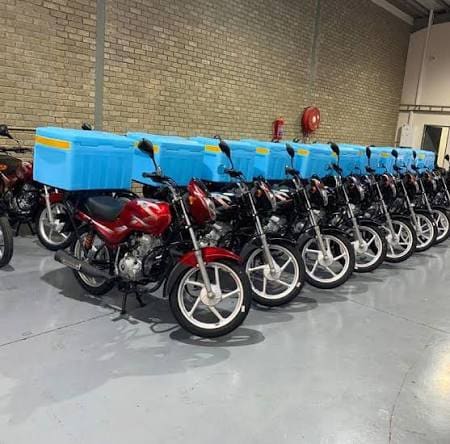
Motorcycle delivery fleet owner Bongani Baloyi initially entered the business believing it would provide a reliable source of passive income but soon discovered the operational challenges involved.
“I started this thing out thinking it was an easy business. I bought four scooters hoping to make R2,400 a week by renting them out for R600 each. Finding Uber drivers is hard and, worse, they don’t pay on time. It’s difficult to find Uber drivers with the right documentation, with some of them trying to run away with your scooter,” said Baloyi.
Another operator, Sizwe Mthethwa, said unreliable riders eventually forced him to close the business.
“I had 17 scooters, now I have zero,” Mthethwa said. “Drivers were giving me the run-around, and I had to liquidate. I would recommend working with family because drivers are not trustworthy,” Mthethwa warned.
Despite his experience, Mthethwa believes there is still money to be made.
“This is a good business, and there is money to be made, but the biggest challenge is the drivers, like any other business where you have to rely on other people,” he said.
South Africa’s growing app-based delivery economy is creating new business opportunities for entrepreneurs who buy motorcycles to rent to delivery riders working for platforms such as Uber Eats, Mr D and Checkers Sixty60.
Instead of earning an income by making deliveries themselves, these entrepreneurs generate revenue by leasing motorcycles to riders for a weekly fee.
The business model has gained attention on social media, where fleet owners promote it as a relatively affordable way to build recurring income through productive assets.
However while the financial model appears attractive, running a motorcycle rental business requires far more than simply buying bikes and collecting rent.
Entrepreneurs say challenges such as finding reliable riders, verifying documentation, recovering late payments and protecting motorcycles from theft have become some of the biggest obstacles to growing and sustaining these businesses.
Operators say the biggest challenge is not purchasing motorcycles but finding trustworthy riders who meet the requirements of delivery platforms and honour their rental agreements. A single missed payment or stolen motorcycle can place significant pressure on cash flow, particularly for owners with small fleets.
The surge in micro-fleet operations is directly anchored by the massive growth in South Africa’s e-commerce and last-mile logistics sectors.
According to industry data from the IMARC Group, the South African online food delivery market reached an estimated valuation of USD 1.1 billion in 2025 and is projected to expand significantly as digital and cashless payments become the urban standard.
This consistent transaction volume creates an insatiable demand for delivery assets, making the logistics sector an appealing entry point for township-based SMEs. However, industry analysts warn that high macro-growth figures can obscure the micro-level operating risks that independent fleet owners must shoulder alone.
Beyond rider reliability, experienced fleet operators say many first-time investors underestimate the ongoing costs of protecting commercial assets.
Insurance, vehicle tracking, maintenance and theft prevention can significantly increase operating expenses and reduce profitability if they are not factored into the business model from the outset.
Industry experts note that standard personal motorcycle insurance policies generally exclude commercial delivery activities. As a result, owners leasing motorcycles to delivery riders may require specialised commercial insurance that covers third-party liability and other risks associated with business use.
Fleet operators also increasingly rely on GPS tracking systems with anti-jamming capabilities to improve the chances of recovering stolen motorcycles, particularly as vehicle theft remains a persistent challenge in South Africa’s logistics sector.
Operators say aspiring entrepreneurs should budget for more than the purchase price of a motorcycle.
Entrepreneur, Nyasha Moyo, recommends setting aside enough capital to cover operating expenses while the business begins generating income.
“Take two-thirds of your capital to do asset acquisitions and one-third for operational expenses from day one because you won’t immediately start making money,” Moyo said.
He estimates that about R30,000 is needed to start the business, with roughly R20,000 allocated to purchasing a motorcycle and R10,000 reserved for fuel, insurance, maintenance and other operating costs.