











































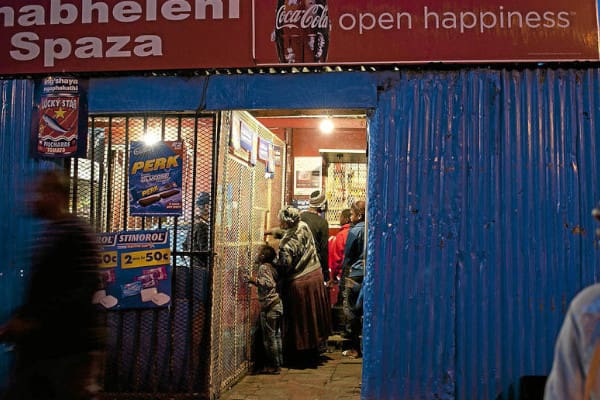
Parliament’s Portfolio Committee on Small Business Development says it welcomes the stringent internal controls and due diligence measures implemented by the Department of Small Business Development and the Small Enterprise Development Finance Agency (SEDFA) to ensure that the Spaza Shop Support Fund reaches its intended beneficiaries.
The R500 million Spaza Shop Support Fund was jointly launched in April 2025 by Minister of Small Business Development Stella Ndabeni and Trade, Industry and Competition Minister Parks Tau. The Fund is administered by SEDFA and the National Empowerment Fund.
The fund is intended to provide up to R300 000 in financial and non-financial support to qualifying township and rural spaza shops.
The fund came under scrutiny after the Portfolio Committee on Small Business Development received a briefing from the Small Enterprise Development Finance Agency (SEDFA) on allegations that some of the funding had been disbursed to foreign nationals.
The committee received a briefing from the Small Enterprise Development Finance Agency (SEDFA) on August 12, regarding the Public Protector’s report on the allegations. It also received an update from the Department of Small Business Development (DSBD) on progress made in disbursing support to qualifying South African-owned
spaza shops.
The briefings formed part of the department’s and SEDFA’s first-quarter performance reports for the 2026/27 financial year. Figures provided by the DSBD showed that SEDFA had approved 1,386 applications worth R83.9 million , while R57 million had been paid to 930 spaza shop owners as of July 31.
Committee Chairperson, Masefako Dikgale, said they welcome the robust internal controls put in place by the department and SEDFA.
“Where an application reveals an operator mismatch or other indicators of fraud, that application must not proceed to disbursement,” Dikgale said.
The committee’s engagement with the department and SEDFA follows the Public Protector’s announcement on 17 July 2026 that her office had issued a Section 7(9) notice from a systemic investigation into food-safety regulation and enforcement at spaza shops and other informal food businesses in Gauteng.
The investigation identified verified cases of business fronting, beneficiary mismatches, fraud and misrepresentation, including instances where South Africans were registered as licence holders or beneficiaries while foreign nationals operated the businesses.
SEDFA was responsible for R150 million of the R500 million fund and had approved 1 319 spaza shops owned by South African applicants as of June 8, with the approvals valued at R79.8 million. KwaZulu-Natal had recorded the highest number of approved beneficiaries, with 537 businesses receiving approvals worth R32.22 million.
Limpopo followed with 234 beneficiaries worth R15.21 million, while the Eastern Cape had 140 beneficiaries approved for R8.4 million.
Ndabeni said the beneficiaries in its provincial breakdown had all been recorded as South African citizens.
“SEDFA physical visits sites/spaza shops to ascertain if they exist and are owned by a South African,” said Ndabeni.
The fund’s qualifying criteria require spaza shop owners to be South African citizens, or to have been naturalised as South African citizens before 1994.
Businesses also have to operate in South Africa’s rural and township areas and serve local communities, be registered with their municipalities and comply with relevant business and legislative requirements.
Ndabeni added that measures have been put in place to prevent fraud and abuse of the fund. She said the due diligence process included document verification and checks on applicants’ nationality.
SEDFA’s Post Investment and Monitoring Unit was expected to conduct site visits after the distribution of stock and point-of-sale systems to determine whether support had reached the intended beneficiaries. The Auditor-General was also expected to audit the process and beneficiaries.