
















































Thousands of state-owned properties could become hubs for business, investment and growth, as KwaZulu-Natal opens its property portfolio to the public.
The province’s Government Property Finder Portal maps 10,067 state properties, giving businesses and investors a way to identify government assets and explore their potential uses.
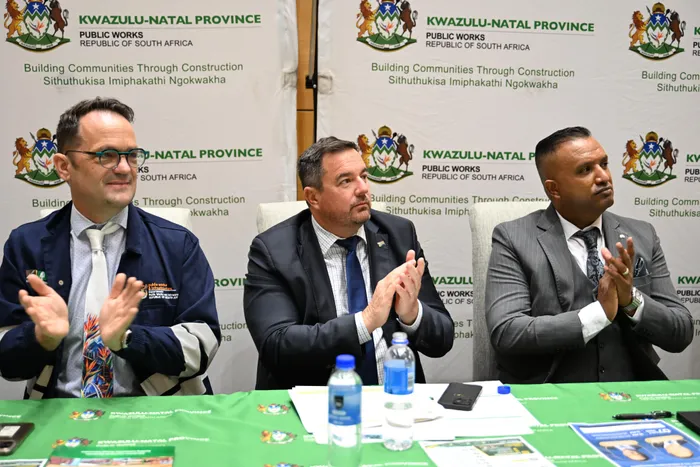
Launched on 8 October by KwaZulu-Natal Public Works and Infrastructure MEC Martin Meyer and Deputy Minister of Trade, Industry and Competition John Steenhuisen, the platform also allows users to check property locations and occupancy status and report maintenance problems.
The initiative aims to improve the use of public assets while creating opportunities for businesses seeking premises for expansion and investment.
Vacant properties could support business expansion
Steenhuisen said the government-owned properties could stimulate economic activity, support industrial development and create jobs.
“Government property should not simply be an asset on a balance sheet. It should be an asset that works for the economy and the people of South Africa,” he said.
He identified manufacturing hubs, business incubators and innovation centres as potential uses for the properties, saying better access to suitable locations could help businesses establish and expand their operations.
However, the portal’s listings do not necessarily mean that all properties are vacant or immediately available. The opportunities for businesses will depend on availability, leasing or acquisition conditions, infrastructure and the processes governing access.
Meyer said the department had released its first 81 unused buildings and land parcels to the public as part of its asset management programme. He also pointed to more than 300 schools are standing empty across the province and could potentially be repurposed.
“We want people to come with the ideas to us and say, ‘We want to bring this, and it will serve the community’,” Meyer said, according to The Witness.
The department is considering options such as long-term leases and alternative uses for buildings and land, potentially allowing businesses, non-governmental organisations and other entities to propose projects that put these assets to productive use.
Steenhuisen said the Department of Trade, Industry and Competition could work with provincial governments, development finance institutions and enterprise support agencies to connect available properties with funding and business development programmes.
Portal targets asset management
Beyond its commercial potential, the portal is intended to improve public oversight of government property and help authorities respond to maintenance complaints and suspected illegal occupation.
Meyer said the provincial department manages 10,067 properties, making it difficult for officials to monitor every facility continuously.
“If it belongs to the public, it must serve the public,” he said.
The platform allows residents to identify the department responsible for a property and report problems, including neglected facilities. Communities and businesses can also flag unused properties that could be put to better use.
Dr Vish Govender, head of the KwaZulu-Natal Department of Public Works and Infrastructure, said the platform could strengthen monitoring by allowing the department to receive reports about properties.
Govender said introducing website prompts would encourage members of the public to report suspected unlawful occupation. This could help officials identify problems that might go undetected during scheduled inspections.
“This would help us to have real-time audits of particular hotspot areas,” Govender said.
The department’s use of geographic information system mapping also allows properties to be located digitally, making information more accessible to the public.
Steenhuisen commended the provincial department for developing the platform in-house without relying on external consultants. He called for other provinces and government departments to consider similar initiatives.
“Every government-owned property that can be put to productive use represents a potential opportunity for a new business, a new investment or a new job,” Steenhuisen said.