



















































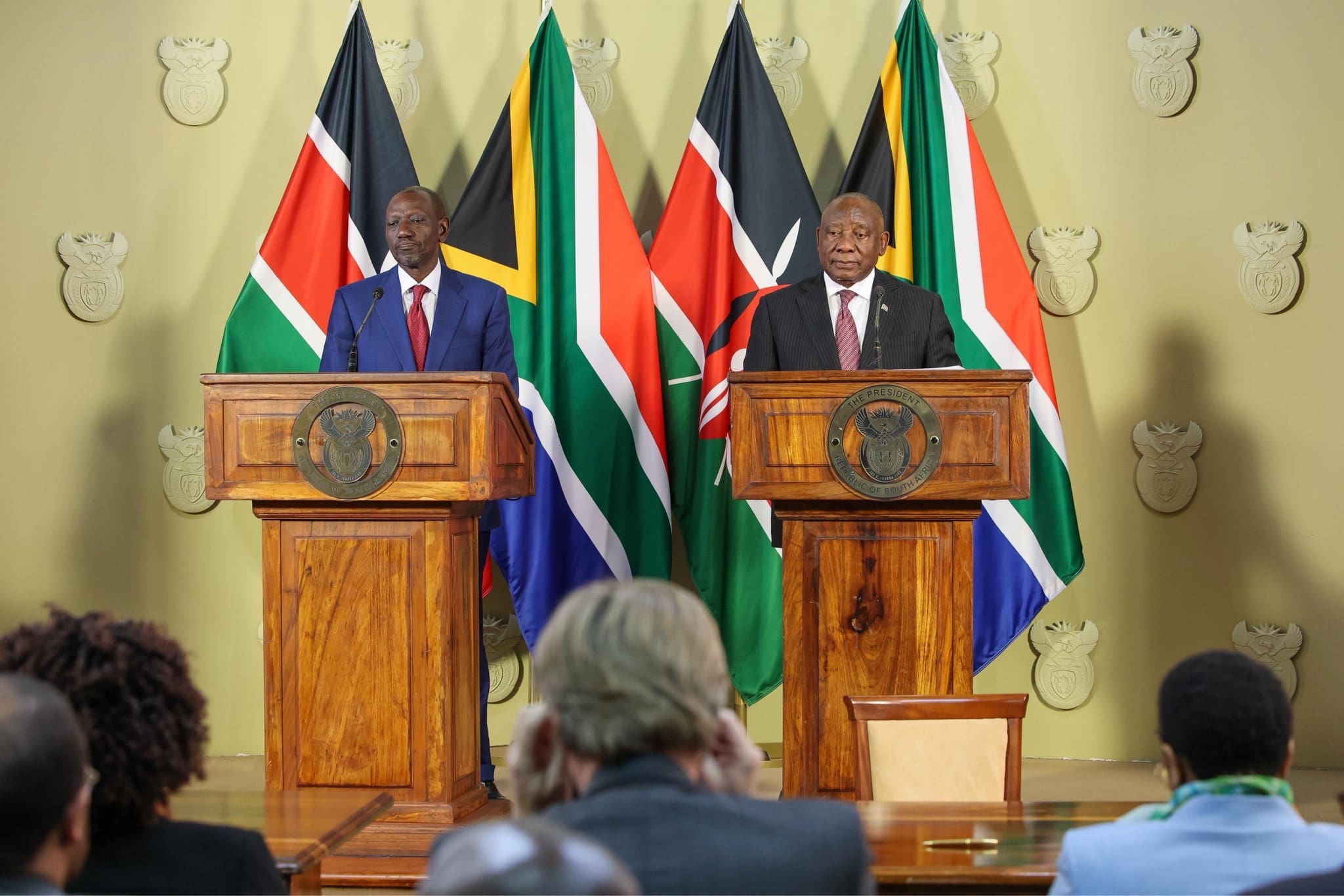
South African and Kenyan business leaders have committed to expanding trade and investment cooperation, with a strong focus on small and medium enterprises (SMEs), during the South Africa-Kenya Business Forum held alongside Kenyan President William Ruto’s state visit to South Africa.
Small and medium enterprises in both countries are expected to benefit across a range of sectors, including manufacturing, logistics and transport, agriculture, skills and education services, creative industries, and sport-related businesses, as trade barriers are reduced and cooperation frameworks are implemented under AfCFTA.
Stakeholders at the forum agreed that the next phase of cooperation will depend on how effectively both countries implement digital customs systems, and regulatory frameworks to translate policy commitments into practical trade outcomes.
The forum, hosted in Midrand, brought together over 300 business leaders across multiple sectors, aiming to reduce the trade imbalance between the two economies. The core was to accelerate cross-border commercial opportunities through the African Continental Free Trade Area (AfCFTA) and the Tripartite Free Trade Area (TFTA).
The two were identified as key instruments to improve market access, streamline regulations, and unlock value chains across the continent.
Business Unity South Africa representative Dr Stavros Nicolaou said both countries must move beyond policy frameworks and focus on implementation to unlock trade potential.
“Despite AfCFTA and TFTA, trade between the two economies is underwhelming but has significant room to grow. Kenya presents a major opportunity for South African businesses,” Nicolaou said.
He added that deeper cooperation in supply chains and procurement systems could improve competitiveness across both economies.
“We need greater collaboration in sharing manufacturing data chains and aggregating procurement to achieve economies of scale and better efficiency,” he said.
Kenya calls for stronger investment flows and partnership
Kenyan business representatives echoed the call for stronger collaboration, highlighting the importance of removing structural barriers that continue to limit intra-African trade.
A Kenyan business delegation representative said improved regulatory alignment would be key to unlocking long-term investment between the two countries.
“Trade within Africa cannot grow if each market continues to operate in isolation. We need harmonised standards, faster customs processes, and predictable regulatory systems that support investors on both sides,” the representative said.
Both sides agreed that customs modernisation and digitalisation will be central to improving trade efficiency.
Nicolaou noted that outdated systems continue to slow down cross-border movement of goods, increasing costs for businesses and reducing competitiveness.
“Digitalising customs processes, aligning standards, and reviewing tariff structures are essential if we want to make trade easier and faster between our countries,” he said.
In a parallel development, South Africa and Kenya signed six Memoranda of Understanding (MoUs) aimed at strengthening cooperation in commerce, maritime transport, skills development, gender equality, arts and culture, and sport.
The agreements aim to strengthen economic cooperation, improve trade logistics, and expand collaboration across key sectors of the economy.