















































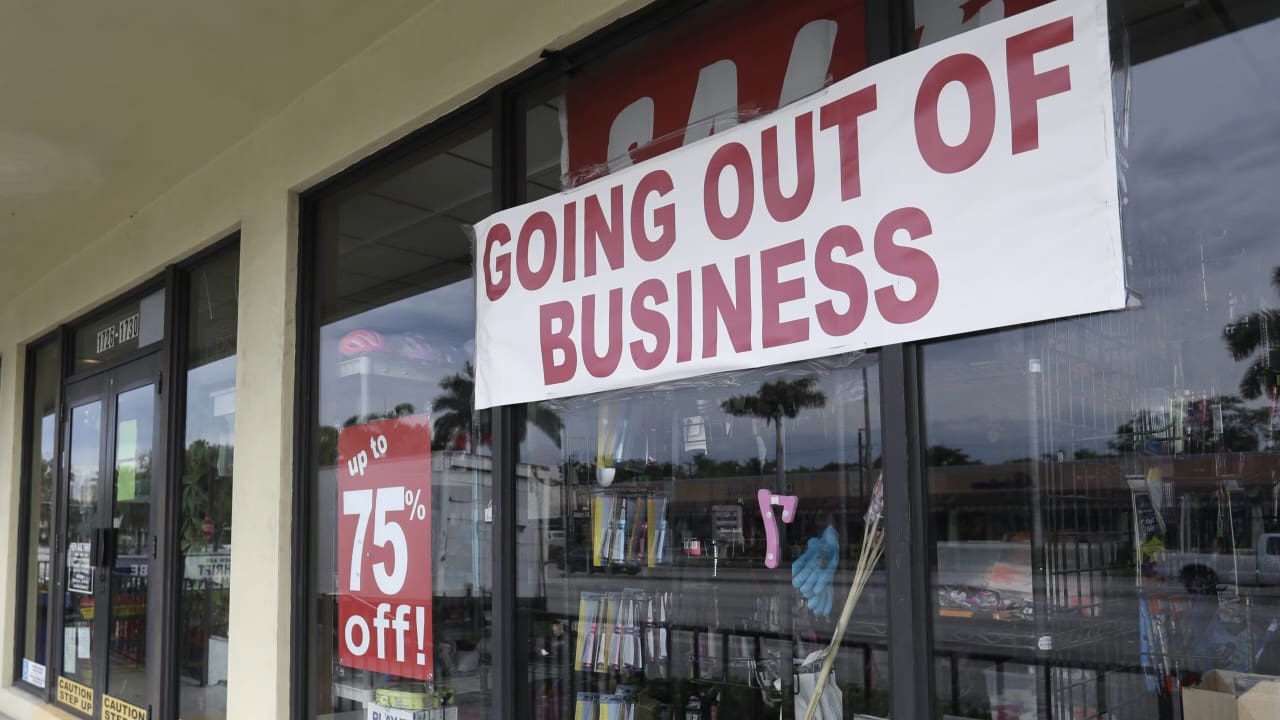
Statistics South Africa recorded 1,828 liquidations between January and August 2026, down by 6.4% from the 1,952 recorded during the same period in 2025.
August also brought a 15.3% year-on-year decline, with 227 businesses liquidated compared with 268 in August 2025. Liquidations were also down by 13.7% over the three months to August, falling from 825 to 712.
The decline follows a difficult 2025, when South Africa recorded 2,904 liquidations, compared with 2,626 in 2024, according to Stats SA.
The latest figures show that the largest identified group of liquidated businesses was in financing, insurance, real estate and business services, with 268 liquidations between January and August.
This was followed by trade, catering and accommodation, with 187 liquidations, while community, social and personal services recorded 59 and construction recorded 42.
Manufacturing recorded 20 liquidations, followed by transport, storage and communication with 15, agriculture, hunting, forestry and fishing with 11, mining and quarrying with three, and electricity, gas and water with one.
But the sector picture comes with an important qualification: 1,222 of the 1,828 liquidations were classified as unclassified. This means the identified industries account for only a portion of the total, and the statistics cannot be used to claim that any one sector is responsible for most business failures.
The concentration among trade, accommodation and business services nevertheless points to businesses operating close to consumers and dependent on steady cash flow being among those appearing in the identified data.
Voluntary closures dominate
Of the 1,828 liquidations recorded during the first eight months, 1,634 were voluntary, and 194 were compulsory.
The distinction matters because voluntary liquidation does not automatically mean a court has forced a financially distressed business to close.
The South African Revenue Service says a company or close corporation can be voluntarily liquidated when shareholders or members apply to wind it up. A solvent company can also be voluntarily wound up, meaning the liquidation statistics cannot simply be treated as a count of businesses that became insolvent because they could no longer pay their debts.
That makes the 89% voluntary share particularly important when interpreting the decline.
Coface chief Africa economist Aroni Chaudhuri has also warned against reading lower liquidation numbers as evidence that businesses are necessarily healthier.
“When business creation, especially among small and medium-sized enterprises, is constrained, the number of liquidations may also decline,” Chaudhuri said.
Businesses reaching rescue before liquidation
Research by the Turnaround Management Association Southern Africa, based on 4,373 Companies and Intellectual Property Commission proceedings, found that 1,409 companies were in business rescue as of March 2026.
Stefan Steyn, a TMA-SA director who conducted the research, said business rescue should not be viewed as a quick solution.
“Successful rescues take an average of 18 months to complete, while companies that ultimately fail spend more than a year in the process before ending in liquidation,” Steyn said.
He said the findings raised questions about whether some companies were entering rescue too late or remaining in the process without realistic prospects of recovery.
Haroon Laher, chair of TMA-SA, said the timing of intervention can determine whether a distressed business still has a chance of survival.
“By the time companies enter business rescue, management is often already swimming against the wave, trying to force through a restructuring when the distress has become too deep,” Laher said.
In such cases, lenders may already have lost confidence, leaving businesses with few options beyond liquidation.
Michael Dorn, CEO of RT Group, has similarly argued that restructuring professionals are often brought in after a company has already run out of liquidity.
“If you are brought in too late, there is no liquidity left, and management expects solutions immediately,” Dorn said.
The latest liquidation figures therefore offer some relief, not the full story. The number of formal business closures may be falling, while the businesses that remain are still navigating weak demand, unpaid invoices and rising costs.
As Dorn argues, the focus should therefore shift from waiting for businesses to reach the end of the road to intervening while there is still something to save.