








































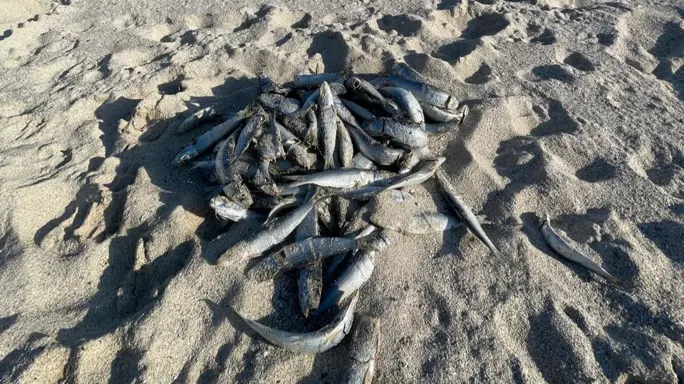
Emerging marine health risks along the Western Cape coast threaten to destabilise South Africa’s small pelagic supply chain, leaving fishing SMEs exposed to potential stock declines and further operational setbacks.
The Department of Forestry, Fisheries and the Environment (DFFE) said laboratory sequencing confirmed the presence of PHV genetic material in sampled sardines. However, scientists have not established that the virus was the cause of the deaths of scores of fish along the coast.
The virus was detected in dead sardines and at lower levels in some apparently healthy fish, suggesting that its presence alone may not be enough to cause mass mortality.
Fishing businesses are now watching whether the deaths could affect sardine stocks and add further pressure to a sector already facing supply problems.
Sardine shortages already affecting industry
The latest investigation comes after businesses in the commercial small pelagic sector had already raised concerns about sardine shortages.
On 30 June, the government increased the sardine Total Allowable Catch (TAC) west of Cape Agulhas by 6 000 tonnes, from 30 500 tonnes to 36 500 tonnes.
The decision followed requests from industry stakeholders after several fishing rights holders had already harvested their local allocations and were forced to scale down operations. The DFFE said this had placed more than 1 000 jobs at risk.
The additional allocation was expected to protect more than 5 000 livelihoods.
Minister of Forestry, Fisheries and the Environment Willie Aucamp said the decision was aimed at protecting jobs while ensuring the resource remained sustainable.
“I remain fully cognisant of the important contribution that the commercial small pelagic sector makes to job creation and in this case, over 5 000 livelihoods will be protected as a direct result of this decision,” Aucamp said.
The shortage illustrates how changes in sardine supply can affect more than fishing operators. Small processors, transporters, packaging businesses and other suppliers also depend on activity in the sector.
Scientists still investigating the cause
The latest PHV finding has added another layer to the investigation.
The virus has previously been linked to large-scale sardine mortality events in Australia and New Zealand during the 1990s. However, DFFE fisheries scientist Janet Coetzee cautioned against concluding that PHV caused the current deaths.
“We can now confirm that Pilchard Herpesvirus, or PHV, is present in all of the sardines we tested, including in apparently healthy fish. What this means is that finding the virus does not automatically mean that it caused this event,” Coetzee said.
Scientists are investigating whether another environmental stressor, including harmful algae, low oxygen or unusual oceanographic conditions, may have triggered or worsened the mortality.
Tests for paralytic toxins associated with the harmful algal bloom detected around Saldanha Bay did not find those toxins in the sampled fish.
“The toxin test results do not suggest that harmful algae were the main cause of the die-off,” Coetzee said.
SMEs wait for clarity
The commercial impact will depend on whether the mortality event has affected sardine stocks.
The DFFE is expanding disease surveillance along the West, South and East coasts, while a joint task team involving the department, fishing industry and other stakeholders is being established to coordinate the response.
The department’s October/November hydroacoustic biomass survey will provide the first opportunity to assess the possible effect of the mortality event on the sardine population.
A significant decline could affect the availability of fish for processors and reduce activity for businesses providing transport, packaging and other services.
The DFFE has said the presence of PHV does not currently justify a general suspension of fishing or canning, and there is no evidence that the virus infects humans or other animals.
Coetzee has also urged the public not to collect, consume or feed dead or dying sardines to pets while investigations continue